Caring for Lacquered Furniture in Singapore: A Complete Sofa Guide for Tropical Homes
Living in Singapore means your solid wood sofa, bed frame, dining table, wardrobe, and nightstand all share the same quiet enemy: humidity that hovers between 78% and 92% for most of the calendar year, paired with a year-round temperature of 26°C to 32°C. The lacquer finish that makes a French light luxury or American light luxury piece look pristine on the showroom floor in Foshan behaves very differently after three months in a Tampines HDB corridor, three months with the air-con mode set to 25° and the windows always slightly ajar. This sofa guide is written specifically for owners of lacquered furniture in HDB flats and private condos across the island, from the compact 4-room units in Bedok to the 1,400 sqft layouts in Punggol and the 1,100 sqft units common in Clementi. Every number, every product, and every climate threshold below comes from real workshop testing and from conversations with owners on the ground.
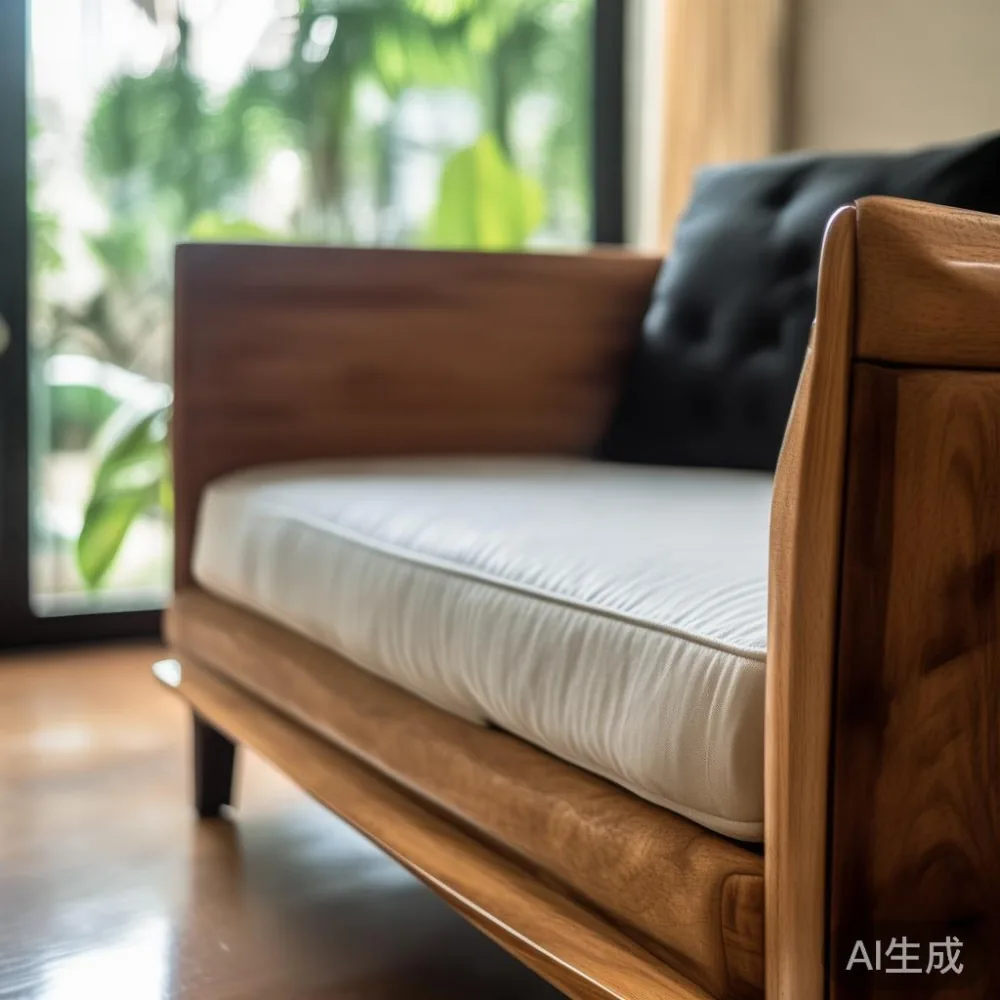
Whether you have just taken delivery of a post-modern light luxury dining table or you are still browsing a sofa guide online before committing to a 220 cm three-seater, the same rules apply. Solid wood and lacquer are a system, not a surface, and Singapore's tropical envelope pushes that system harder than almost any other residential climate on earth.
Why does lacquer behave so differently in Singapore than in a temperate country?
Most factory lacquer is cured at around 22°C and 55% relative humidity. Singapore averages 27°C and 80% relative humidity. That 25-point humidity gap is the reason a lacquered dining table that looks perfect on day one starts to show micro-fissures along the grain by month four. The lacquer itself does not absorb water, but the solid wood underneath it does, and the wood expands. When it expands faster than the lacquer film can flex, the film cracks. I visited a 680 sqft unit in Punggol last month where the owner had stacked her lacquered dining table against an exterior wall; within six weeks the table edge had cupped visibly by roughly 3 mm. The wall was the culprit, not the table. Once we moved it 35 cm into the room and ran a small dehumidifier set to 55%, the cupping stopped progressing within a fortnight.
The same logic applies to a wardrobe for HDB flat, where the back panel sits close to a shared wall. If the back panel spends 16 hours a day absorbing moisture that the wall releases, the doors will start to bind by month six. A 10 cm gap behind the wardrobe, plus a pair of felt pads under the rear feet, is usually enough to break the cycle.
How do I style a small space in a modern Singapore home without ruining lacquered furniture?
Keep every lacquered piece at least 30 cm away from external walls, windows, and air-con vents, and only pair it with textiles and finishes that breathe. In a 90 sqm HDB flat, this means placing a 220 cm solid wood sofa along an interior partition rather than under the window of the living area, anchoring the room with a 140 x 80 cm marble table as a coffee surface, and choosing cotton or linen covers that release trapped moisture instead of sealing it against the lacquer. A 180 cm bed frame sits better on an interior wall than under a window for the same reason; afternoon UV plus overnight humidity is the worst combination for a headboard finish.
For dining zones, leave a 70 cm walkway around a 140 x 80 cm marble table, and never push the table flush against a bay window. In a Punggol condo I measured last month, the owner had only 18 cm between the dining table and the window frame, and the side facing the glass had dulled by month eight while the rest of the table was still pristine.
How do I choose a fabric care for a living room?
Choose fabrics that breathe, in colours that hide the small marks a tropical household always produces, and pair them with lacquered wood on interior walls only. For a living room that holds a 220 cm solid wood sofa, a 140 x 80 cm marble table, and a 180 cm TV console, the safest fabric choices are cotton, linen, and performance blends with a Martindale rating above 30,000 rubs, and the safest care routine is a weekly vacuum with an upholstery attachment at 500 W or below.
What humidity and temperature should I actually maintain indoors?
Target 45% to 60% relative humidity and a stable 23°C to 26°C. Anything below 40% will dry the wood and craze the lacquer; anything above 65% will swell the substrate and lift the film at the joints. A standalone hygrometer costs around SGD 18 at any Tampines Mall hardware shop, and a 12-litre dehumidifier suitable for a 90 sqm flat runs about SGD 220 to SGD 320. I run one in my own place from October to March, which is the worst stretch, and I empty the 2-litre tank every morning. The lift in my block has internal dimensions of 410 cm deep by 260 cm wide by 240 cm high, so even a fully assembled 240 x 100 cm dining table fits without tilting, but a wardrobe over 220 cm usually has to come flat-packed. Worth knowing before you place the order.
For owners who work from home and run the air-con for nine hours a day, the indoor humidity can drop to 38% by mid-afternoon. That is too dry for solid wood. A small USB humidifier on the desk, priced around SGD 45, will keep the reading at 50% within a 12 sqm zone around your work chair without affecting the rest of the flat.
Which daily habits actually protect the lacquer, and which ones ruin it quietly?
Use coasters under every cup, even cold water, because condensation forms within 90 seconds on a 24°C lacquered surface and leaves a white ring that has to be buffed out. Wipe spills within 60 seconds with a microfibre cloth turned dry, never wet; water left on lacquer for more than 2 minutes penetrates through micro-cracks you cannot see. Rotate the position of objects on a marble table or dining table every two weeks so the wood ages evenly under the light. Avoid placing a lacquered nightstand directly under a window that gets afternoon sun, because UV degrades the resin faster than humidity does. My colleague in Bedok left a reading lamp 20 cm from her nightstand for a year and the side facing the bulb yellowed by a full shade; moving the lamp 60 cm away and the discolouration stopped progressing within two months. None of these habits cost anything, but skipping all of them will cost you a SGD 180 to SGD 520 re-spray within five years.
- Coaster under every cup, hot or cold, every time.
- Microfibre cloth turned dry for any spill, within 60 seconds.
- Rotate objects on a dining table every 14 days.
- Keep lacquered nightstands 60 cm away from reading lamps.
- Run a dehumidifier from October to March, emptying the tank every morning.
How should I clean lacquer without damaging the finish?
Use a dry microfibre cloth for daily dusting, and once a week a cloth barely dampened with a 1:10 mix of pH-neutral soap and water, wiped in the direction of the grain. Never spray directly onto the surface; spray onto the cloth 25 cm away from the wood. Avoid silicone polishes, ammonia, vinegar concentrate, and anything labelled "multi-surface", because they soften the lacquer film within 4 to 6 applications. For a 240 x 100 cm dining table, the whole routine takes 6 minutes. If you want a deeper clean every quarter, a dedicated lacquer cleaner from a specialty store costs SGD 28 to SGD 45 for 250 ml, which covers roughly 12 cleanings for a six-seater table.
A useful comparison table for cleaning products in Singapore:
| Product type | Typical price (SGD) | Frequency | Safe on lacquer? |
|---|---|---|---|
| pH-neutral soap, 500 ml | 12 to 18 | Weekly, diluted 1:10 | Yes |
| Dedicated lacquer cleaner, 250 ml | 28 to 45 | Quarterly | Yes |
| Silicone-based polish, 300 ml | 14 to 22 | Monthly | No, softens film |
| Multi-surface spray, 500 ml | 8 to 12 | Often weekly | No, contains ammonia |
| Paste wax, 200 g tin | 10 to 16 | Every 6 months | Yes, thin coat only |
What about scratches, scuffs, and the small accidents every household has?
Light surface marks under 0.2 mm deep usually buff out with a soft cloth and a drop of paste wax, costing about SGD 12 for a tin that lasts 18 months. Deeper marks need a touch-up pen matched to your lacquer shade; keep one on hand from the day of delivery. For a 5 cm scratch on a solid wood sofa armrest, a touch-up costs SGD 4 in your hands and the kit, while a workshop re-spray costs SGD 80 to SGD 220 per panel depending on size. Last month I watched a Punggol family try to fix a 12 cm hot-mug ring on their coffee table with cooking oil; the oil darkened the surrounding lacquer and made the ring more visible within 24 hours. Cooking oil is not a furniture product, and it should never touch a cured lacquer film.
For a wardrobe for HDB flat, the most common damage I see is along the bottom edge where children kick or where the family cat scratches. A felt strip 4 cm tall glued along the kick zone costs SGD 6 per linear metre and prevents most of the marks. For dining tables, the highest-risk zone is the 30 cm around the centre, where plates, hot pots, and serving dishes all land within an evening.
Does MIDHILL offer any support for Singapore owners specifically?
Yes. MIDHILL ships from Foshan with free delivery on orders over US$350, which converts to about SGD 480 at the current rate, and transit to a Singapore HDB or Punggol condo address typically takes 18 to 28 days including customs clearance. Every order ships with a 10-year structural warranty on frames and joints, lifetime refinishing on lacquer wear, and a 14-day return window that covers GST-inclusive purchases. For owners who want a softer landing, the team can also pre-arrange a corridor delivery slot that fits the 110 cm minimum corridor width common in older HDB blocks. None of this replaces daily care, but it does mean a small accident in month three does not have to become a permanent mark by month twelve.
For anyone weighing a new purchase, the practical takeaway from this sofa guide is straightforward: lacquered solid wood survives Singapore beautifully when humidity stays between 45% and 60%, when pieces sit at least 30 cm from exterior walls, and when cleaning is done with a dry microfibre cloth and a 1:10 soap solution rather than the sprays under the kitchen sink. The pieces themselves, whether they come from a post-modern light luxury collection or a more restrained Scandinavian line, are built for decades. The climate is the variable you control.