What to Check Before Buying a Sofa You Cannot Sit On: A Singapore Sofa Guide
Last month I visited a new launch in Punggol with my colleague, and we watched a young couple argue in the showflat about a three-seater sofa they had already paid for. It would not fit into the service lift. The salesman had measured the sofa, but nobody had measured the lift. The deposit was 35 percent gone, and the only options were a refund with a 12 percent cancellation fee (SGD 480 on a SGD 4,000 set) or a L-shaped sofa turned the wrong way in a 3.2-metre-wide living room. They left without buying anything. That afternoon is the reason I wrote this sofa guide: the comfortable act of sitting on a sofa in a showroom tells you almost nothing about whether it will actually reach your living room, survive daily use, or match the apartment you already rent or own.

This article is a sofa guide written for Singapore homes, especially HDB flats in Tampines, Bedok, and Punggol, and the tighter three-bedroom condos around Bukit Timah and the East Coast. I will walk you through the measurements, the materials, the mechanics, and the money questions, so the next sofa you buy is one you can sit on at home, not one that lives in your head. Prices are quoted in SGD throughout, and where MIDHILL (a Foshan solid wood furniture maker exporting to more than fifteen countries) fits the brief, I will mention what they offer and why it is relevant. The same checks apply whether you are browsing for a solid wood sofa, a bed frame, a dining table, a wardrobe, or a nightstand from the same collection.
Measure First: The 90 Seconds That Save SGD 600
The most expensive mistake in furniture shopping is buying a piece that physically cannot reach your front door. In most HDB blocks built after 2005, the service lift opening is 1.0 to 1.1 metres wide, and the cabin depth is about 1.5 to 1.8 metres. Older blocks in Bedok and Tampines sometimes have lift cars as shallow as 1.3 metres. A standard three-seater sofa in a box is often 2.1 to 2.3 metres long, 0.95 metres deep, and 0.7 metres tall in its carton. The numbers do not work.
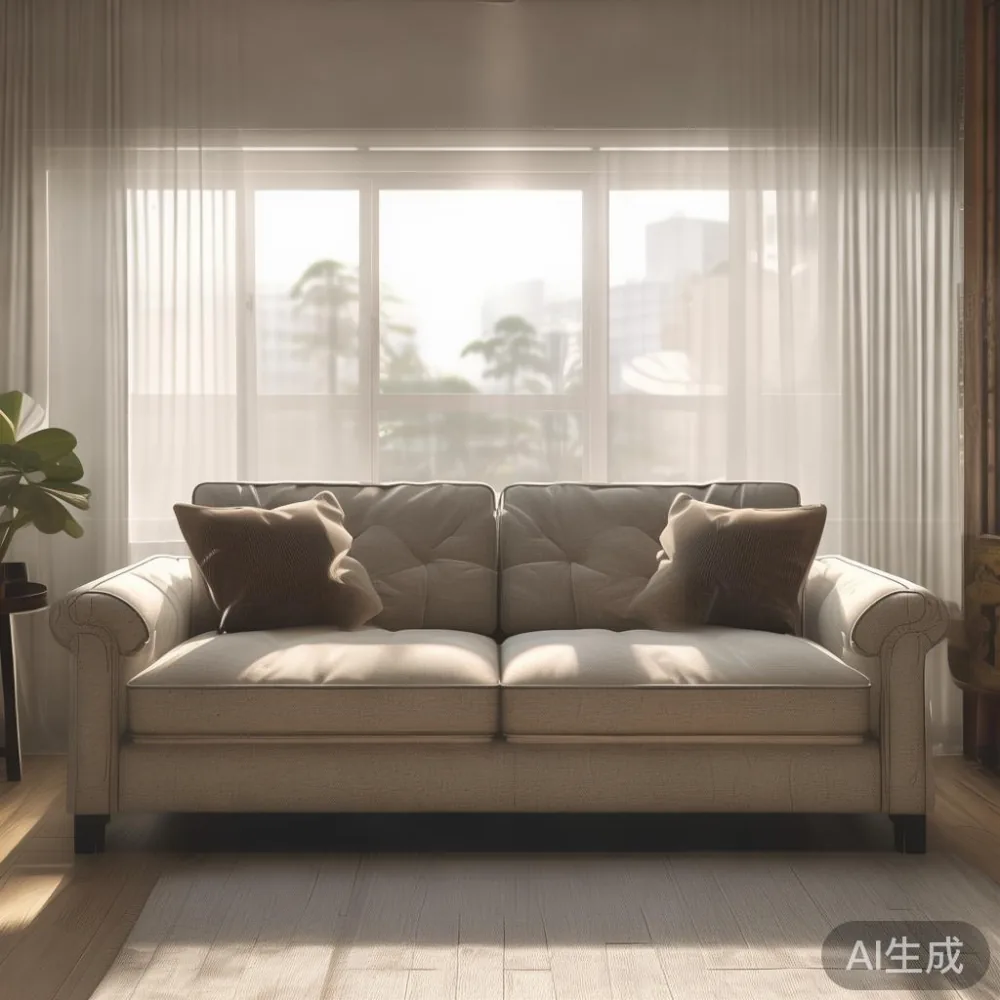
Before you click buy, take a folding ruler, a phone measure app, or a SGD 6 laser distance meter from HomeFix and write down four numbers: lift door height and width, lift cabin depth and diagonal, corridor width from lift to your unit door (usually 1.2 to 1.5 m), and the diagonal of your own front door (often 2.0 to 2.1 m in newer HDB, sometimes only 0.9 m wide on older 4-room flats). Then add 10 cm clearance for turning the sofa on its side. If any of those numbers fails, the sofa fails, no matter how it felt in the showroom. This step is also why so many Singapore buyers now prefer a sofa that ships in two boxes rather than one, a point I will return to when I talk about solid wood frames.
Can I test a sofa without sitting on it?
Yes, and you should treat the showroom sit as a five-minute check rather than the main event. In the showroom, lift the front skirt and look underneath, press the seat cushion with one palm for ten seconds and watch how slowly it springs back (under two seconds means the foam is too soft for daily use), unzip a back cushion cover and read the foam density label (30 kg per cubic metre or higher is the practical minimum for a family sofa), and grab the armrest and try to wiggle it side to side. Any creak at the armrest joint is a frame problem, not a fabric problem.
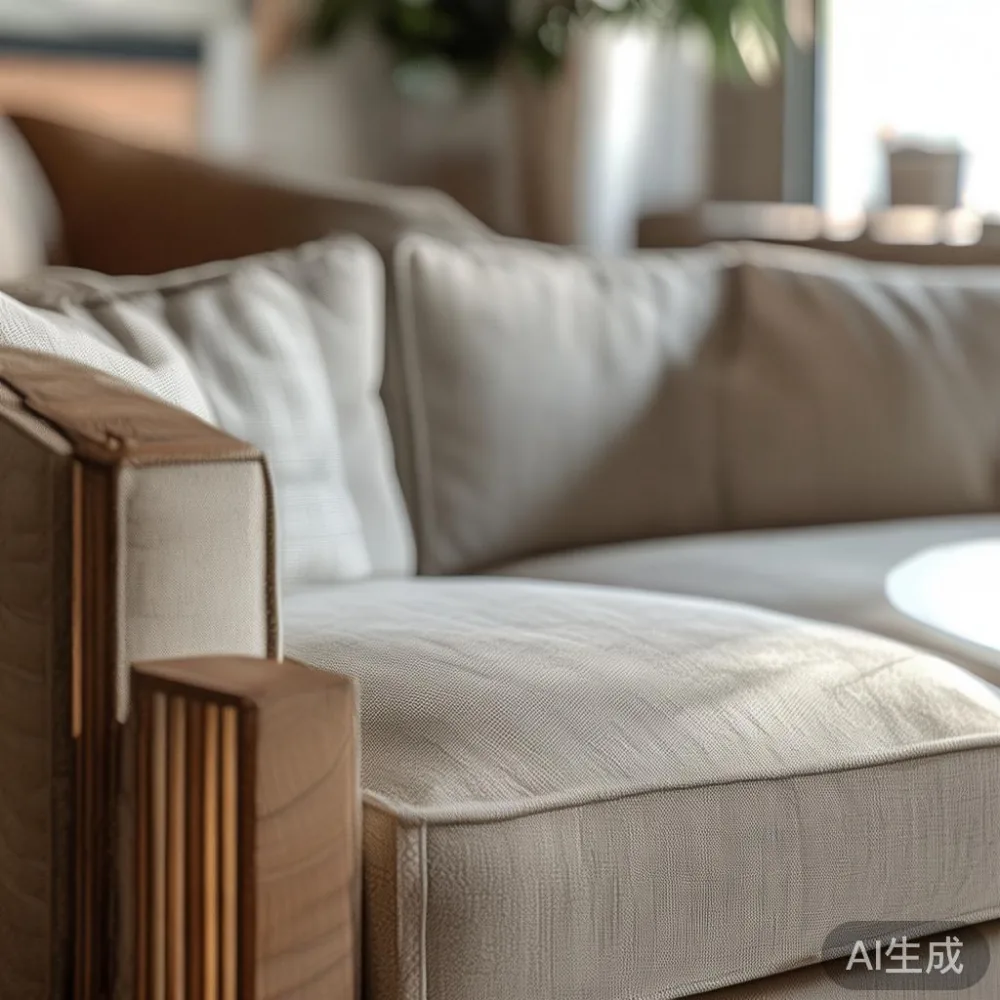
What you cannot test in the showroom is the real weight. A solid wood sofa in a light luxury post-modern silhouette can weigh 65 to 90 kg for a three-seater, against 35 to 50 kg for a comparable plywood frame. That weight tells you two things: the frame will outlast cheaper builds by a decade or more, and you will need two people, not one, to unpack it on the seventh floor of a Punggol HDB without a service lift. Always ask the seller for the unpacked weight and the number of cartons, and confirm whether the delivery team carries the sofa up the stairs or only to your door.
Frame, Suspension, and Cushion: The Three Things That Decide Whether You Will Still Like the Sofa in Year Five
Frames are usually the section a buyer skips. That is a mistake. A solid hardwood frame in oak, ash, or beech, kiln-dried to a moisture content of 8 to 12 percent, will hold its screws and joints for fifteen to twenty years of nightly use. A mixed softwood frame with plywood panels often starts loosening at the five-year mark, especially in Singapore humidity that runs 70 to 85 percent most mornings. Look for mortise-and-tenon joints at the corners, corner blocks glued and screwed (not stapled), and a warranty that covers the frame for at least ten years. MIDHILL backs its sofa frames with a ten-year structural warranty, which is the part of the warranty card you actually read, and offers lifetime refinishing on solid wood pieces if the surface ever dulls.
Suspension comes next. The three systems you will meet are sinuous S-springs (the cheapest, a slightly bouncy feel), eight-way hand-tied coils (the most labour-intensive, around SGD 1,800 to SGD 3,500 more on a comparable sofa), and webbing. For most Singapore families, sinuous springs with a 2.0 mm wire gauge are perfectly fine, as long as the springs sit on a solid wood base and not on cardboard. Then the cushion. High-resilience foam at 35 kg per cubic metre, wrapped in a down-feather topper, gives the best mix of support and softness. Pure feather cushions feel gorgeous on day one and need daily puffing from year two. For a household with kids who jump on sofas, foam with a 1 cm fibre wrap is the practical call.
Is Japandi sofa furniture worth it?
Yes for compact Singapore interiors, no if you are buying the look without the materials, and the answer has a number attached. A genuine Japandi sofa in solid ash or white oak with linen-blend upholstery generally costs between SGD 2,400 and SGD 4,800 for a three-seater, and lasts twelve to fifteen years with normal care. A Japandi-style sofa in plywood with a printed wood-grain finish costs SGD 1,000 to SGD 1,600 and usually needs replacing after five to seven years because the print peels at the armrest and the joints loosen.
The question of whether Japandi sofa furniture is worth it comes down to a simple division. Divide the price by the realistic lifespan in years. A SGD 3,200 solid wood Japandi sofa at fourteen years of expected use works out to about SGD 230 per year, or SGD 4.40 per week. A SGD 1,300 plywood version at six years of use works out to about SGD 217 per year, or SGD 4.20 per week. The numbers look similar, but the solid wood version retains roughly 35 percent of its value if you resell, has a ten-year warranty, and does not warp during the December monsoon when your HDB hits 82 percent humidity. That is where the real saving lives.
Upholstery, Colour, and How the Sofa Will Look in Your Actual Living Room
Bring a photo of your living room, not a memory of it. Singapore showrooms are brightly lit with 4,000 K cool white, which makes beige look grey and ivory look white. Your HDB living room at 7 pm under 3,000 K warm downlights will tell a different story. Linen-blend and cotton velvet age gracefully in our climate and breathe well. Microfibre and polyester blends resist stains from Milo and kopi spills, but trap heat; in a non-air-conditioned flat, that becomes uncomfortable by month three. Genuine full-grain leather is wonderful but needs conditioning every six months to prevent peeling, and a light luxury American style sofa in aged leather pulls a room together in a way few fabrics can match.
Also think about the apartment around the sofa, not just the sofa. If you have already chosen a marble table for the dining area in a French light luxury palette, your living room sofa should pick up one of the marble's undertones, not fight it. The same logic applies if you are buying a solid wood bed frame or a dining table from the same collection; matching wood tones across the sofa, the bed frame, and the dining table is what separates a curated home from a showroom look that falls apart in a 90 sqm flat.
The Money Part: Delivery, GST, Returns, and the Fine Print
In Singapore, advertised prices on overseas furniture sites usually exclude 9 percent GST, which adds SGD 360 to a SGD 4,000 sofa the moment it clears customs. Delivery within mainland China is sometimes free, but Singapore shipping on a three-seater typically runs SGD 180 to SGD 350 unless the seller offers free shipping above a threshold. MIDHILL, for example, ships free above US$350 (about SGD 470), which means a single sofa order usually qualifies but a single nightstand might not. Ask whether the delivery quote includes lift-up to the unit, or only to the lift landing. Staircase carry surcharges in non-elevator walk-ups are usually SGD 15 per floor per piece.
Returns are where the real trap lives. Many cross-border sofa brands quote a 14-day return window, but read the conditions: the sofa often has to be in its original packaging, unassembled, with the protective foam still on the corners. Once the carton is opened and the sofa assembled, return shipping from Singapore to Foshan is SGD 600 to SGD 900 one-way, which the buyer pays. A 10-year structural warranty only covers the frame, not the cushions or the fabric; cushion softening under 25 percent is usually classed as normal use, not a defect. Read the warranty card like a contract.
Putting It All Together: A One-Page Sofa Guide Checklist
Use this checklist the next time you shop, and save it inside the notes app on your phone.
1) Measure your lift door, cabin, corridor, and front door, then add 10 cm clearance. 2) Confirm the number of cartons and the unpacked weight in kg. 3) Read the frame material; ask for kiln-dried solid hardwood and a ten-year warranty. 4) Check the suspension system and the cushion foam density (30 kg per cubic metre minimum). 5) Bring a photo of your living room and your existing pieces, including any marble table or bed frame, to match undertones. 6) Total the landed price: product, GST, delivery including lift-up, and any staircase surcharge. 7) Read the returns policy in full, including who pays return shipping and what condition the sofa must be in.
If a sofa passes all seven checks and still feels right when you sit on it, you have probably found the one. And if you happen to be browsing solid wood pieces in a light luxury American or French style, MIDHILL's catalogue is one of the few that ticks every box above, from the ten-year structural warranty to the lifetime refinishing service that keeps a solid wood sofa looking new well past its first decade. The point of a good sofa guide is not to push a brand, but to make sure the sofa you cannot sit on in a showroom is exactly the sofa you will sit on for the next twelve years at home.
Frequently Asked Questions About Buying a Sofa You Cannot Sit On First
How long should a good sofa last in Singapore humidity? A solid hardwood frame in a light luxury style typically lasts twelve to eighteen years. Plywood and mixed-softwood frames usually need replacing after six to eight years.
Is a sofa in two cartons really better than one? Yes, for HDB flats. Two cartons mean each box is short enough to fit a 1.5 m lift cabin and narrow enough for a 1.0 m door, which solves the most common delivery failure.
Can I use the same sofa guide logic for a bed frame or dining table? Yes. Measure the lift, measure the doorway, check the frame material, and read the warranty. The same Foshan workshop that builds a solid wood sofa also builds bed frames, dining tables, wardrobes, and nightstands to the same standard, which makes it easier to match undertones across an entire home, even a small one like a 90 sqm Punggol HDB. If you are searching for boho style for small home office, the same checklist applies to a reading chair or a single accent armchair, just scaled down.
What about the cushions? Anything below 30 kg per cubic metre will bottom out within three years for a family of four. Anything above 35 kg will feel firm on day one and soften to perfection by month four.