Buying Solid Wood Furniture Online in Singapore: Delivery, Lifts, and the Honest Truth
I have been writing about solid wood furniture for long enough to know that the buying decision is only half the story. The other half happens on a Saturday morning, when a 2.4-metre sofa frame meets a 0.9-metre HDB service lift in Tampines. That is the moment furniture either becomes part of your home or a very expensive problem. This sofa guide is built around that moment. Every section that follows comes from real conversations with delivery crews, warehouse managers, and homeowners across Singapore — from 1980s walk-ups in Bedok to brand-new condos in Punggol — and from my own visits to showrooms in Foshan and Shenzhen over the last few years. If you are reading a sofa guide before clicking "checkout," you are already ahead of most buyers. This particular sofa guide focuses on the unglamorous but decisive topic of delivery and assembly, with a few notes on how light-luxury brands like MIDHILL actually handle the logistics in a 728 km² city-state.
Why Singapore is a special case for furniture delivery
Singapore looks tiny on a map, but it is unusually demanding for furniture logistics. The Housing and Development Board (HDB) flats that house roughly 80% of the population come with service lifts that are typically 1.1 m wide × 1.4 m deep × 2.1 m tall, and corridor widths that drop to about 1.2 m at the lift lobby. Private condos in Punggol, Sengkang, or the Greater Southern Waterfront tend to be more generous — service lifts around 1.5 m × 2.0 m × 2.4 m — but the rules are stricter: many MCSTs require a contractor's risk deposit (often S$500–S$2,000) before movers can touch the lift, and some ban deliveries entirely between 22:00 and 07:00. Add in 9% GST on the landed value of imported goods, a typical road freight premium of S$120–S$280 per trip, and last-mile surcharges for upper floors, and you can see why the "free shipping" line on a product page is worth roughly one-third of the actual bill.
For solid wood pieces specifically — a 2.2 m rubberwood dining table, a 1.8 m king bed frame, a 2.4 m four-door wardrobe, a marble-top coffee table, or a solid wood sofa weighing 85–110 kg — the geometry is unforgiving. I watched a MIDHILL crew in late March unpack a 2.4 m ash wood sofa frame outside a 12th-floor unit in Bedok Reservoir. The frame went in vertically, on its short edge, with about 4 cm of clearance on either side of the service lift door. It was the third attempt of the morning for that delivery company. The two previous bookings had been cancelled because the buyer had measured the main door of the flat instead of the service lift door, which is almost always 10–15 cm narrower.

What does a "light-luxury" sofa actually weigh and why does it matter?
Light-luxury is a term you will hear a lot in the Foshan furniture market. French light-luxury tends to use curved silhouettes, gilt accents, and bouclé fabrics in cream or oat tones; American light-luxury leans toward oversized sectionals in performance linen and brass-tipped legs; post-modern light-luxury mixes walnut or ash frames with travertine marble tables and asymmetrical side tables. The shared trait across all three is a solid wood frame, usually ash, oak, or rubberwood, sometimes with a plywood internal support grid. That choice has consequences.
A typical 3-seater light-luxury sofa in the MIDHILL range weighs between 78 kg and 105 kg empty, with the marble or sintered stone accent tables adding another 18–32 kg per piece. Cushion cores are high-resilience foam wrapped in down feathers at around 6–8 kg per cushion, and the backrest cushions add another 4–5 kg each. So when the product page says "3-seater, total weight 95 kg," the actual handling weight across six individual cartons is closer to 110 kg once you factor in plywood crates, corner protectors, and the shrink-wrap that keeps humidity out during the 4,400 km sea voyage from Yantian Port to Singapore's PSA terminal. Sea freight takes 10–14 days, port handling and customs clearance add another 3–5 days, and local last-mile delivery from a Tuas or Jurong warehouse to your door typically adds 2–4 working days. In real terms, plan for a 18–24 day window from order to assembly for stocked SKUs, and 35–55 days for made-to-order pieces such as custom-width dining tables or wardrobes outside the standard 1.6 m / 1.8 m / 2.0 m range.
Will the sofa actually fit through my HDB door?
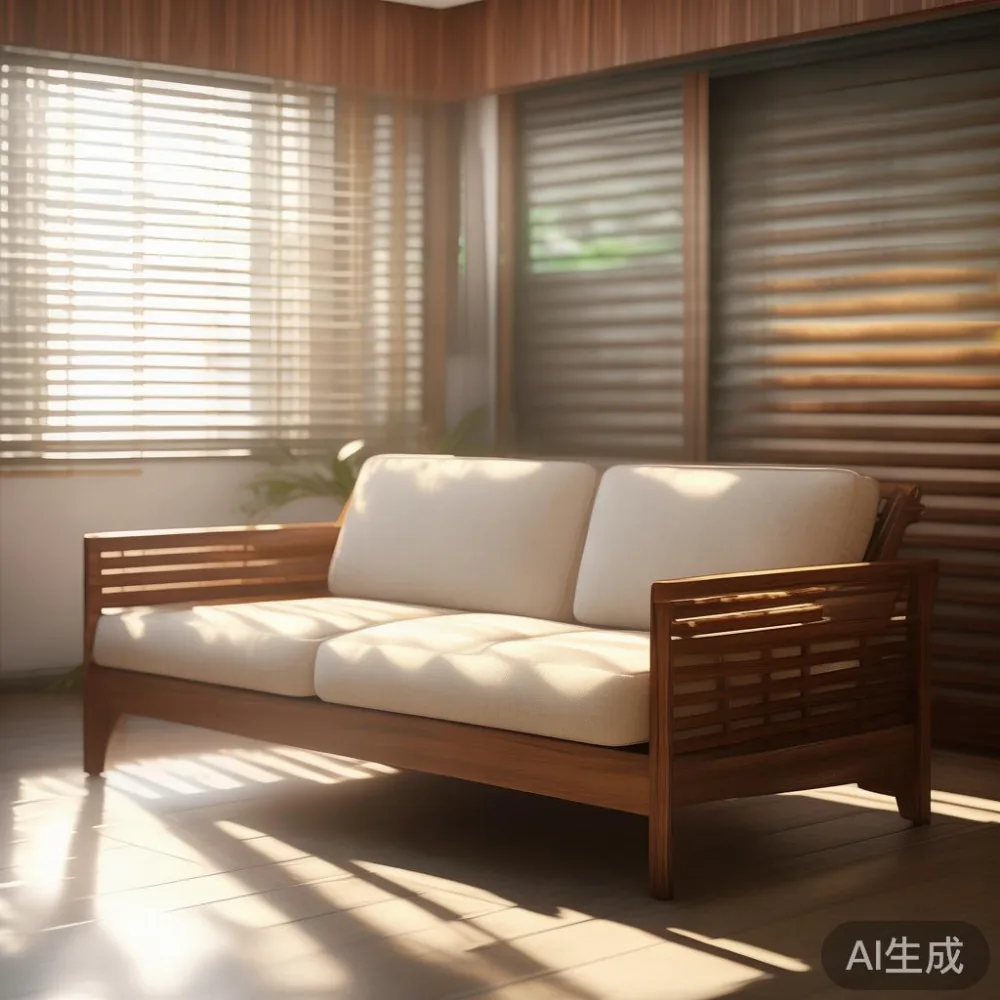
Measure first. Then measure again. A standard HDB main door (Type 1 and Type 2) is 0.9 m wide × 2.1 m tall; the service lift is your real bottleneck at roughly 1.1 m wide × 1.4 m deep × 2.1 m tall. For a solid wood sofa frame longer than 2.1 m, delivery crews in Tampines, Bedok, and Woodlands routinely tilt the frame onto its short side to clear the lift ceiling. The minimum ceiling height you need for that manoeuvre is about 2.25 m — most HDB service lifts just clear it; some do not. If your unit is on a high floor with low ceilings (older blocks at 2.4 m finished height) the crew may have to partially disassemble the sofa on-site. This is where a brand with a 10-year structural warranty earns its keep: a MIDHILL solid wood sofa uses a knock-down bolted frame system, which means the side rails, backrest, and armrests can be separated with a single 14 mm socket wrench, moved in flat-pack form, and reassembled in your living room in 25–40 minutes by a two-person team. A solid-frame, single-piece sofa in the same price band cannot do this — and that is the kind of detail no glossy product page will volunteer.
Two more geometry checks worth doing before you click pay. First, the diagonal of your lift lobby turning radius — measure from the lift door to the corridor wall at 90°, then add 30 cm for a sofa cart to pivot. Second, the staircase in walk-up apartments or maisonettes. I watched a delivery last month in a Bedok walk-up where the staircase measured 0.95 m wide with a 2.6 m vertical rise per floor — the crew refused the job and refunded the buyer, because no sofa frame over 1.8 m could be carried up safely. If you live in a walk-up, buy a sofa with a back height under 0.85 m and a width under 1.6 m. Anything larger is a risk.
What is the difference between Mid-century modern dressing table and modern furniture?
The difference between a Mid-century modern dressing table and a piece of generic modern furniture comes down to three measurable traits: tapered splayed legs between 15° and 20°, a solid wood top between 2.5 cm and 4 cm thick, and hardware (knobs, hinges, drawer slides) recessed into the carcass rather than surface-mounted. A piece that meets all three is recognisable as Mid-century modern; a piece that uses metal hairpin legs, a 1.8 cm engineered top, and click-fit hardware is simply modern.
This distinction matters for Singapore buyers because solid wood tops behave very differently in our 80–90% humidity. Engineered tops swell; solid tops breathe. A Mid-century modern dressing table with a 3 cm rubberwood or ash top, properly sealed with a moisture-cured lacquer, will outlast an engineered alternative by 8–12 years in a non-air-conditioned bedroom. The same logic applies to dining tables, wardrobes, and bed frames. When I toured a Foshan workshop in March, the foreman showed me a kiln-drying schedule of 14 days at 58°C for 4 cm ash planks — anything shorter leaves internal moisture above 12%, and that is what causes cupping and cracked tenons in HDB bedrooms six months after delivery. MIDHILL publishes its kiln-drying data on request, which is more than most brands bother to do.
How much does delivery really cost in Singapore?
Let us put real numbers on the table. A 3-seater solid wood sofa with two side tables, delivered to a 10th-floor HDB in Tampines, breaks down roughly as follows: sea freight and customs (S$140–S$210 for a 1.2 m³ shipment), local truck from Jurong to your block (S$80–S$120), lift and corridor protection (S$40), assembly by a two-person team (S$60–S$90 for 45 minutes), GST on the landed CIF value (9% on the product + freight), and disposal of packaging (S$25 if offered). On a S$2,400 sofa that is about S$345–S$485 of total landed cost — roughly 14–20% on top of the sticker. Many direct-from-Foshan brands quote free shipping above a certain threshold, but the threshold usually excludes the upper-floor surcharge and the assembly fee.
MIDHILL, which exports to 15+ countries and runs free shipping above US$350 (around S$475), absorbs the Jurong-to-door truck and the basic assembly into that threshold for Singapore addresses — but still charges a S$60 surcharge for upper floors (above the 7th) in non-lift-access blocks, and a S$45 disposal fee. The 14-day return window covers change-of-mind on stock items, but only if the original crates are intact; opened or assembled pieces attract a 20% restocking fee. The 10-year structural warranty covers frame breakage, joint failure, and severe warping — not surface scratches, fabric pilling, or fading. A lifetime refinishing offer, available for an S$180 service fee per piece, lets you sand back and re-lacquer a worn dining table top after 8–10 years of use, which is genuinely useful in a tropical climate.
How is the sofa actually assembled on the day?
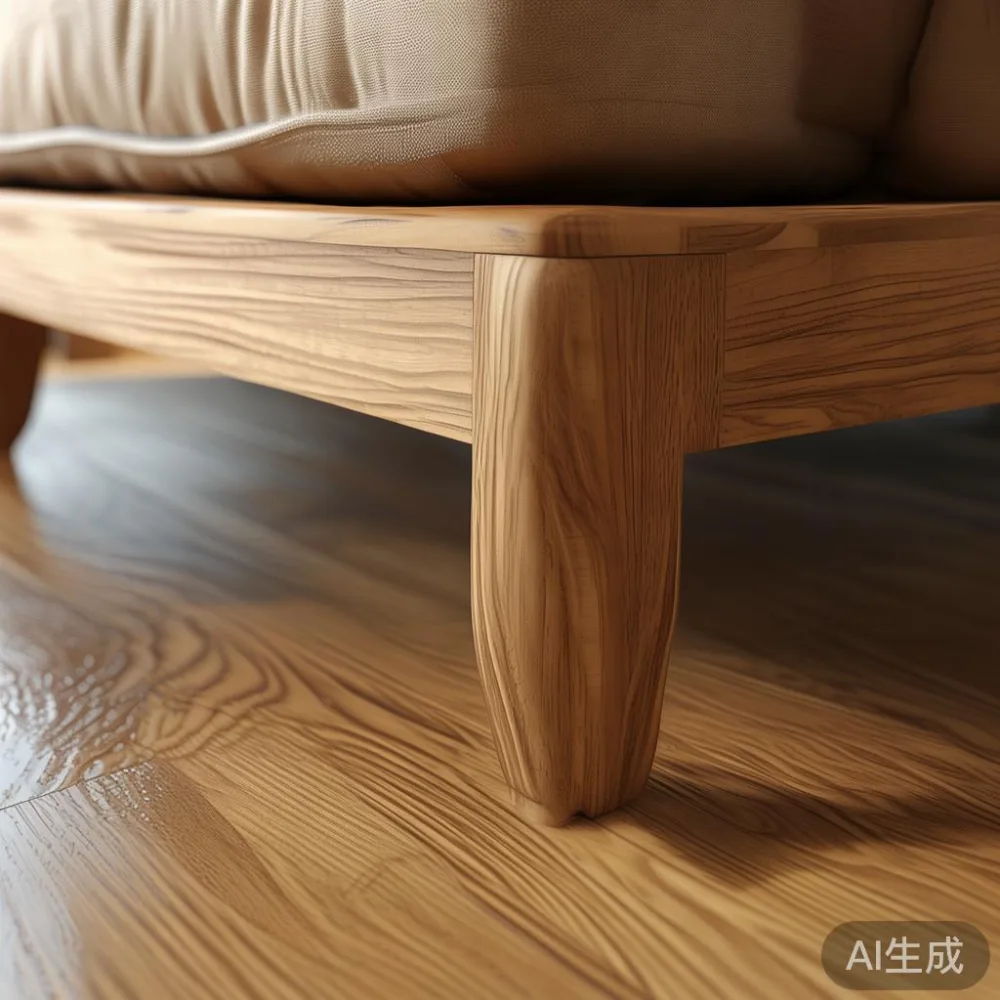
Good delivery teams in Singapore arrive in pairs, with a trolley, a socket set, a cordless drill, a rubber mallet, and about 90 minutes of working time for a single 3-seater sofa plus side tables. The sequence is: (1) photograph the cartons at the door before opening, (2) move cartons flat to the assembly zone, (3) unwrap and inspect each component, (4) bolt the side rails to the seat platform using the supplied 8 mm × 60 mm coach bolts, (5) attach the backrest, (6) drop in the seat cushions and back cushions, (7) install the sofa legs (usually 12 cm or 15 cm solid wood, with a 5 cm adjustable foot for uneven HDB floors). A two-person crew finishes a knock-down frame in 25–40 minutes; add another 15 minutes for cushions and legs. Total time on-site for a sofa is 45–70 minutes.
A solid wood bed frame in king size (1.8 m × 2.0 m) takes 50–80 minutes. A six-drawer wardrobe takes 90–140 minutes. A marble dining table with an aluminium or steel sub-frame is the trickiest item — the marble top alone can weigh 45–65 kg, and most crews insist on at least three people to lift it onto the base. I watched a Punggol condo delivery in mid-April where a sintered stone dining top cracked during placement because the base was not level; the crew used a 4 mm shim pack to correct the level and the homeowner agreed to keep the table, but the supplier wrote off the original top and shipped a replacement within nine days at no cost. That is the kind of after-sales behaviour you cannot price in advance.
What should I check on the delivery day itself?
Six quick checks save you a six-month argument. (1) Photograph every carton before opening, from at least two angles. (2) Count the cartons against the packing list before the crew leaves. (3) Inspect every wood surface for dents, scratches, and corner chips under bright daylight — corridor lighting hides a lot. (4) Test every drawer on wardrobes and nightstands for smooth travel and even gaps; a 2 mm misalignment is acceptable, anything wider points to a warped carcass. (5) Sit on every cushion of the sofa at least five times to confirm foam recovery; press down for 10 seconds and time the rebound — good high-resilience foam recovers in under 3 seconds. (6) Get the assembly team to level the bed frame and dining table with a spirit level before they leave; an unlevel bed will creak within a month, an unlevel dining table will wobble every time someone rests an elbow on it. MIDHILL crews carry spirit levels and shim packs as standard, which is one of those small signals that the brand has done this ten thousand times before.
Final notes for Singapore buyers shopping light-luxury furniture online
The furniture you choose will live in your home for 10–20 years, so the 25 minutes you spend on lift measurements and weight checks before ordering is the highest-return quarter-hour of the whole purchase. A sofa guide that skips delivery realities is only half a guide, and the buyers I have spoken to in Tampines, Bedok, and Punggol all say the same thing: the brand that shows up with a measuring tape on Day 1 is the brand that answers the phone on Day 365. Light-luxury solid wood pieces — a solid wood sofa, a four-door wardrobe, a 2.0 m dining table, a king bed frame, a marble coffee table, a Mid-century modern chest of drawers — reward patience, measurement, and a supplier that treats logistics as part of the product rather than an afterthought. Order a sample of the fabric or wood finish whenever a brand offers it, photograph your lift and corridor before the truck arrives, and keep the original crates for at least 14 days in case a return is needed. Do all of that, and the Saturday morning your sofa arrives will be the easy part.
Singapore context note: all SGD figures are inclusive of 9% GST where applicable. Floor plans and lift dimensions are based on HDB and typical private condo standards as of 2024–2025. Sea freight transit times are quoted for shipments from Yantian or Shekou ports to PSA Singapore under normal berthing schedules.