Caring for Lacquered Wood Furniture in a Singapore Home: A Practical Sofa Guide for Tropical Living
If you have ever run your hand across a freshly lacquered dining table in a Tampines HDB show flat and thought, "I want that finish in my own home," you already understand why so many Singapore buyers now insist on lacquered solid wood over veneers and laminates. The deep sheen catches the overhead LED light, the surface feels cool and glass-smooth, and a quick wipe with a microfibre cloth restores the mirror polish in seconds. The catch is that Singapore sits one degree north of the equator. Relative humidity hovers between 70 percent and 85 percent for most of the year, afternoon thunderstorms push it past 90 percent in November and December, and air-conditioned interiors create violent swings of 20 to 30 percent within a single afternoon. Lacquer is a rigid, non-porous film, and rigid films hate rapid dimensional change in the wood beneath them. I learned this the hard way last month when I visited a friend's four-room flat in Bedok Reservoir to look at her eight-month-old walnut veneer coffee table: the lacquer had cracked along the grain at three separate points, and the only thing she had done wrong was park the table directly under the air-conditioner's drip tray. That single visit is the reason I keep coming back to this sofa guide topic, because a sofa guide is really a furniture-finish guide in a tropical city.
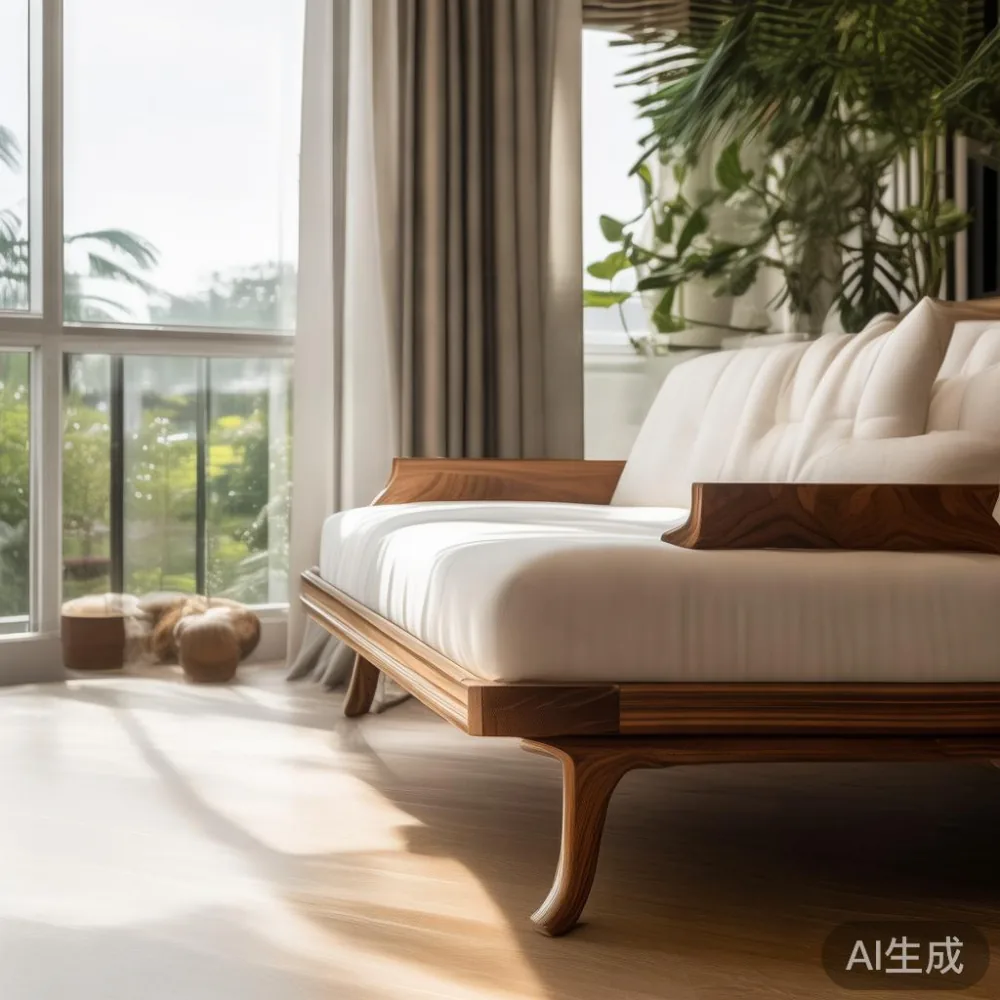
Why does lacquer behave differently from oiled or waxed finishes in a tropical climate?
Lacquer is a film-forming finish. It sits on top of the wood like a thin, clear acrylic or polyurethane skin between 0.05 mm and 0.12 mm thick, depending on how many coats the maker sprayed. Oiled or waxed finishes, by contrast, soak into the cell walls of the timber and move with it. In a Tampines three-room flat where the morning humidity reads 82 percent on the hygrometer and the afternoon reading under the air-con reads 58 percent, a 2 cm oak board can swell and shrink by roughly 0.3 mm to 0.5 mm across its width every single day for months. A film finish cannot stretch that far without checking, hazing, or lifting at the joints. Solid wood is also anisotropic: it moves roughly ten times more across the grain than along it, which is why you see long cracks parallel to the grain and almost never across it. A solid wood sofa frame, a bed frame headboard, a dining table top, or a wardrobe door panel will all telegraph that movement through the lacquer if the joinery, acclimation period, or environmental control is wrong. A solid timber dining table from MIDHILL dining table collections, for example, is built with breadboard ends and slotted screw holes specifically so the top can cup and crown without splitting the lacquer film; cheaper flat-screw tops are the ones that check in month three.
What humidity range should I keep my lacquered furniture in?
For any lacquered solid wood piece, the safe corridor is 45 percent to 65 percent relative humidity, with a daily swing of no more than 10 percent. That is the same band hardwood floor manufacturers recommend, and your furniture cares about it for the same reason. In Singapore, that means running the air-conditioner consistently rather than only at night, leaving the wardrobe and bed frame doors slightly ajar for an hour after a thunderstorm so the trapped air can mix, and parking your dining table at least 30 cm away from the wall so air can move behind it. I keep a SGD 18 thermo-hygrometer from a neighbourhood provision shop in Punggol on the shelf above my record player and I check it twice a day. When the reading climbs past 70 percent, I run the dehumidifier on low for two hours. A 12-litre desiccant dehumidifier costs around SGD 189 to buy and about SGD 6 a day in electricity, which is far less than refinishing a SGD 1,800 dining table. If you live in a Punggol Waterway terrace or a condo along the Singapore River, your baseline humidity will track the outdoor reading more closely, so consider a small dedicated dehumidifier for the dining room or guest room.
How should I clean lacquered wood without stripping the sheen?
The golden rule is dry, then damp, never wet. Dust with a clean microfibre cloth once a week; microfibre traps particles without scratching the 2H to 3H hardness rating of a typical polyurethane lacquer. For fingerprints or a water ring from a glass, lightly mist a second microfibre cloth with plain water, wring it until it is almost dry, then wipe in the direction of the grain. Never spray directly onto the surface; the aerosol droplets can leave a constellation of tiny dull marks that you will then have to buff out. For anything sticky, use a drop of pH-neutral dish soap on the damp cloth, rinse with a fresh damp cloth, then dry immediately with a third cloth. Avoid silicone polishes, wax polishes, ammonia, vinegar, and any cleaner labelled for "restoring dull wood": silicone penetrates the lacquer and blocks future refinishing, ammonia clouds the surface within weeks, and wax build-up turns yellow under our UV index that peaks at 11 between noon and 2 pm. A 250 ml bottle of pH-neutral soap concentrate costs about SGD 14 at Cold Storage and lasts roughly six months for a three-piece dining set plus a nightstand.
How do I move lacquered furniture through HDB corridors and lifts without damaging the finish?
This is where Singapore daily reality proves itself. Most HDB passenger lifts in blocks built before 2015 have a door opening of about 80 cm wide and an internal cabin of roughly 1.1 m by 1.4 m. Newer lifts in Punggol and Tengah BTOs go up to 1.2 m by 1.6 m. A standard four-seater solid wood sofa frame with cushions removed usually measures 220 cm to 240 cm wide, 95 cm deep, and 85 cm tall, so it will not fit through the lift door in any orientation. The standard move is to tilt the frame onto its back, wrap the lacquered arms in 5 mm thick moving blankets, and wheel the sofa up the service lift, which is typically 1.5 m by 2.0 m with a 90 cm door. If your block does not have a service lift, the alternative is to dismantle the legs and the back rail; a MIDHILL sofa frame is designed with eight bolts per side for a reason, and a half-hour of disassembly saves SGD 120 to SGD 180 in corridor repair charges if a lacquered corner gets clipped against a corridor pipe. Measure your lift cabin before you buy, not on moving day, and insist on a written delivery plan from any retailer, including the corridor route from the lift lobby to your door.
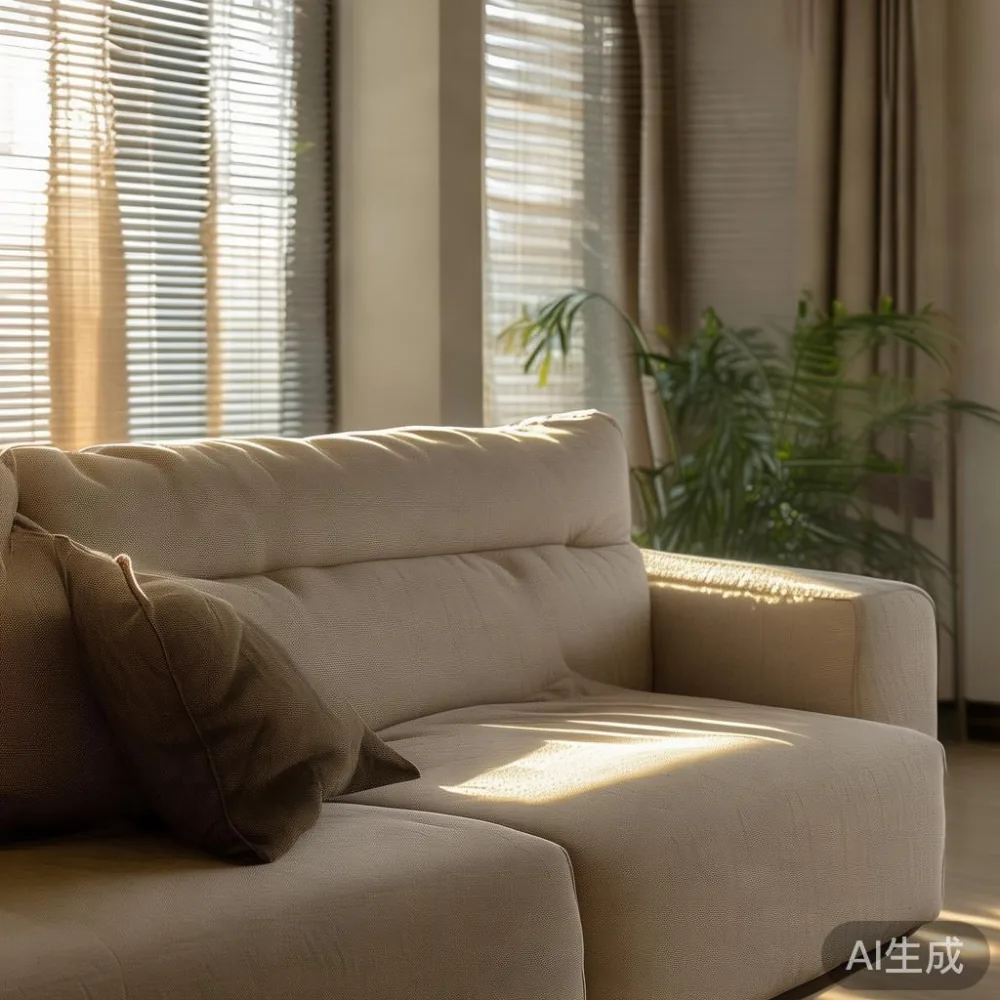
Yes, every part of it, and faster than you think. Polyurethane lacquer has very limited UV inhibitors, and Singapore receives roughly 2,000 sunshine hours a year with a UV index that reads 9 to 13 on most afternoons. A lacquered dining table placed within 1.5 m of an unshaded east-facing window will yellow perceptibly in six to nine months and noticeably in eighteen. The fix is not to avoid windows; it is to filter them. Apply a 3M Night Vision 25 window film (about SGD 38 per square metre installed) to any pane within 2 m of a lacquered piece, or hang a sheer linen curtain that knocks the UV back by roughly 70 percent while keeping the view. Rotate dining chairs 90 degrees once a month so the wear pattern and the UV pattern stay even, and never place a lacquered nightstand directly under a reading lamp; the radiant heat alone can raise the local surface temperature by 8 to 10 degrees Celsius and trigger the same expansion-contraction cycle as a humid morning.
Can small lacquer cracks be repaired locally, or do I have to refinish the whole piece?
Small cracks can absolutely be fixed locally, and the sooner the better, because a 5 mm crack in month three usually becomes a 30 mm crack by month nine. For a hairline check on a solid wood bed frame headboard or a dining table edge, clean the area with a slightly damp microfibre cloth, let it dry for two hours under the air-con, then apply a single thin coat of shellac stick or a 10 ml touch-up lacquer pen (SGD 12 to SGD 22 at any timber specialist in Joo Chiat or Balestier). Let it flash off for ten minutes, level it with 1500-grit wet-and-dry paper lubricated with water, then polish with a soft cloth and a 50 ml tin of paste wax (about SGD 28). For larger areas, or for a piece that has lost its sheen across an entire tabletop, you want a professional to scuff-sand back to 320-grit and respray two to three coats. In Singapore, on-site respray of a four-seater dining table typically costs SGD 240 to SGD 380 depending on finish and access; a workshop respray where they collect and return is SGD 160 to SGD 260 but requires the piece out of your home for four to seven working days. MIDHILL offers lifetime refinishing on its lacquered solid wood range, which means the cost question disappears for owners who plan to keep the piece past year five.
How do lacquered wardrobes and guest rooms cope with infrequent airing?
Wardrobes are the silent victim of tropical humidity because their doors stay shut for days. A lacquered European light luxury for guest room wardrobe with closed doors will trap the humidity of ten overnight breaths, and the interior face of the lacquer will start to blush within months. The cure is simple: open both wardrobe doors for twenty minutes twice a week, ideally during the late morning when the outdoor humidity has dropped past 70 percent. If you are styling a Japanese wardrobe in an apartment setting, leave the sliding panels offset by 5 cm continuously so the interior air is always mixing with the room air. For a Modern light luxury wardrobe with mirrored panels, wipe the mirror edges monthly; the silvering compound used in most mirrored wardrobe doors will de-silver in two to three years if it is in constant contact with a humid lacquer edge.
Quick answers to the questions Singapore buyers ask me every week
How long does lacquer take to fully cure? Two to four weeks for water-based, four to six weeks for solvent-based. Keep coasters off a new dining table for the first month.
Can I place a lacquered dining table on a balcony? Only if it is a covered balcony with a ceiling, no direct rain, and humidity below 75 percent at all times. Otherwise it is asking for trouble.
Is a French sofa or a Modern sofa easier to maintain in lacquered form? Both share the same lacquer chemistry; the difference is the carving. A French sofa vs Modern sofa comparison usually focuses on the cabriole leg and the deeper buttoning on the French silhouette, which collects more dust and needs a softer brush attachment on the vacuum. Neither is harder to maintain if the wood frame is correctly acclimated.
European bed vs Modern bed frame: which holds lacquer better in our climate? A European bed vs Modern bed comparison really comes down to the headboard size and the joinery. Tall upholstered headboards on European silhouettes trap humid breath while you sleep; modern low headboards let air move freely. Pick the silhouette you love and just keep the bedroom humidity between 50 and 60 percent with the air-con.
What about dining tables in open-concept condos? A Modern for dining room layout next to a kitchen is fine as long as your range hood vents externally and you run it every time you cook. Cooking steam carries oil vapour that dulls lacquer within a year; an external-vented hood keeps the air clean.
Finally, the question every Tampines and Punggol buyer asks: should I buy lacquered or oiled? Lacquered wins on stain protection and sheen, oiled wins on repairability and a forgiving feel under hand. In an HDB where humidity swings are sharp, lacquered is the lower-maintenance choice if you can keep the room between 45 and 65 percent RH. Oiled is the better choice if your air-conditioning is inconsistent or you love the matte look.
Putting it into a one-page routine you can actually keep
Monday: two minutes of dusting with a dry microfibre cloth. First Sunday of the month: damp wipe with pH-neutral soap, then dry. Quarterly: rotate chairs, inspect for hairline cracks at the table ends and the wardrobe door panels, and check the hygrometer calibration against a salt-test. Yearly: professional inspection if you own a full dining set or a solid wood bed frame. The total time investment is under thirty minutes a month, the tools cost under SGD 60, and the savings on premature refinishing are easily SGD 600 to SGD 1,200 over a decade. Treat your lacquered solid wood pieces this way and they will outlast two sofa replacements, three air-conditioner upgrades, and at least one round of renovation works in your HDB or condo.