Small Apartment Styling Guide: How a Solid Wood Sofa Guide Changes Everything
If you live in a 65 sqm HDB flat in Bedok or a 48 sqm shoebox unit in Punggol, you already know the daily maths of square centimetres. Every piece of furniture you bring in eats floor area, fights the air-con airflow, and slows down your corridor trips when the lift at Tampines GreenRidges is crowded at 7:45pm. After visiting more than forty compact homes across Singapore over the last three years, I can tell you that the homes that feel calm and spacious are not the ones with the biggest budget. They are the ones where the owner made fewer, better choices. This sofa guide is built around that single idea: pick furniture that earns its footprint, then style the room so nothing visual competes with anything else.
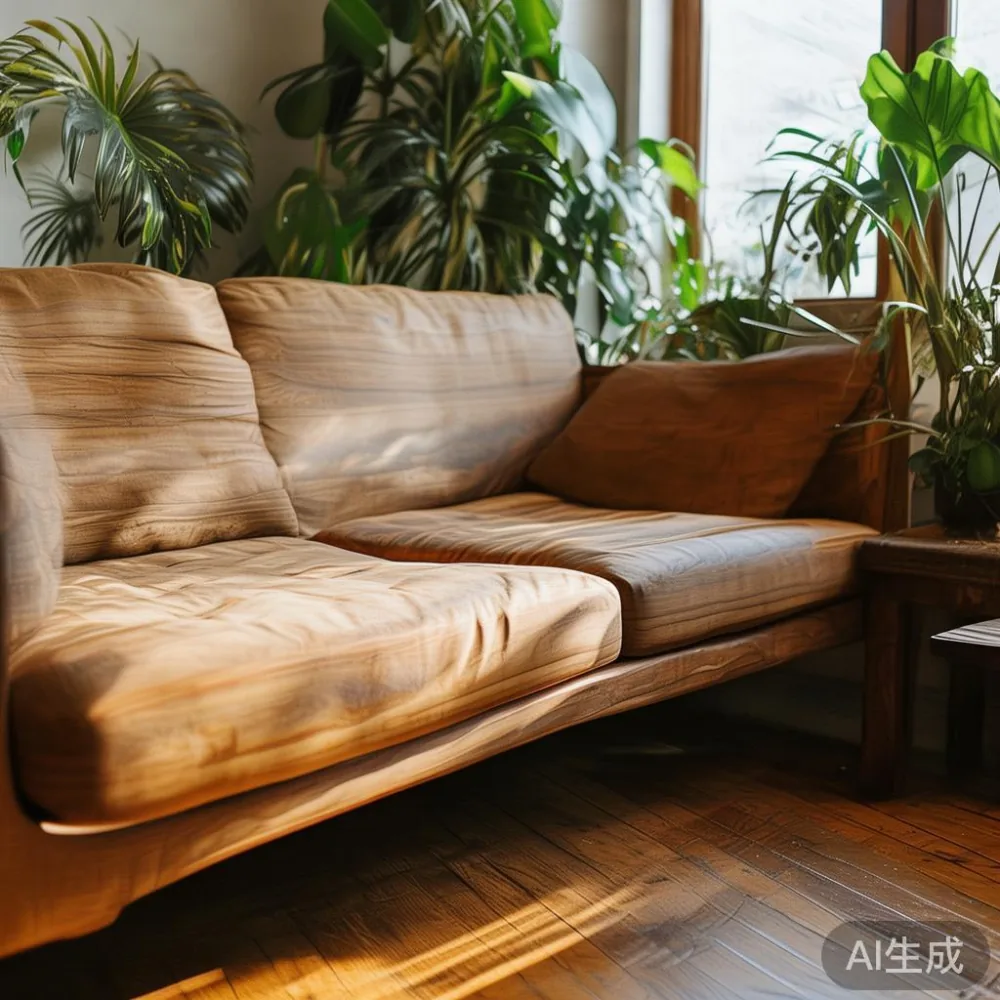
Why a small apartment feels crowded even when it is technically empty
Most Singapore flats under 70 sqm share three pain points. The first is corridor width: HDB common corridors are usually 1.2m to 1.5m wide, and lift doors open to about 0.9m, so any sofa deeper than 95cm becomes a delivery nightmare. The second is ceiling height: typical HDB units sit at 2.6m to 2.8m, which means tall wardrobes over 2.1m start to feel oppressive. The third is light: many BTO flats in Sengkang and Punggol have only one window wall, so heavy timber tones absorb the little daylight you have. A good small-space plan works around these three constraints, not against them.
I tested this last month when my colleague Priya moved into a 56 sqm two-bedder in Punggol. Her old solid wood sofa from a previous place was 2.4m long and 1.05m deep, and the movers actually refused to angle it through the lift because the sofa was wider than the lift car. We had to call a second crew with a lorry-mounted crane for a hoisting job, which added SGD 280 to her bill. A two-seater at 1.7m by 0.85m would have cleared the lift with 10cm to spare on each side. That single change saved her money, stress, and an afternoon.
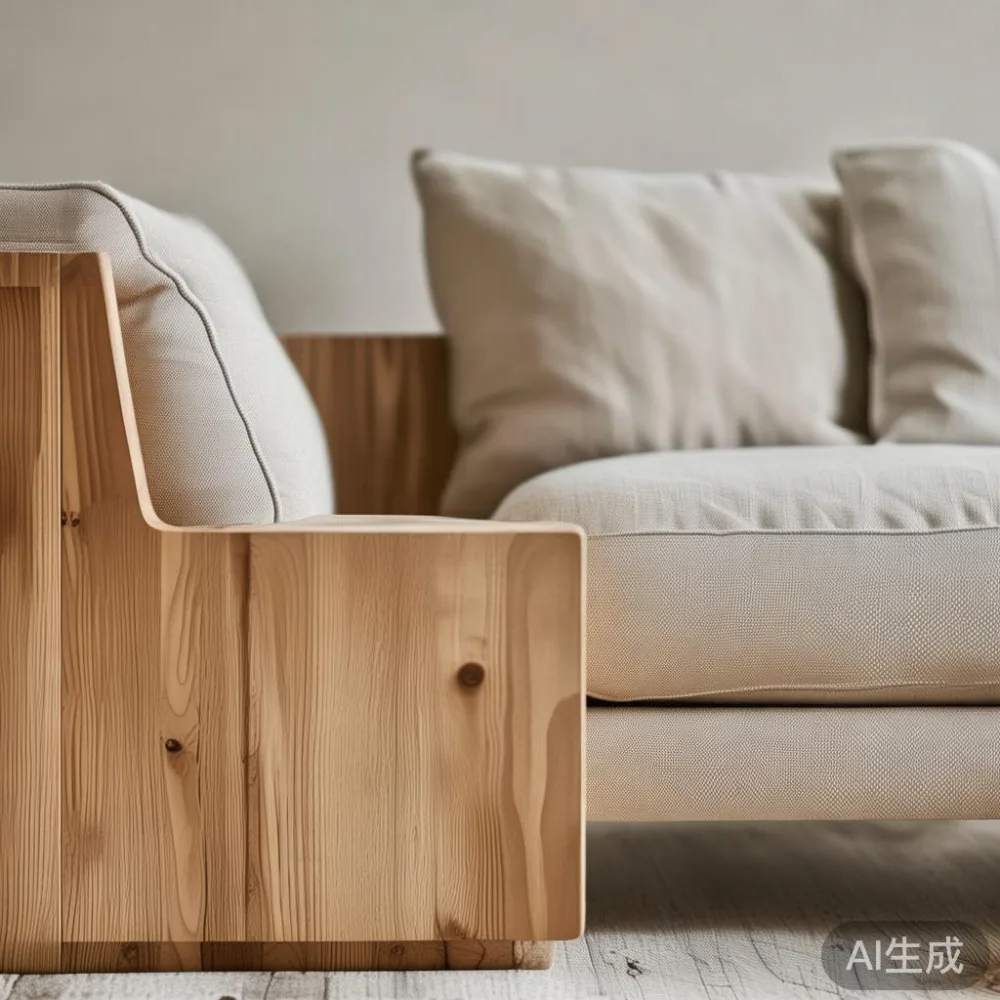
Start with the sofa, not the wall colour
Painters will tell you to choose the wall colour first. In a small apartment, choose the sofa first. The sofa is the largest object in the living area, it dictates the room's visual weight, and it decides what other furniture can survive next to it. If your sofa is a deep chocolate solid wood frame with thick rolled arms and four oversized cushions, every other piece has to shrink to keep up, and your room will start to feel like a furniture showroom rather than a home.
The trick is a low-profile solid wood sofa with a slim silhouette. Look for arm heights under 65cm, seat depths of 55 to 60cm (deep enough for an afternoon nap, shallow enough to walk around), and legs that lift the frame 12 to 15cm off the floor. Visible legs are non-negotiable in a small room. They expose the floor underneath, and the floor line is what your eye reads as space. A skirted base hides the floor and quietly steals another 15cm of perceived room.
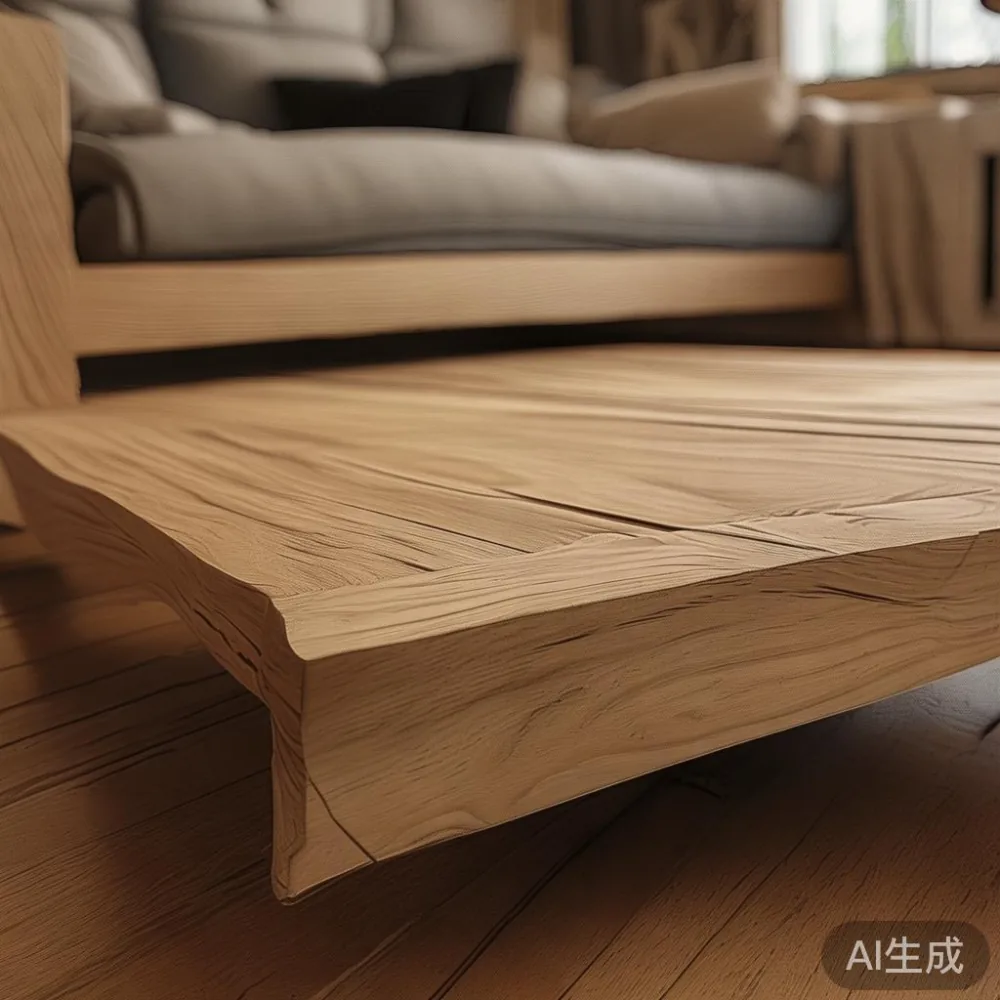
For a light luxury direction, French light luxury leans into curved silhouettes, soft boucle or velvet in oat, taupe, or dusty sage, and tapered wooden legs in natural oak. American light luxury goes broader and lower, with squared cushions, performance fabric in stone grey, and a relaxed coastal feel. Post-modern light luxury is the one I see working best in newer Punggol and Sengkang BTOs: a 1.8m solid wood sofa in walnut or white oak, paired with a slim marble side table and a single brass floor lamp. The mix of materials is what gives it that quiet, designed look without ever feeling busy.
What size dining table actually fits a 4-person HDB?
Square dining tables are the unsung hero of small HDB dining areas. A 90cm by 90cm table seats four comfortably for daily meals and tucks neatly into a corner, leaving the rest of the room breathable. Round tables at 100cm diameter work even better because there is no corner to bruise a hip on, and they soften the rectangular grid that most HDB layouts already have. Rectangular tables should stay under 140cm in length for a four-person setup, or 160cm if you regularly host six.
Pair the table with chairs that have a seat height of 45cm and a back height under 90cm. Anything taller blocks sightlines to the kitchen and makes the room feel shorter. For a 4-person set, expect to budget around SGD 1,800 to SGD 3,200 for a solid wood dining table in ash or rubberwood, plus SGD 480 to SGD 900 for four chairs. Solid wood matters here because the dining table takes the most abuse of any piece in a small flat. A veneer table will delaminate within three to four years under Singapore's humidity, even with daily air-conditioning.
If you want a softer material mix, a round marble table at 90cm pairs with ash wood chairs for a post-modern light luxury reading. Just check the marble weight: a real marble top at 90cm round is around 38 to 45kg, and you want two people to be able to slide it for cleaning. A sintered stone top at the same size weighs 18 to 22kg and behaves better in our climate. If you are researching the best Coastal bed for 2026 to match this dining zone, the same oak tone should run through both rooms to tie the apartment together.
How do I style a small bedroom so the bed does not dominate?
The bed is the elephant. In a 9 sqm HDB bedroom, a queen bed at 152cm by 188cm takes 2.85 sqm of floor, which is roughly a third of the room. You cannot hide it, so you have to frame it well. Start with the bed frame: a solid wood bed frame with a headboard no taller than 110cm keeps the proportions humane. Anything with a 130cm upholstered headboard will press visually against the ceiling and make the room feel like a hotel room that has been compressed.
Then the nightstand question. Most HDB bedrooms can only fit one nightstand, and that is fine. A single solid wood nightstand at 45cm wide by 40cm deep, with one drawer and an open shelf below, gives you a lamp, a phone, and a book without eating the walkway. Skip the matching tallboy on the opposite side and put a slim floor lamp there instead. Floor lamps cost less than a second nightstand, take up no bedside surface, and pull the eye upward.
For wardrobe thinking, a floor-to-ceiling built-in is the standard in newer BTOs, but if yours is freestanding, choose one under 180cm tall and 120cm wide, with sliding doors rather than hinged. Hinged doors need 55 to 60cm of swing clearance, which is roughly half the width of a small bedroom. Sliding doors need 8 to 10cm and a quiet top track. If you are researching the best European wardrobe for 2026, look for models with internal LED strips, soft-close hinges rated to 100,000 cycles, and a carcass depth of 55 to 58cm. Anything deeper steals walking room.
One last bedroom note: many buyers now want a calm, hotel-style look without spending hotel prices, and that is where light luxury styling earns its keep. If you have ever searched how to style light luxury bed in bedroom, the short answer is restraint. One textured throw, two pillows, no more. A fabric headboard in linen, a slim brass reading light, a marble-top nightstand. That is the whole recipe. Anything more and the room starts to whisper "showroom" instead of "home".
What is the simplest way to make a small living room feel bigger?
There is a sequence that works every time, and it has nothing to do with the size of your windows. Step one: keep the largest piece of furniture (the sofa) within 10cm of the same wall length as the wall it sits against, or 30% shorter. A 2m sofa against a 2.3m wall looks intentional; the same sofa against a 4m wall looks lost. Step two: anchor the room with a rug that is large enough that the front legs of the sofa sit on it. In a 3m by 3m living area, a 200cm by 290cm rug does the job. Smaller rugs fragment the floor and shrink the room. Step three: light in three layers. Ceiling, table, floor. Three sources, ideally on separate switches, so you can dim the ceiling to 30% and let the table and floor lamps carry the evening.
Step four: leave one clear wall. A small room with a sofa, a side table, a rug, and one blank wall behind the TV feels 30% larger than the same room with a sofa, a side table, a rug, a bookshelf, a plant, and a floor lamp all competing for the same wall. Negative space is a material. Treat it like one.
Which delivery details actually matter in Singapore?
Most HDB delivery drama is about the last 15 metres. Before you confirm any order, measure the lift door width, the lift car depth, and the corridor turning radius at your block. Standard HDB passenger lifts are around 1.1m wide by 1.4m deep with a door opening of 0.8m to 0.9m. Service lifts are larger but not every block has one. For a 2m solid wood sofa, the lift car is the bottleneck, not the corridor. Some brands will tell you a 2.2m sofa can be delivered, but what they really mean is that two delivery men will carry it up the stairwell if the lift fails. You do not want that bill, which can run SGD 150 to SGD 400 depending on the floor.
For HDB flats above the 7th floor, ask about hoisting. Most solid wood furniture above 30kg per box needs to be hoisted up the outside of the block for safety reasons, and a proper hoisting job costs SGD 200 to SGD 350 per item. If you are buying a 4-piece set (sofa, dining table, bed frame, wardrobe), ask for a bundled hoisting rate. Reputable sellers offer this for free over a certain order value, which is one of the things worth comparing beyond the headline price.
How long should a solid wood sofa actually last in Singapore?
With air-conditioning running 12 to 16 hours a day and humidity kept between 55% and 70%, a kiln-dried solid wood sofa frame should give you 12 to 18 years of daily use. The cushions are the wear part: high-resilience foam at 35 to 40 density will hold shape for 4 to 6 years, and down-wrapped cushions for 3 to 4 years before needing a top-up. Fabric covers in performance weave can be hot-washed at 30 degrees and replaced for around SGD 280 to SGD 450 per seat, which is far cheaper than buying a new sofa every 5 years.
One thing I have learned watching deliveries: the brand matters less than the after-sale. A solid wood sofa with a 10-year structural warranty and a lifetime refinishing service is a much safer bet than a cheaper one with a 1-year warranty, especially for HDB buyers who plan to stay put through one or two renovation cycles. MIDHILL, for example, ships from Foshan with kiln-dried oak and ash frames, offers free shipping on orders above US$350 (roughly SGD 480), and has a 14-day return window. Those terms are useful when you are buying a 1.8m sofa you cannot easily test in a showroom. The same logic applies if you are looking at a dining table or bed frame from the same maker: consistent timber, consistent finishes, and one delivery crew who knows how to handle the whole set.
A short checklist before you click buy
Measure the lift door and the lift car depth, not just your living room. Choose a sofa arm height under 65cm and seat depth around 55 to 60cm. Keep the bed headboard under 110cm tall. Pick a dining table no wider than 90cm if it is round, or 140cm if rectangular, for four people. Use a rug large enough to sit at least the front legs of the sofa. Light the room in three layers on three switches. Leave one clear wall. Ask about hoisting, warranty length, and refinishing terms before you pay. If your shortlist includes a coastal or Japanese inspired dining room, a guest room that needs an industrial edge, or a wardrobe plan that fits a narrow HDB bedroom, the same rules apply: measure twice, keep the silhouette slim, and let the negative space do the work. For more practical references and current specs, the m.midhill.co mobile catalogue is a useful place to compare sofa guide dimensions against your own floor plan before you commit. And if you want to think about the dining zone with a specific tone in mind, the Japanese for dining room aesthetic translates beautifully into Singapore HDB dining areas because both share a love of light wood, low profiles, and a single hero object on the table.