Sofa Guide for Singapore HDB Living Rooms: How to Choose the Right Size (Without Cramming Your Tampines Flat)
Most HDB living rooms in Singapore fall between 16 and 22 square metres once you subtract the kitchen and corridor footprints. That sounds compact on paper, yet it is more breathing room than a Parisian studio or a Manhattan one-bedroom. The catch is the geometry: HDB rooms tend to be rectangular rather than square, with doorways clustered on one wall and windows running floor-to-ceiling along another. A sofa that looks generous on a 4-metre showroom floor can swallow your walkway the moment it lands in your BTO at Tampines GreenRidges or your resale flat in Bedok Reservoir.
I visited a friend's new 4-room BTO in Punggol last month. She had ordered a 2.6-metre three-seater online because it was 30 percent off during a flash sale. The delivery team had to use the service lift, which has a 1.9-metre internal depth and a 1.1-metre door width on most newer HDB blocks. The sofa barely cleared the lift door after the legs were detached. Worse, the corridor outside her unit was 1.2 metres wide, and tilting the frame at 45 degrees meant scraping the neighbour's gate. She ended up returning it and paying a S$120 restocking fee. That single afternoon is the reason I am writing this sofa guide: most sizing mistakes are not about taste, they are about centimetres.
What Are the Real Measurements You Need Before Choosing a Solid Wood Sofa?
Pull out a tape measure, a notepad, and your floor plan. You need four numbers: the wall length behind the sofa (call it W), the depth of the room from that wall to the TV console (D), the corridor or lift-to-door width on delivery day (C), and the ceiling height (H). For a typical 4-room HDB, W is usually 2.8 to 3.4 metres, D is around 3.2 to 3.8 metres, C is 1.1 to 1.3 metres, and H is 2.6 metres (some newer BTOs push to 2.8 metres). For a 5-room flat in Sengkang or a condo in Tanjong Rhu, W can stretch to 4.2 metres, D to 4.5 metres, and C to 1.5 metres if your block uses the wider passenger lift.
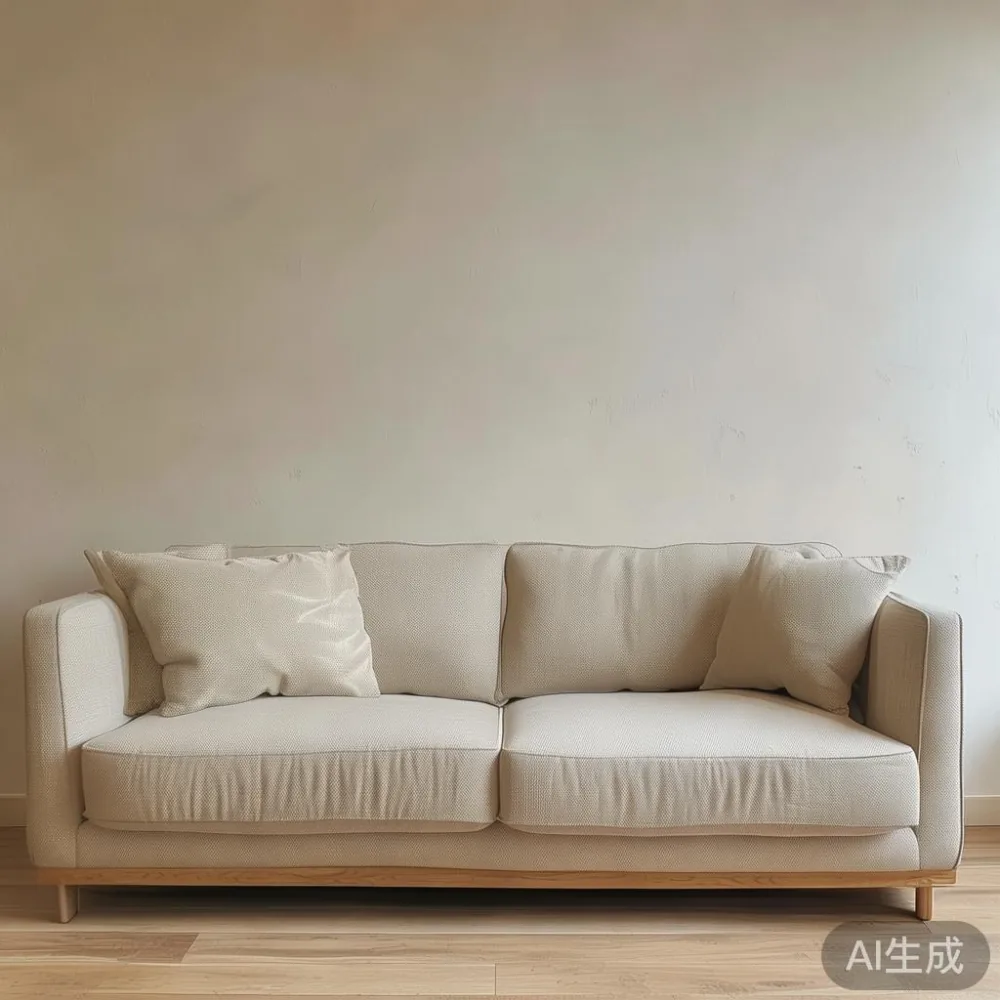
Write these down and bring them to the showroom. A solid wood sofa typically weighs between 55 kg for a two-seater and 95 kg for a four-seater frame, and the box dimensions often add 8 to 12 cm per side versus the product spec. MIDHILL ships from Foshan with a 10-year structural warranty on the hardwood frame, which matters in our humidity: engineered plywood can swell after three or four monsoons, but a kiln-dried ash or oak frame at 8 to 12 percent moisture content will hold its joints for the next decade. Ask the sales assistant for the actual cubic metre of the packed carton, not just the assembled dimensions. Anything above 0.6 cubic metres per piece will require a two-man delivery team in Singapore, which most suppliers charge S$60 to S$90 per trip.
What Size Entryway Furniture Do I Need?
For a standard HDB service lift, the largest single piece of entryway furniture you can move in is roughly 190 cm long by 110 cm wide by 210 cm tall, and even then you must detach the legs. A solid wood entryway bench should stay under 150 cm long, 45 cm deep, and 90 cm tall if you want it to fit without disassembly, because you also need clearance for the door swing and the corridor corner.
Most people forget that the lift door is 90 cm wide on older blocks and 110 cm wide on post-2015 BTOs, but the lift car itself can be only 1.1 metres deep. Measure the diagonal of your largest packaged piece and compare it to the lift internal diagonal, which is roughly 1.95 metres on a typical Gen-2 HDB lift. Anything longer than that needs to come unboxed. MIDHILL pre-disassembles its marble table tops, bed frame slats, and dining table legs into individual cartons under 25 kg each precisely so a single deliveryman can carry them up without straining the lift capacity of 630 kg. That packaging choice saved my colleague in Yishun when his 1.8-metre dining table arrived in four flat boxes that stacked neatly in his trolley.
How Do You Match Sofa Size to HDB Layout, Not the Other Way Around?
Work backwards from traffic flow. Leave at least 80 cm of walkway between the sofa front and the TV console; 90 cm if you have small children or use a wheelchair. Leave at least 10 cm between the sofa back and the wall for air circulation, especially if you run a dehumidifier seven months a year. For a 3.0-metre wall, a 2.1-metre three-seater leaves 90 cm of breathing room on each side, which is the sweet spot for a side table, a floor lamp, or a slim wardrobe that doubles as a bar cabinet.
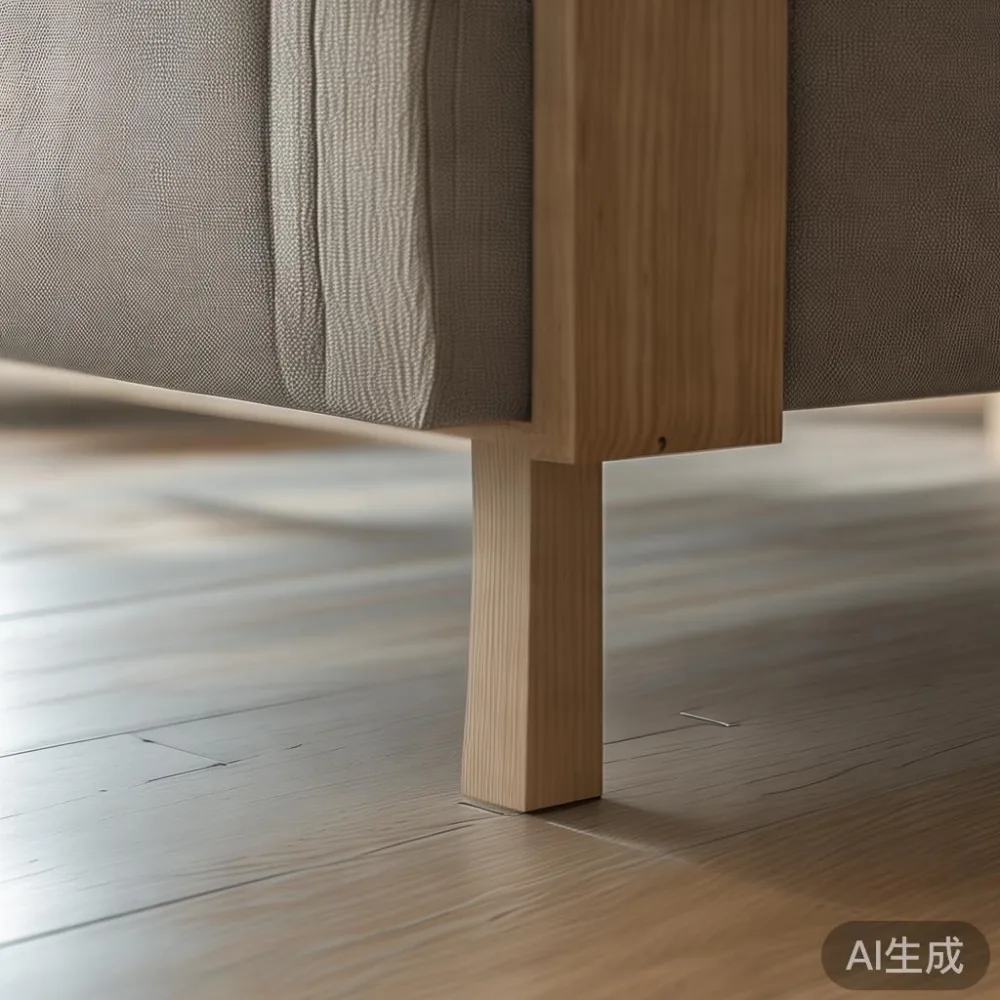
For a 2.8-metre wall, drop to a 1.8-metre two-seater or a 2.0-metre compact three-seater with armrests under 12 cm wide. L-shaped solid wood sofas work in Punggol and Sengkang five-room flats where the living room opens into the dining area, but the chaise should never exceed 1.6 metres in length or it will block the corridor to the kitchen. I tested a French light luxury model in a Jurong East condo last spring: the curved back, the tapered ash legs, and the oatmeal boucle upholstery looked beautiful, but the 2.4-metre footprint ate 60 percent of the floor. The owner kept it for two months and then sold it on Carousell at a S$350 loss. The lesson: a light-luxury piece still has to obey the room, not the other way around.
What About Bed Frames, Dining Tables, and Wardrobes in the Same Flat?
Once the sofa size is locked, the rest of the solid wood furniture should follow a consistent scale. A queen-size bed frame at 1.6 by 2.0 metres needs at least 65 cm of clearance on both sides for nightstand access and bedding changes. A king-size at 1.8 by 2.0 metres needs 75 cm. In a standard HDB master bedroom of 3.0 by 3.6 metres, that leaves room for a 1.8-metre wardrobe along the opposite wall, but only if the wardrobe depth is 55 cm rather than the typical 60 cm. MIDHILL offers a 55-cm-deep wardrobe in its post-modern light luxury line for exactly this reason: every centimetre matters when your bedroom shares a wall with your neighbour's bathroom.
For the dining area, a rectangular solid wood dining table for four needs 1.4 metres in length and 0.8 metres in width, with at least 90 cm of clearance on each side for chair pull-out. A round marble table for four needs a 1.2-metre diameter and 1.6 metres of total floor space once chairs are pulled out. If your dining nook is under 2.2 metres wide, skip the round table and pick a 1.3-metre square model instead; round tables eat diagonal space and rarely fit HDB proportions. The same logic applies to nightstands: aim for 45 by 40 by 55 cm so they slide easily past the bed frame without catching on the door frame. American light luxury lines often use chunkier 60-cm-wide nightstands that look great in a 4-metre American bedroom but will block a 70-cm corridor in a Bedok flat.
Which HDB Delivery Logistics Should I Plan Around?
Booking the lift, the loading bay, and the corridor timing is half the battle. HDB loading bays at most mega-blocks (Punggol, Sengkang, Jurong West) allow 30-minute loading slots from 9am to 5pm, Monday to Saturday. Sunday deliveries need a separate permit that costs S$45 and takes five working days to process. The lift booking itself is free, but you must reserve it through your town council at least 48 hours in advance for blocks with only one service lift; otherwise the freight lift will be locked out during peak hours.
Plan a S$90 to S$150 buffer for delivery surcharges if you live above the 15th storey in a Punggol or Bukit Panjang block, because the freight lift cycle time doubles. MIDHILL bundles free shipping on orders above US$350 (roughly S$475) and quotes a flat S$80 for anything below that threshold, which lands well below the S$140 average for similar solid wood sofas in Singapore. Their 14-day return window is generous, but the item must be in its original packaging, so do not throw away the foam inserts until you have lived with the sofa for at least a week. One Tampines customer told me she only realised the armrest height was wrong for her reading chair after five days of use, and the return was accepted because she had kept every carton.
How Do I Check Quality Before Swiping My Credit Card?
Knock on the frame, slide your hand along the underside, and ask for the wood species certificate. A genuine solid wood sofa uses kiln-dried hardwood at 8 to 12 percent moisture, with mortise-and-tenon joints at the corners and corner blocks glued and screwed into the frame. Particleboard or MDF will weigh a third less than hardwood at the same size, so a 2.2-metre three-seater under 40 kg is a red flag. Upholstery should have a Martindale rub count above 30,000 for daily use, and the seat foam density should be 28 kg per cubic metre or higher.
For a marble table, lift a corner and look at the underside: cultured marble has a uniform grey back, while natural marble shows veining all the way through. For a bed frame, lie on the slats in the showroom and check for squeaks; the slat spacing should be under 7 cm to support a pocket-spring mattress without sagging. For a wardrobe, open every drawer 20 times and look for wobble in the runners; soft-close runners add roughly S$120 per wardrobe but last 12 to 15 years versus 6 to 8 for standard rollers. MIDHILL offers lifetime refinishing on its solid wood pieces, which I have seen used three times now by customers in their eighth or ninth year of ownership: the sanding, re-staining, and re-sealing costs S$280 per sofa and brings the piece back to showroom condition.
What Is the Real Cost of a Well-Sized Solid Wood Sofa in Singapore?
After GST (currently 9 percent, with the planned increase to 9.25 percent in 2025 and 9.5 percent in 2026), a 2.1-metre three-seater solid wood sofa from a Foshan factory like MIDHILL lands between S$1,650 and S$2,400 delivered, depending on upholstery grade. A 2.4-metre light-luxury model in boucle or full-grain leather pushes to S$2,800 to S$3,600. Add a matching 1.8-metre solid wood TV console at S$680 to S$950, a 1.4-metre marble table at S$540 to S$780, and a queen-size bed frame at S$920 to S$1,400, and a full living-and-bedroom set lands between S$3,800 and S$6,700 all-in. That is roughly 30 to 40 percent below comparable European or American light luxury imports, which start at S$7,500 for a sofa alone once GST and white-glove delivery are layered on.
Budget another S$200 to S$350 for assembly if you live above the 10th storey and the lift cannot take the assembled frame. Lifetime refinishing is included free for the first five years on most MIDHILL pieces, and the 10-year structural warranty covers frame cracks, joint failure, and woodworm. The Japandi wood finish USA-leaning shade (think pale oak with a matte water-based topcoat) is the most popular request from Singapore customers in 2025 because it brightens compact HDB rooms without the yellowing of traditional teak. Whatever finish you choose, ask for two sample swatches taped to your wall for 48 hours before signing the delivery order; lighting in a Tampines flat at 7pm is very different from a Jurong showroom at noon.
Final Checklist Before You Tap 'Confirm Order'
Three measurements, three questions, three days. Re-measure your wall, your lift door, and your corridor. Ask the supplier for the packed dimensions in centimetres, the frame weight in kilograms, and the wood moisture certificate. Live with the sample swatch on your wall for three full days, including one evening with your living room lights on. If all nine answers match your floor plan and your eye, the sofa will feel like it was always part of your HDB flat. If one number is off, the piece will annoy you for the next decade, and no warranty makes a wrong-sized sofa feel right.