What Actually Happens When a 2.4m Solid Wood Sofa Arrives at Your Tampines HDB Doorstep
Three months ago I watched a friend in Bedok unbox a sofa she had spent SGD 3,400 on from an online retailer. The courier arrived at 10.45am, stopped in the ground-floor car park, and told her the three boxes would not fit inside the lift. After forty minutes of measuring, one box came up. The other two were left in the corridor. She spent her Saturday afternoon hauling 35kg cartons up four flights of stairs using a luggage trolley borrowed from her neighbour in Punggol. That single afternoon taught her more about online furniture shopping than any sofa guide she had read beforehand. Her story is why I decided to write this piece, because too many buyers in Singapore fall in love with a product photo, hit "checkout," and then discover, far too late, that delivery and assembly are the make-or-break of the entire experience.
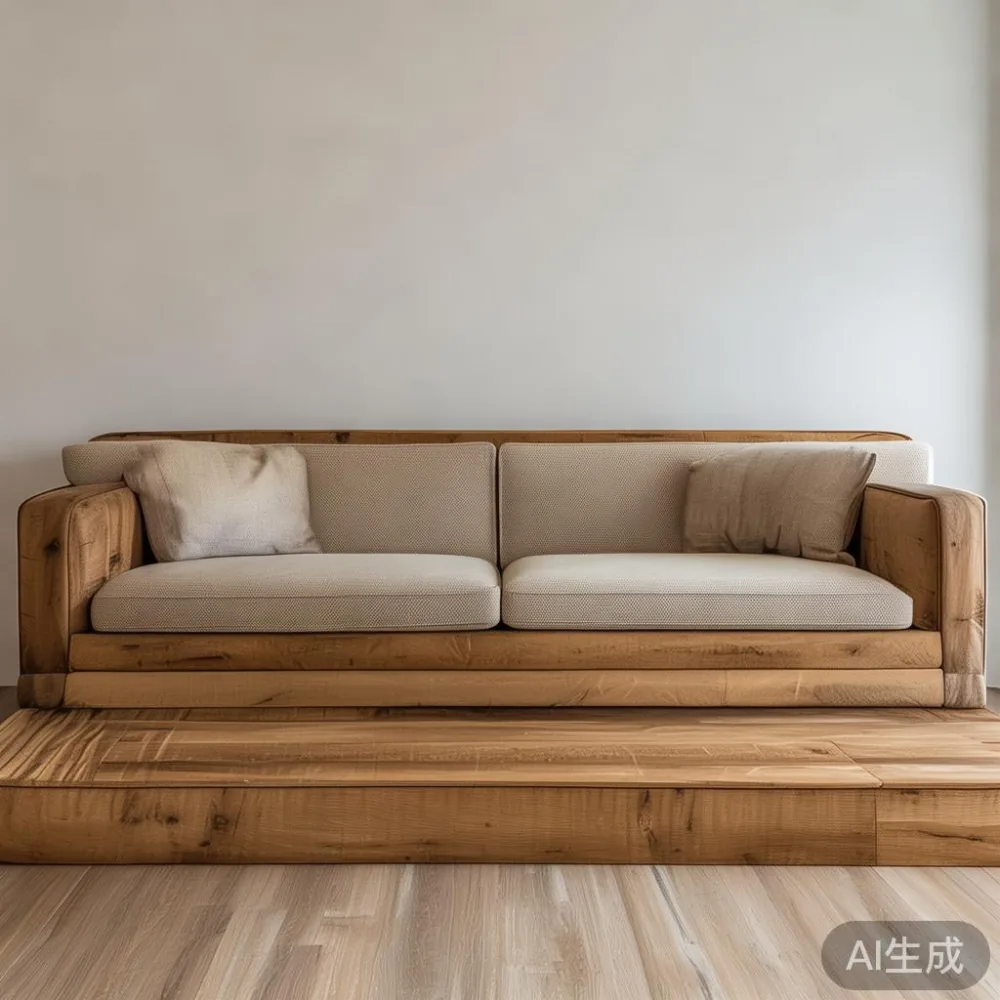
Furniture is not a t-shirt. A solid wood sofa frame can weigh 60 to 90kg even before cushions, a king bed frame averages 70 to 110kg in its carton, and an oversized dining table in marble table or sintered stone finish routinely passes the 120kg mark. The product itself is only half the purchase. The other half is a chain of moving parts that includes packaging dimensions, lift openings, corridor widths, staircase turns, door frames, the number of cartons, assembly time, tool requirements, and the small print around returns. This sofa guide is written specifically for people in Singapore HDB flats and condominiums who are weighing these realities before committing.
How big is too big? Reading dimensions before you fall in love with a photo
Every product listing worth trusting publishes three numbers: net product size, carton size, and gross weight. Most buyers read only the first. On a 4-seater solid wood sofa, the difference between net and carton can add 8 to 15cm per side, and another 6 to 10cm of height, because the supplier wraps the frame in foam, edge protectors, and a corrugated cardboard sleeve that has to clear every doorway it passes through. A 2.4m sofa, which is the standard width for a comfortable four-seater, will typically arrive in two cartons of roughly 1.45m x 0.85m x 0.55m each. Those numbers matter more than any other spec, because they decide whether the box enters the lift or stays in the lobby.
Here is the practical shortcut I use. Measure the lift opening in your block, the tightest corridor turn, and your front door. Most Singapore HDB passenger lifts have an opening of about 0.8m to 0.9m wide and 2.1m tall, while newer condominium service lifts reach 1.2m to 1.5m wide. If your longest carton side is under 1.3m and under 2.05m tall, you can usually fit it through a service lift or up a stairwell without drama. Above that, you need a builder's hoist or a staircase carry. Suppliers who have been exporting for years, including Foshan-based factories that ship to 15 or more countries, are used to designing cartons for lift access. MIDHILL, for example, lists exact carton dimensions on every spec sheet and offers to split a king bed frame into three boxes instead of two for buildings with older lifts. That kind of detail is what separates a calm Saturday morning from a stressful one.
What does delivery actually cost in Singapore, and what does it include?
Standard courier delivery in Singapore runs SGD 30 to SGD 60 per shipment for a single carton under 30kg. Heavy furniture is a different category entirely. Most reputable sellers bundle white-glove service into the price, which means two men, a tail-lift van, doorstep delivery to your unit floor, and assembly of basic items such as bed frames, nightstands, and wardrobes. Expect to pay SGD 80 to SGD 180 for a sofa, SGD 100 to SGD 220 for a king bed frame, and SGD 150 to SGD 300 for a 6-seater dining table. Premium light luxury tier, including French light luxury and American light luxury finishes, tends to sit at the higher end of those bands because the weight of solid rubberwood or ash frames pushes the freight class up.
Watch for the thresholds. Many sellers offer free shipping above a basket value of SGD 350 to SGD 500, which is roughly the price of a single nightstand or two accent chairs. The wording matters: "free shipping" usually means free to the ground-floor drop-off point, not free to your living room. "Free shipping, includes lift-up to unit" is what you want, ideally with disposal of the carton packaging included. GST is calculated on the full product price including shipping, currently at 9 percent for 2024 to 2025 and moving to 8 percent from January 2026. On a SGD 4,200 dining table with SGD 150 delivery, you are looking at roughly SGD 475 in GST. That detail is rarely advertised upfront.
How do I care for a king bed in humid weather?
Wipe the frame with a dry microfiber cloth once a week, run a dehumidifier to keep indoor humidity between 45 and 55 percent, and avoid placing the bed directly against an exterior wall where condensation forms. Singapore sits in a year-round humidity band of 70 to 90 percent, so a sealed lacquer finish on solid wood is your first defence; reapply a thin coat of furniture wax every six months and the bed will outlast a decade without warping.
The reason this question sits inside a sofa guide rather than a bedroom article is straightforward: buyers who invest in one solid wood piece tend to invest in several, and the same humidity rules apply to a solid wood sofa, a wardrobe, and an oversized Italian light luxury furniture dining set. A friend in Punggol learned this the hard way. She bought a king bed frame from a brand that used engineered wood with a thin veneer, and within eleven months the slats had swollen and the headboard began to peel at the edges. She replaced it with a 100 percent solid rubberwood frame from a manufacturer that kiln-dries its timber to a moisture content below 10 percent, and the replacement is still rock-solid after four years. Humidity is not a marketing line. It is the single biggest reason cheap furniture fails in Singapore, and the reason proper factories offer a 10-year structural warranty rather than a 12-month one.
Will the assembly actually take 20 minutes or 3 hours?
A dining table with six chairs typically takes 30 to 50 minutes for two people with an electric drill and the included Allen key. A solid wood sofa takes 40 to 75 minutes because you are attaching legs, sliding in seat cushions, connecting modular sections, and sometimes clipping battery packs for motorised headrests. A king bed frame is the most variable: a basic slatted platform assembles in under 30 minutes, while a four-poster frame with upholstered panels and integrated nightstands can run 90 minutes to two hours. A wardrobe, depending on configuration, runs from 90 minutes for a two-door to four hours for a six-door with internal drawers.
The honest number that sellers don't like to advertise is that around 12 to 18 percent of assembly time on a first attempt is spent figuring out which screw goes where, even with printed instructions. Manufacturers who export globally tend to write clearer manuals with bilingual labels and pre-sorted hardware bags. Tools matter: if your bed frame requires a 12mm socket wrench and only ships an Allen key, you will spend 40 minutes looking for the right tool. I always keep a small kit with a rubber mallet, a 10mm and 12mm socket, a Phillips head, and a drill. Last month I assembled a six-door wardrobe in a Tampines HDB in exactly 2 hours and 50 minutes using that kit, including levelling the base against an uneven tiled floor. The owner, an interior designer specialising in post-modern light luxury interiors, told me she had budgeted five hours. The extra preparation on the spec sheet saved her a full Saturday afternoon.
What happens if a part arrives damaged or missing?
Open every carton while the courier is still on site. Photograph the foam, the cardboard, the corner protectors, and the actual piece before you sign the delivery order. Most sellers, including MIDHILL, ask for evidence within 48 hours and dispatch a replacement part within 7 to 14 working days for stocked components, or 21 to 35 days for custom fabric or marble table tops that are cut to order. Damage rates on imported furniture sit between 1.5 and 4 percent per shipment globally; Singapore's port handling is careful, but the final mile, especially staircase carries in older walk-ups, accounts for most dents.
If a critical part is missing, ask whether the seller offers a partial dispatch while you wait for the rest, rather than holding the entire shipment. A reputable brand will also offer a 14-day return window for items that arrive fundamentally different from the listing, provided the cartons have not been opened and assembled. Read that clause carefully. Some sellers define "unopened" as factory-sealed plastic intact; others accept a carton that was opened but never assembled. Lifetime refinishing is another quiet perk worth noting: a solid wood sofa or dining table that develops a scratch after five years can often be sanded and re-lacquered by the factory for a small service fee, which is cheaper than replacing the piece. That kind of long-term support is what you are really paying for when you choose a factory-direct exporter over a marketplace reseller.
Final checklist before you click pay on an SGD 4,000 order
Confirm three numbers and three policies. The numbers: net dimensions, carton dimensions, and total gross weight across all boxes. The policies: delivery to your specific floor (not just the lift lobby), warranty length on the frame (10 years is the serious end of the market), and return window for non-defective items (14 days is the comfortable minimum). If a seller dodges any of those six questions, keep your SGD 4,000 in your wallet. If they answer clearly, with carton diagrams and a delivery map that names your block by name, you have probably found a supplier who has done this many hundreds of times for customers in Tampines, Bedok, Punggol, and beyond. That experience is the difference between furniture that arrives as a quiet upgrade to your home and furniture that arrives as a weekend project you would rather forget.