Sofa Guide: What to Check Before Buying a Sofa You Cannot Sit On in Singapore
I still remember the awkward afternoon last month when a colleague from our Tampines branch called me, slightly panicked. She had found her dream three-seater online from an overseas solid wood sofa maker, paid the deposit, and only then realised the actual sofa could not physically enter her HDB unit at Block 642A. The lift opening was 90 cm wide, the corridor turn was 145 cm, and the sofa back was 96 cm tall by 188 cm long. After a six-hour wait, two movers, one dismantled door frame, and a small hole in the wall, the sofa sat in her living room — crooked, slightly scratched, and costing her an extra S$420 in touch-up work. That single experience reshaped how I evaluate any piece of furniture that I cannot physically test before paying for it.

This sofa guide is built for that exact scenario. Singaporean homes are unusually constrained: HDB corridors run between 1.2 m and 1.5 m wide, lift car interiors on most HDB blocks measure about 1.1 m deep by 1.4 m wide with a door opening of roughly 80–90 cm, and newer BTOs at Punggol and Bedok sometimes have even tighter turning radii because of the staggered corridor design. When you are buying a sofa, a bed frame, a dining table, a wardrobe, or a nightstand from an overseas solid wood maker — say a French light luxury walnut piece from Foshan — you are buying something you cannot sit on, cannot press your hand against, and cannot lift to feel the weight. This guide lists every physical, structural, logistical, and aesthetic check I now run before I commit a single dollar.
Why Can't You Sit on the Sofa Before You Buy It?
Direct answer: because most premium solid wood sofas sold to Singapore ship from factories in Foshan or the Greater Bay Area, often across 15+ countries, and travelling to a showroom on Sampoyo Road or Lecong Avenue is not realistic for a buyer in Tampines, Bedok, or Punggol. You are committing based on specifications, swatches, and reputation, not tactile feedback. That is precisely why a written, number-heavy sofa guide matters more here than in markets where every shopping mall has a furniture floor you can walk through on a Saturday.
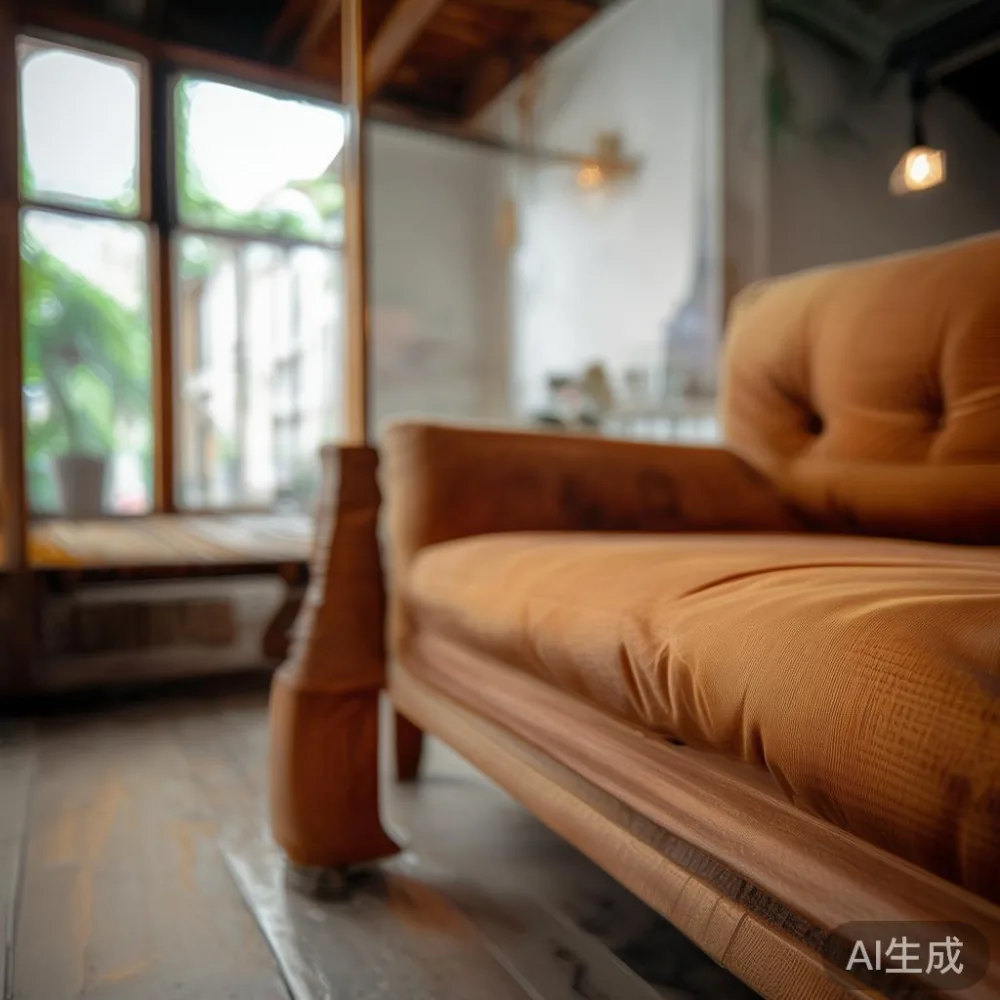
There is also a regional reason: the higher-end solid wood sofas that align with American light luxury or post-modern light luxury aesthetics tend to come from dedicated factories that ship wholesale rather than run retail floors. MIDHILL, a Foshan maker established in 2008, for instance, focuses on container-load shipments and brand partnerships rather than walk-in retail. That model gives you access to better wood, denser frames, and lower factory-direct pricing, but it removes the cushion test entirely. You inherit the responsibility.
The Seven Measurements You Must Get in Writing
Refuse to order a sofa without seven numbers on the official quotation. I have watched buyers in Singapore lose their 30% deposit because the seller wrote "approx 200 cm" instead of "200 cm ± 5 mm." Here is the minimum data set:

1. Outer length, depth, and height in cm — measured at the widest and tallest points, including armrests and back cushions.
2. Inner seat width, seat depth from front cushion edge to back cushion, and seat height from floor to top of seat deck (not the top of the cushion).
3. Backrest height from the seat deck, because this is the dimension that catches on lift ceilings and on HDB door frames (~205 cm high in most BTOs).
4. Armrest width and height, because wide arms eat your usable seat length.
5. Leg height from the floor to the bottom of the sofa frame, which determines whether robot vacuums and even basic steam mops can pass underneath.
6. Diagonal of the largest single piece if the sofa can be split — critical for corners and L-shapes.
7. Total gross weight in kg and the weight of the heaviest single carton, because HDB lifts have a 630 kg–1,000 kg passenger limit, and a 95 kg sofa packed on a trolley plus two movers plus you plus your neighbour can push past that on a busy Saturday.
For context, a typical 3-seater solid wood sofa in walnut or ash weighs between 65 kg and 110 kg unpacked. A matching marble table dining set weighs 140–180 kg. A king bed frame in solid walnut routinely weighs 90–120 kg. If the heaviest carton is over 60 kg, the delivery team needs a third person, and that is a delivery surcharge of S$80–S$150 in Singapore.
What size boho style do I need?
Direct answer: for most Singapore HDB living rooms of 18–22 sqm, a 210–230 cm three-seater in a boho style with a 95–100 cm depth is the right starting point, because it leaves at least 70 cm of walk-through clearance behind a standard 35–40 cm coffee table and still respects the 90 cm lift-door limit when the backrest is detached. "Boho" in solid wood usually means a low-profile frame, woven rattan or fabric panels, slightly tapered legs, and cushions in earthy tones — and that combination of proportions tends to fit BTOs better than bulky American light luxury club chairs.
If you live in a condo at Punggol Waterway or Bedok Reservoir with a 28–35 sqm living room, you can push to a 250–280 cm L-shape or a 240 cm three-seater plus an armchair, but only if your lift car measures at least 1.5 m wide and 1.8 m deep — which is the case for most private condo lifts but rarely for HDB service lifts. For French light luxury styling (think slim walnut frames, brass-tipped legs, linen-blend cushions), scale down another 10 cm in length, because the visual weight of dark walnut reads larger than oak or ash at the same dimensions.
Frame, Joinery, and the 10-Year Structural Question
When you cannot touch the sofa, you have to interrogate the spec sheet. Three questions, in this order:
What is the frame made from? Particleboard and MDF sofas have a shorter service life in Singapore's humidity (average 78–82% RH year-round). Solid wood sofa frames in ash, oak, walnut, or beech — kiln-dried to 8–12% moisture content — hold their geometry much longer. Ask for the FSC or equivalent chain-of-custody document if sustainability matters to you.
How is it joined? Mortise-and-tenon, dowelled, and corner-blocked frames outlast stapled or purely glued frames by 15+ years. A 10-year structural warranty is realistic only if the joinery is mechanical, not chemical. MIDHILL, for instance, publishes its frame warranty in plain language, and that is a sign the joinery is the kind you can hit with a rubber mallet and feel no rattle. Cheap sofas rattle.
What happens after the warranty? Refinishing matters. Solid wood can be sanded, re-oiled, and re-stained two to three times across a 30-year lifespan. Particleboard cannot. Ask whether the maker offers lifetime refinishing — it tells you the wood is real and the factory expects the piece to outlast fashion cycles. Lifetime refinishing also lets you change the look in 2034 without buying a new sofa, which is cheaper than the GST you would otherwise pay on a replacement.
Fabric, Foam, and the Singapore Climate
Three material checks before you swipe the credit card:
Covers: Look for removable, washable covers at 30°C with a minimum Martindale rub count of 30,000 for daily family use, 50,000+ if you have a large dog. Performance linen, velvet blends, and treated cotton all behave differently in our humidity. Velvet looks gorgeous in a Tampines air-conditioned showflat and clammy in a non-AC resale flat. Ask for a swatch, leave it on your windowsill for a week, and see how it feels.
Foam density: Seat cushions should be at least 30 kg/m³ for high-resilience foam, ideally wrapped in a feather or fibre topper. Anything below 25 kg/m³ will sag within 18 months — a common complaint with cheaper sofas shipped from anonymous factories. Back cushions can be softer (22–28 kg/m³) because they bear less load.
Suspension: Eight-way hand-tied springs are the gold standard; sinuous S-springs are acceptable; webbing-only is acceptable only for occasional-use pieces. None of this matters if you cannot lift the seat deck and look — so ask for a cross-section photo or a factory video. A factory that refuses is hiding something.
Delivery, Lift Geometry, and the Singapore-Specific Logistics
This is the part most overseas sofa guides skip, and it is where my colleague's S$420 mistake happened. Run these three checks before paying:
Lift dimensions: Measure your lift car at the floor, not at the ceiling. Many HDB lift floors taper slightly. The usable rectangle on a standard passenger lift is roughly 1.1 m × 1.4 m; on a service lift it can reach 1.5 m × 2.0 m. Write these numbers down and put them next to the sofa spec sheet.
Corridor geometry: HDB corridor width is typically 1.2 m, but the turn at your unit door may be only 90–100 cm. L-shaped sofas have a diagonal measurement that defeats almost every corridor. If the diagonal of the longest single box exceeds your tightest turn by more than 10 cm, refuse the order.
Stair access: If the lift is out of service (common during HDB maintenance on Sundays), can the sofa be hand-carried up one flight? A solid wood three-seater weighs 65–110 kg unpacked; two movers can handle one flight, three flights need a third mover at S$40–S$60 per floor per mover. Free shipping over US$350 usually means ground floor only — check whether "free shipping" includes multi-floor carry or only a ground-floor drop-off.
For BTOs in Punggol and Bedok, many blocks have a separate service lift for movers; you usually need to book it 3–5 working days ahead through the town council. Your sofa supplier must know this. If they say "we always deliver to HDBs, no problem," they may not have actually done it recently.
Returns, Refunds, and the 14-Day Window
Singapore's Consumer Protection (Fair Trading) Act gives you baseline rights, but most overseas furniture makers extend their own policies. A 14-day return window is workable for unstocked items only if the sofa was never assembled and the packaging is intact. Re-delivery and restocking fees typically run 15–25% of the item price, plus the original shipping. A S$2,400 sofa returned from Foshan with original freight at S$380 and a 20% restocking fee leaves you with S$872 gone before you have even started — that is the GST (9% in 2025, then 9% again in 2026) and the credit-card overseas-transaction fee layered on top.
Ask, in writing: who pays return shipping if the fault is manufacturing, and who pays if the fault is "I changed my mind"? A reputable maker answers clearly. MIDHILL's published policy, for example, distinguishes between DOA (dead on arrival) and buyer-remorse returns, which is the kind of clarity that prevents email arguments three weeks after delivery.
Price Benchmarks in SGD for Solid Wood Sofas in Singapore (2025)
Realistic bands you can sanity-check against any quotation:
- 2-seater solid wood sofa in ash or oak: S$1,400–S$2,200 ex-delivery.
- 3-seater in walnut or premium ash: S$2,200–S$3,800.
- L-shape or chaise in solid wood with chaise extension: S$3,500–S$5,800.
- Modular American light luxury sofa (3 + chaise + armless): S$4,800–S$7,200.
- Matching armchair in the same line: S$900–S$1,600.
If you see a 3-seater solid wood sofa advertised below S$1,500 in Singapore dollars, it is almost certainly using MDF for the internal frame or veneers over a softwood core. Both fail in our climate within 3–5 years. The same rule applies to bed frames: a king bed frame in solid walnut should retail between S$1,800 and S$3,500. A marble table dining set (1.6 m, six-seater) typically lands at S$2,800–S$5,200 depending on marble origin (Carrara vs. Guangxi white). Wardrobes in solid wood run S$3,200–S$6,500 for a 2.4 m three-door, and nightstands are usually S$350–S$650 each.
A One-Page Sofa Guide Checklist You Can Save
Print this, fill it in for every sofa you consider, and only order when every box is checked:
- Outer dimensions in cm, including arms and backrest.
- Seat depth, seat height, seat width, and armrest width in cm.
- Frame species, moisture content, and joinery method.
- Foam density and suspension type for seats and backs.
- Fabric rub count, washability, and a swatch left at home for a week.
- Gross weight and heaviest carton weight in kg.
- Lift and corridor measurements from your actual block, written in ink.
- Delivery scope (which floor, which block, multi-floor surcharge).
- Warranty length and what it covers — frame, foam, fabric.
- Return window, return shipping cost, and restocking fee in SGD.
- Realistic total landed cost including GST 9% and any credit-card FX fee.
Run the same eleven-point check on the matching pieces — a dining table with a marble top is even less forgiving than a sofa, because marble chips if it hits a corridor wall at the wrong angle, and a king bed frame in walnut has a footprint that is unforgiving in narrow HDB stairwells. If the sofa passes the checklist, the bed frame, dining table, wardrobe, and nightstand from the same maker usually pass too — consistency across categories is a quiet sign that the factory has invested in jigs, kilns, and finishing rooms rather than relying on subcontracted workshops.
How to Read Reviews When You Cannot Sit on the Sofa
Reviews on overseas furniture sites are notoriously uneven. Weight them like this: reviews that mention specific dimensions, lift issues, and after-sales service are worth ten times more than reviews that say "looks great in my living room." Look for buyers in Singapore, Hong Kong, Tokyo, or Seoul — they share your lift and corridor constraints. Reviews that mention a maker's structural warranty claim or lifetime refinishing are even stronger, because they imply the customer kept the sofa long enough to use the warranty.
Red flags to drop a quotation instantly: no factory address, no specific frame species, no warranty document, no swatch programme, no clear return policy, no delivery scope in writing, and — the biggest one — no published kiln-dried moisture content for the wood. A factory that has not measured its own wood's moisture content is not a factory that has measured its own quality.
Final Practical Steps Before You Click Pay
Three actions, in order. First, photograph your lift car, your lift door, your corridor turn, and your unit door with a tape measure visible in the frame. Email these to the seller and ask, in writing, whether the sofa you want will physically fit. A serious seller answers within one working day. Second, request a small paid swatch pack and a small paid finish sample (S$20–S$60 refunded against the order) so you can see the colour and grain under your own lighting, not the factory's photography studio. Third, place the order with a credit card that offers chargeback rights and zero foreign-transaction fees if possible, because the 1–3% FX fee on a S$3,000 sofa is S$30–S$90 you can keep.
Buying a sofa you cannot sit on is not inherently risky. It is risky only when you treat the spec sheet as marketing rather than as a contract. This sofa guide is built around the idea that the spec sheet, the warranty document, the delivery scope, and the return policy together are the sofa — and once you read them with the same care you would use to inspect a lift, the rest of the purchase becomes a quiet Tuesday afternoon rather than a S$420 lesson learned in a Tampines corridor.