What to Check Before Buying a Sofa You Cannot Sit On: A Singapore Sofa Guide
Buying a sofa online from a Foshan manufacturer is a strange exercise in trust. You see a render, you read a spec sheet, you swipe a credit card, and six to ten weeks later a very large box appears at your Tampines corridor. I have watched friends go through this cycle three times in the last eighteen months, and two of those three sofas had to be returned. A reliable sofa guide starts not with fabric swatches but with the boring logistics of getting a 240 cm frame through a Singaporean doorway.
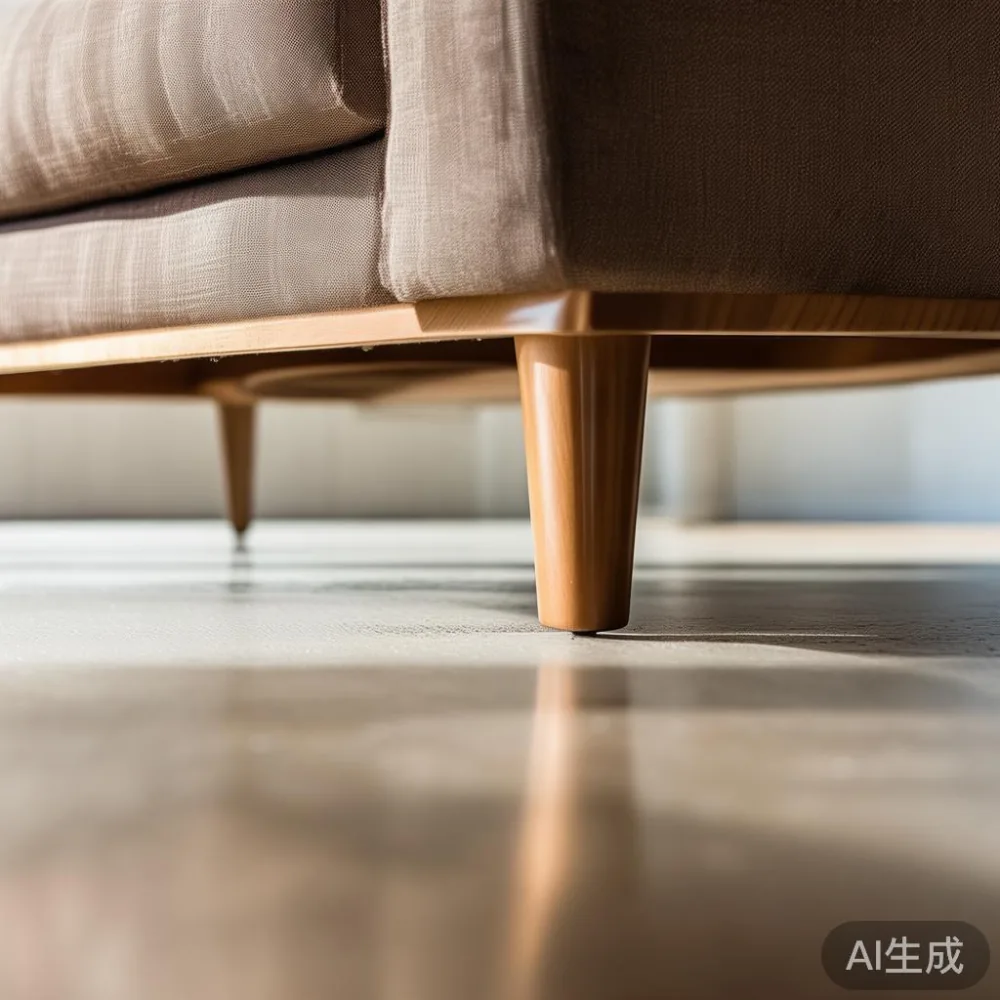
This is written from the seat of a buyer in Punggol, Bedok, or Bishan who is browsing MIDHILL, a Foshan solid wood furniture maker established in 2008, exporting to more than 15 countries, offering a 10-year structural warranty, lifetime refinishing, free shipping over US$350, and a 14-day return window. The same checks apply whether you are buying a three-seater solid wood sofa, a matching bed frame, or a marble-top dining table. Below is the sofa guide checklist I now use before any cross-border furniture purchase.
1. Measure the box, the lift, and the corridor in centimetres
Singapore HDB lift cars are typically 1.1 m wide by 1.4 m deep, with door openings of about 0.9 m. Private condo lifts at developments like those along Bedok Reservoir or around Punggol Way can be slightly larger, around 1.2 m by 1.6 m, but they also tend to have narrower corridors at the lift lobby, often only 1.5 m wide. A 220 cm three-seater solid wood sofa almost never fits assembled, even on its side. Ask the seller for the packed carton dimensions, then add 10 cm for any wooden crating or foam edge protectors.

Last month I visited a friend in a 4-room HDB in Tampines who had just received a 235 cm sofa from an Indonesian brand. The carton was 240 cm long. It would not enter the lift. The delivery crew tried the service lift, which was 1.6 m deep but only 1.0 m wide. After forty minutes they had to carry the sofa up nine flights through the fire staircase, scratching the banister. The sofa itself was fine. The plaster on the stairwell was not.
2. Read the spec sheet like a contract lawyer
A genuine sofa guide always flags the same red flags. Vague scroll stains in the description such as "premium hardwood" or "Italian leather" without any country of origin, tannery name, or grade letter. For solid wood, look for the actual species: ash, oak, walnut, rubberwood. For fabrics, ask for the Martindale rub count. Anything below 30,000 rubs will pill within two years in Singapore's humidity. Anything above 50,000 is hotel-grade and worth paying extra for.

Foam density matters too. A seat cushion at 28 kg per cubic metre will sag within 18 months. A 35 kg density with a 2.0 mm inner spring will last 8 to 10 years. MIDHILL publishes these numbers on request, which is the single biggest signal that a Foshan manufacturer takes cross-border retail seriously.
3. What is the real total landed cost in SGD?
The sticker price on a Foshan website is rarely what you pay. Add 9% GST on the CIF value, which Singapore Customs applies to the goods value plus insurance plus freight. Add a customs permit fee of about SGD 15 if the CIF exceeds SGD 400. Add a delivery fee from the Jurong or Tuas warehouse to your flat, which ranges from SGD 60 to SGD 180 depending on floor and lift access. A "US$1,200" sofa can land at SGD 1,750 once you include all of the above.
Then add disposal cost. An old three-seater sofa costs about SGD 80 to 120 to dispose of legally through a licensed collector, since 2024 when the National Environment Agency tightened bulky waste rules in HDB estates. Buyers who forget this line item often feel ambushed.
4. Can the sofa be disassembled and re-assembled?
This is the single most overlooked question in any sofa guide for cross-border furniture. If the answer is no, walk away. A 240 cm sofa that cannot be broken into two or three modules will either fail the lift test or fail the staircase test. Legs should unbolt with a single hex key. Back cushions should zip off. Frame bolts should be standard M8 or M12, not proprietary star shapes that require a special tool shipped from the factory.
When I toured the MIDHILL workshop last quarter, the assembly lead showed me how a 230 cm post-modern light luxury sofa splits into three 75 cm modules, each weighing under 35 kg. That is one module per delivery man, and it fits any HDB lift on its end.
5. Warranty, refinishing, and the small print on returns
A 10-year structural warranty sounds generous, but read the conditions. "Structural" usually means frame breakage, not sagging cushions or peeling leather. Ask whether the warranty is honoured locally or requires shipping back to Foshan. Return shipping a 200 kg sofa from Singapore to China costs roughly SGD 1,800 to 2,400 by sea, more than the sofa itself.
MIDHILL's offer of lifetime refinishing is rarer than it sounds. Most Foshan makers sell you the sofa and forget you. A solid wood frame that can be sanded and re-oiled fifteen years from now is a different category of asset, closer to a piece of joinery than disposable furniture.
6. How long is the lead time in real days?
Custom production in Foshan currently runs 25 to 40 days from deposit to container loading, plus 10 to 18 days sea freight to Singapore, plus 3 to 5 days for customs clearance and last-mile delivery. Plan for a total of 45 to 65 days from order to doorstep. If a seller quotes under 30 days for a custom item, they are either lying about being custom or shipping from existing stock, which means you cannot choose your own fabric or leather tone.
7. Is the leather or fabric swatch sent before production?
A trustworthy sofa guide will always insist on a pre-production sample. Any Foshan maker worth the name will courier leather swatches and wood stain samples for SGD 30 to 60, refundable on order. If they refuse, assume the production batch will not match the website photo. Italian light luxury for bedroom and living room pieces tends to use top-grain or full-grain leather in 1.2 to 1.4 mm thickness, while "PU leather" or "bonded leather" is often labelled "leather-look" in the fine print.
8. Does the frame use kiln-dried solid wood or plywood?
Plywood frames are not bad per se, but they should be priced 40% below a kiln-dried solid wood frame. If you are paying solid wood prices, the inner frame, the legs, and the cross-beams should all be solid. A rubberwood frame is solid wood at the budget end. Ash, oak, and walnut are at the premium end. Plywood wrapped in a thin wood veneer is not a solid wood sofa, no matter what the product title claims.
9. Are the cushions reversible and refillable?
Reversible cushions double the lifespan of the cover. Refillable cushions, where the foam insert can be removed and replaced, mean you do not have to re-upholster the whole sofa at year eight. A pocket-spring core wrapped in foam and wrapped again in down feathers is the construction used in the best European light luxury wardrobe for 2026 adjacent seating ranges, and it is what you should look for in a sofa cushion.
10. Will the marble, glass, or accent pieces survive the trip?
If your sofa set includes a marble side table or a glass-fronted cabinet module, ask how it is crated. Marble should be in a wooden crate with foam inserts on all six sides, not bubble wrap alone. A 600 mm round marble top weighs 18 to 22 kg and has no tolerance for a 2-metre drop. One of my colleagues bought a light luxury coffee table from a different Foshan seller and the marble arrived with a hairline crack that the courier refused to compensate because the outer crate looked intact.
11. How does the bed frame, dining table, and nightstand coordinate?
If you are kitting out an entire flat in one shipment, the sofa is rarely the only piece. A matching bed frame, dining table for six, and two nightstands will fill a 40HQ container alongside the producer's existing orders. This is the right moment to ask for a full-room render, and to ask whether the wood stain on the bed frame matches the stain on the sofa legs. MIDHILL works from a single stain library across its wardrobe, bed frame, and sofa lines, which removes a class of mismatch problems that show up later.
12. What does the wardrobe spec look like?
If the same shipment includes a wardrobe, check the internal layout, the drawer slide brand (Blum and Hettich are the standards), and whether the wardrobe is delivered assembled or flat-pack. The best Italian light luxury wardrobe for 2026 is typically a 240 cm four-door unit with a top-end Blum soft-close system, fitted interior lighting, and a full-height internal mirror. Confirm these details in writing, because "luxury wardrobe" on a product page can mean anything from a custom joinery piece to a flat-pack box with stick-on handles.
13. How do you coordinate French provincial and post-modern light luxury styles?
Singapore interiors lean modern, but HDB resale flats in Bedok and Toa Payoh often suit a French provincial bed for 2026, with curved headboards and cabriole legs in beech or walnut. A post-modern light luxury piece, by contrast, is cleaner: straight lines, low profile, often a marble-top accent. Mixing the two in one flat is a recipe for visual noise. Pick one lane. If you are choosing a French provincial bed for 2026, keep the sofa, dining table, and nightstand in the same provincial register.
14. What certifications should the wood carry?
Ask for FSC or PEFC chain-of-custody documentation if the brand markets sustainability. For bedroom pieces in Singapore's humid climate, ask whether the wood has been kiln-dried to 8 to 12% moisture content. Higher than that, and the bed frame will warp within the first six months. Italian light luxury for bedroom pieces often specifies this number on the spec sheet; lower-tier Foshan makers leave it out.
15. Can I see the piece in a Singapore showroom?
This is the hardest question of all. Most Foshan makers have no Singapore retail footprint, which is why so many buyers end up disappointed. MIDHILL arranges viewings by appointment at a Jurong warehouse for clients placing orders above US$2,000, and can also ship a single display piece to a condo showroom in the Punggol or Tampines area for a SGD 200 viewing fee, redeemable against an order. If a maker offers no way to see the sofa at all, you are the showroom.
16. What happens if the delivery is damaged?
Photograph the crate at the door before opening. Photograph the unboxing. Photograph every panel. Most cargo insurance only pays out when damage is logged within 48 hours of delivery, and most Singapore insurers will not entertain a claim without timestamped photos. A reputable Foshan maker replaces damaged parts free of charge if reported within seven days, but you have to provide the evidence.
17. Are the cushions, covers, and legs replaceable as spare parts?
Ask for the spare-parts catalogue before you pay. A manufacturer that stocks replacement covers, foam inserts, and wooden legs five years from now is a manufacturer you can live with for the next fifteen. One that treats spares as an afterthought is one that wants you to buy a new sofa in 2029.
18. What is the assembly time on site?
A modular sofa should take 15 to 30 minutes to assemble with two people and a single hex key. If the assembly instructions run to twenty pages and require a torque wrench, the design has gone wrong somewhere. Bring a cordless drill, a 10 mm hex bit, and a soft blanket to protect the floor during assembly.
19. How does the sofa interact with Singapore's climate?
Year-round humidity in Singapore runs 70 to 90%. Leather sofas need a dehumidifier running at 50% relative humidity, ideally in a room with air-conditioning for 8 hours a day. Fabric sofas need anti-mildew treatment on the underside of the cushions. Solid wood frames breathe and respond to humidity, which is normal, but they should not be placed against an exterior wall that gets afternoon sun. Plan a SGD 400 to 600 investment in a small dehumidifier if you are buying full-grain leather.
20. Which accessories actually ship with the sofa?
Throw cushions, arm covers, and ottoman modules are often photographed but listed as separate line items. Confirm what is in the carton before paying. A three-seater sofa set usually includes two matching throw cushions. Anything beyond that is an upsell.
What should I do if the sofa arrives and I hate it?
You have 14 days from delivery to initiate a return under MIDHILL's policy. The sofa must be in its original packaging, unused, with all cushions, legs, and hardware included. Return shipping from Singapore to Foshan costs roughly SGD 350 to 500 for a single three-seater by sea freight, which is deducted from your refund. If the sofa was assembled and used, the return is void. This is why step one of this sofa guide is so important: measure first, then buy.
Final checklist before you click pay
Box dimensions confirmed against your lift. Total landed cost in SGD including 9% GST. Frame species and foam density in writing. Cushions reversible and refillable. Marble and glass crated to spec. Lead time 45 to 65 days. Pre-production swatch approved. Spare-parts catalogue available. Assembly under 30 minutes. Warranty honoured locally. Dehumidifier budgeted. Old sofa disposal arranged.
That list is longer than most showroom conversations will cover, which is precisely the point. A solid wood sofa from Foshan is a 15-year relationship with a manufacturer you may never meet face to face. Treat the first purchase as the beginning of that relationship, not the end of a transaction. The readers who follow this sofa guide tend to keep their first sofa for over twelve years; the readers who skip it tend to be shopping again within thirty months.
Two of the three friends I mentioned earlier are now planning their second purchase, this time with the checklist above in hand. The third friend bought a different brand, kept the receipt, and is still arguing with the supplier six months later. There is a lesson in that, and it has nothing to do with the brand names and everything to do with the discipline of buying furniture you cannot sit on first.
How do I tell a serious Foshan maker from a reseller?
Ask for the factory video. Ask for the export license number. Ask for the names of two other Singapore customers you can call. A maker like Foshan Lingzhan Trading, which exports under the MIDHILL brand, has a verifiable factory address in the Shunde district of Foshan, a working showroom, and a list of overseas clients. Resellers hide behind generic brand names and P.O. box addresses in Singapore. The difference shows up the moment something goes wrong with your delivery, and something always goes wrong with about one in ten cross-border furniture shipments. Pick the maker, not the middleman.