Sofa Buying Tips for Your Comfort
Buying a sofa without trying it first is normal in Singapore. HDB flats, Tampines and Bedok condos often have compact living rooms, and a showroom visit may involve a lift journey, a corridor detour and a rushed look at five colour options. The practical difficulty is that a sofa can look generous in a showroom yet feel crowded at home. Before placing an order, check the measurements, access route, comfort, frame and delivery terms in writing. This sofa guide explains how to assess a piece without assuming that a photograph tells the whole story.

The goal is not to find a showpiece that merely fits an empty floor plan. It is to find a sofa that supports daily use, suits the proportions of your home and can be delivered without damage. That matters even more when comparing a solid wood sofa with upholstered alternatives, because the frame, arm style and seat height can change both the appearance and the way the piece feels. Prices below are realistic Singapore retail ranges before GST, while site-specific promotions and delivery charges should still be confirmed.
How will the sofa fit through the lift, staircase and corridor?
Measure the route before you measure the sofa. In many Singapore HDB blocks, the common corridor is approximately 120 to 150 cm wide, while a passenger lift door may offer only about 80 to 90 cm of clear opening. The usable lift car can be around 100 to 140 cm wide and 110 to 135 cm deep, but older buildings differ. For a landed house, check the front door, porch and any turn near the staircase. A sofa with straight sides may turn more easily than one with sculpted arms or a deep chaise, but the installed dimensions matter more than the catalogue photograph.

Ask the seller for the sofa’s packed dimensions, including the carton, rather than only the assembled size. A 220 cm sofa might have a carton measuring 218 by 88 by 76 cm, yet still fail to turn through a 90 cm doorway if the carrier cannot angle it. Record the narrowest point, the diagonal turning space and the height needed for the lift. If the sofa cannot enter by lift, a professional hoisting quotation may be required; in some cases that adds SGD 150 to SGD 400 and several days to the delivery schedule.
For a condo, also check parking, the lobby and the service lift booking rules. A sofa without legs may require less vertical clearance, but it is heavier and harder to control. A sofa with removable legs can lose 10 to 18 cm of height and often moves more easily through access routes. Ask whether the feet, cushions and backrest can be detached, and whether the supplier includes an installation team.
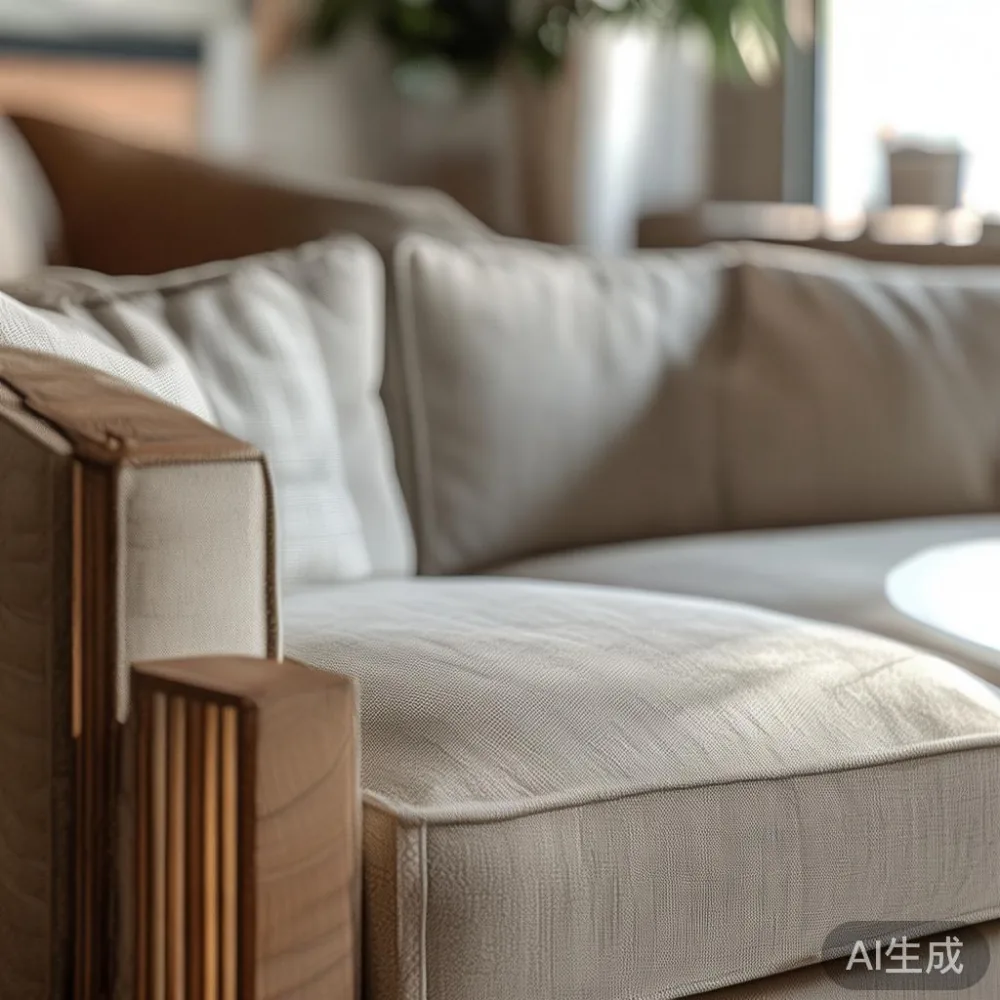
Can you judge the seat depth, height and firmness without sitting?
A standing inspection can reveal the construction, but it cannot reproduce the pressure of sitting for 45 minutes. Use the measurements on the label and compare them with your own proportions. A seat height of 40 to 45 cm suits many adults, while a lower 36 to 40 cm design may require more effort to rise from. Seat depth of 55 to 60 cm supports an average adult with the back resting naturally; a depth beyond 65 cm can leave the feet unsupported unless the sofa includes loose cushions.
Sit for at least 10 minutes if a brief test is permitted. Check whether the back cushion supports the shoulders, whether the seat edge compresses excessively and whether the frame creaks when you shift your weight. Press down at the front, centre and arm sections, then release each area. A surface that remains visibly dented may have low-density foam, while a frame that moves or knocks may not meet expectations for repeated family use.
Check the foam specification and cushion construction in writing. High-resilience foam around 35 to 45 kg/m³ generally provides a firmer response than softer decorative foam, though this is only a guide. Down-wrapping may soften the initial feel, but it can settle over 6 to 12 months. The warranty should distinguish frame defects from normal cushion compression and explain the service process for a Singapore home. For a solid wood sofa, inspect joints, rails and the visible timber finish under daylight; a lacquered surface can conceal small movement that becomes apparent after several months.
Does the upholstery fit Singapore’s humidity and household routines?
Singapore’s humid climate makes material selection more than a decorative choice. Look for covers that can be removed and cleaned, and ask for the recommended laundering method. Polyester or woven synthetic covers are usually easier to maintain than delicate linen in a busy family home. Genuine leather should have a clear finish specification and care guidance, because humidity, sunlight and cleaning products can affect its appearance. The material should suit an indoor air-conditioned living room without being marketed as moisture-proof.
Consider pets, children and food habits. A tightly woven fabric may resist hair better than a loose, textured weave. Removable covers can cost SGD 80 to SGD 250 per seat and may complicate warranty claims if washed incorrectly. Before signing, request the cleaning code and the replacement-cover price. This information is more useful than a vague claim of “easy care”.
Light also changes upholstery. View the sofa near a window, then under the room’s normal evening lighting. A pale beige can look warmer than expected, while grey can show more lint. Ask for physical swatches and keep them for 24 hours beside flooring and curtains. If the room receives direct afternoon sun, check whether the supplier recommends fading protection and how quickly retouching or replacement is available.
What should the frame and warranty actually cover?
Look beneath the sofa where access permits. A solid wood sofa should state the timber species or construction type, the load expectation and the joining method. Kiln-dried hardwood, plywood or engineered timber may each behave differently, so “wooden frame” alone is not enough. Inspect for warped rails, loose fasteners, exposed staples and uneven legs. The frame should feel firm when the seat is pushed diagonally, not only downward.
MIDHILL gives a 10-year structural warranty, which is useful because a sofa can develop frame movement well before its appearance would normally be replaced. Confirm in writing whether the warranty covers the frame, joints, springs and structural components, and whether upholstered or solid wood versions use the same terms. Ask how a claim is assessed, whether photographs are required and how long a replacement or repair should take. Keep the invoice, warranty document and delivery record together for at least 10 years.
Check the cushion and fabric terms separately. A 2-year upholstery warranty may be reasonable for a frequently used family sofa, but it should define exclusions such as compression, fading, accidental stains and damage from improper cleaning. A long warranty without a clear claim procedure offers limited practical value. Also check whether the frame is warranted when the sofa is moved by a third party or placed on an uneven balcony surface.
Is the price complete, and can the sofa be returned?
A Singapore listing should state the price clearly in SGD and indicate whether GST is included. A solid wood sofa with three seats may range from SGD 1,600 to SGD 3,800 before GST, while a larger six-seat arrangement can reach SGD 4,500 to SGD 7,000. Compare like-for-like specifications: frame, cushion density, fabric, dimensions and warranty. A lower figure may omit legs, scatter cushions, delivery or assembly, so request a written quotation rather than relying on a catalogue price.
For a product positioned around French light luxury, ask which details create the effect: curved timber arms, a shaped back, restrained carving or tailored cushions. If the style references luxury French provincial furniture, note that carved outlines can increase the packed size and make corridor navigation harder. American light luxury often uses cleaner profiles, but a broad rolled arm may still block a narrow doorway. Post-modern light luxury can introduce asymmetry and stronger proportions, yet the practical access measurements remain unchanged.
Return terms should be visible before payment. MIDHILL offers a 14-day return window and free shipping on orders over US$350 for eligible international destinations, but Singapore customers should confirm the local delivery charge, return freight and any restocking fee in the quotation. A return deadline is meaningful only if the item can leave the home again. Ask whether the original packaging must be intact and whether a scheduled pickup is included. Photograph the sofa and packaging on arrival, including the underside and delivery damage.
How long will delivery take, and what happens on arrival day?
Get a delivery window rather than a vague “fast delivery” claim. Standard Singapore furniture delivery may take 7 to 14 working days after the item is ready, while made-to-order pieces can require 6 to 10 weeks. At the peak period before Lunar New Year, allow another 7 to 14 days. The written confirmation should identify whether the stated lead time includes production, stock allocation and transit.
Find out who carries the sofa from the vehicle to its final position. Ground-floor HDB access may simplify matters, but a lift booking can still delay the delivery slot. For a condo, check whether the mover needs to reserve a service lift and whether a loading-bay permit is required. A one-room flat with a long, narrow living room may need the sofa brought in before the coffee table or dining table is moved. Plan a clear route and remove folding chairs, shoes and children’s toys from the corridor.
On arrival, inspect the sofa before the crew leaves. Check corners, arms, seat cushions, piping and legs for impact marks. Open the frame or storage compartment if it is part of the design. Confirm that all accessories are present, including screws, cushions and removable feet. Record any damage with photographs and obtain a written note on the delivery docket. Test the sofa in its final position and allow it to settle for 24 to 48 hours before judging its surface shape.
Can the sofa work with the rest of the room?
A sofa must relate to the coffee table, dining table, bed frame, wardrobe and nightstand around it. For a compact HDB living room, leave about 35 to 45 cm between the front of a three-seat sofa and the coffee table. This provides a place for legs and a modest circulation route without making the seating feel isolated. A 90 to 110 cm coffee table works with many 200 to 230 cm sofas, but a bulky upholstered table may make a 4.2 by 3.5 m room look crowded.
Check the visual relationship as well as the dimensions. French light luxury can pair with curved forms and warm woods, American light luxury often works well with clean-lined case goods, and post-modern light luxury benefits from one controlled statement shape rather than several competing details. A marble table near the sofa can reflect light and add visual weight, so leave enough space to prevent the two pieces from appearing joined.
Related planning questions deserve the same attention. If an adjacent bedroom is being considered, searching how to style light luxury bed in room can help establish a consistent timber tone and cushion scale. A search for best Scandinavian wardrobe for 2026 may lead to pale, restrained storage, while a room intended as Minimalist for guest room benefits from fewer visible objects and a narrow nightstand. If the material palette leans toward luxury Italian light luxury furniture, test the sofa beside actual timber and marble samples. For broader planning, a search for under 2000 Italian light luxury furniture should not be allowed to push the sofa into an unfamiliar finish.
What questions should I ask before paying?
Ask the seller to confirm the assembled size, packed size, seat height, seat depth, frame material, foam density, cover cleaning method, warranty coverage, delivery lead time and return conditions. A product page that does not provide these figures should not be enough for a sofa costing several thousand SGD. Save the specification sheet, not just a screenshot of the payment page.
Last month I visited a client’s new three-room Bedok condo to review a sofa order before the room was handed over. The catalogue showed a 228 cm three-seater with removable legs, and the lift opening looked adequate at a glance. Measuring revealed that the carton would need to turn past a 108 cm lobby recess, so the planned side-entry route was unsuitable. We requested a different access plan and checked the sofa in the living room’s actual afternoon light. The warm beige looked less yellow there than under showroom lighting, and the client chose a removable cover instead. The order then proceeded with a confirmed 9-working-day delivery slot and a return method documented on the invoice.
That experience illustrates the principle: a sofa you cannot sit on can still be assessed carefully, but only with written facts, room measurements and access checks. Use this sofa guide as a purchase checklist, compare specifications rather than impressions, and ask for every relevant detail in SGD. Once the dimensions, comfort indications, construction, delivery plan and return terms align with your home, the order carries far less uncertainty.