Cost-Comparison Guide: Veneer vs. Solid Wood in Singapore Homes
Choosing a sofa for a Singapore home is rarely just a question of appearance. The purchase price is visible at checkout, but a fair 5-year comparison must also account for delivery, GST, repairs, refinishing, moisture exposure and the likelihood of replacing the frame. For residents of Tampines, Bedok and Punggol, the physical route from the loading area to the living room can change the final cost just as much as the timber itself.
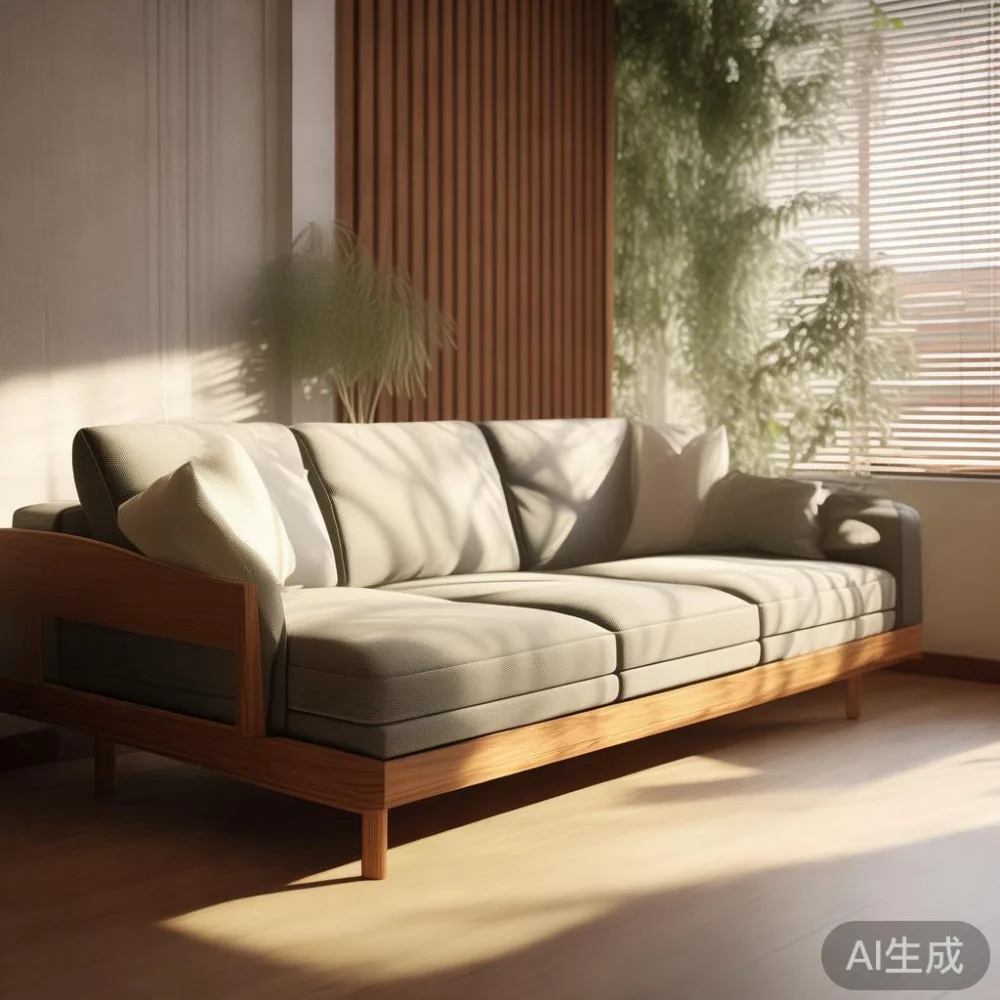
This sofa guide compares a mid-sized 210 cm solid wood sofa with a similarly sized veneer sofa priced in Singapore dollars. The worked example produces a total ownership cost of SGD 2,940 for veneer and SGD 4,240 for solid wood over 5 years. The solid wood sofa costs SGD 1,300 more within that period, but the gap narrows if its refinishing needs continue at a moderate rate. I will also explain why French light luxury, American light luxury and post-modern light luxury interiors often use timber in different ways.
All prices below include an assumed 9% GST. Figures are planning estimates rather than quotations, and they exclude fabric replacement, relocation and unusual water damage. Delivery to most Singapore addresses is estimated at 7 to 14 days after stock confirmation, while an export-order lead time of 30 to 45 days should be allowed for some solid wood collections.
What is the difference between veneer and solid wood?
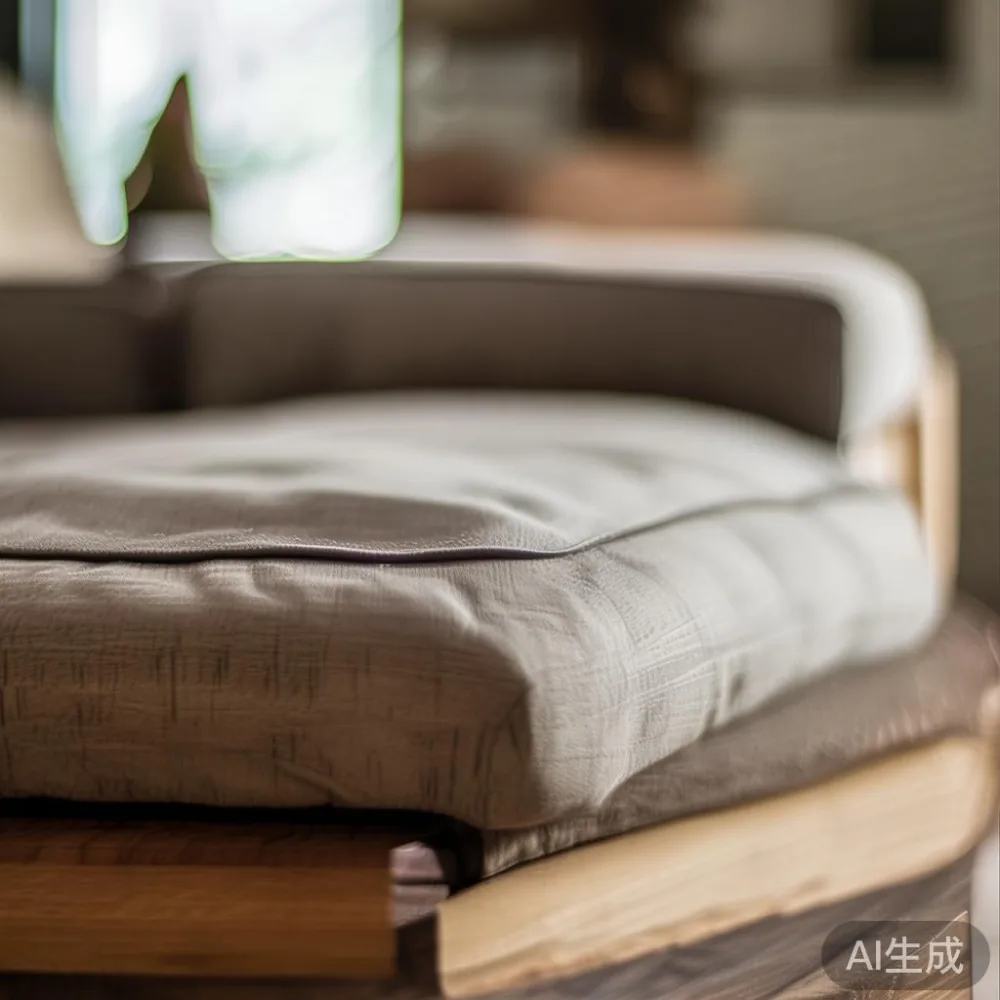
Veneer is a thin layer of timber, usually 0.6 to 1.2 mm thick, bonded to a engineered board such as plywood or particleboard. The visible face may be oak, walnut, ash or teak, but the structural core is not solid timber. A 210 cm three-seat veneer sofa may weigh about 52 kg, compared with 78 kg for a comparable solid wood sofa.
Solid wood uses timber through the load-bearing members, commonly including kiln-dried oak, ash, beech or rubberwood, depending on the product. It reacts more visibly to humidity and temperature, but it can be sanded and refinished repeatedly. Veneer can also be repaired, although a deep scratch may expose the board beneath and require a colour-matched patch rather than simple sanding.

Singapore’s relative humidity usually stays near 60% to 80%, while air-conditioned rooms may fall to 45% to 55%. Neither material should be placed directly against a wet wall or beside a frequently opened balcony door. A solid wood sofa still needs stable indoor conditions, but it offers more room for surface restoration when a 52 kg sofa is moved into a new HDB flat after 3 or 4 years.
This distinction matters in this sofa guide because the lower purchase price of veneer does not describe the whole ownership period. The correct comparison is purchase cost plus delivery, assembly, incidents, maintenance and expected refinishing over 5 years.
How much does a sofa cost in Singapore over 5 years?
I used a common HDB-sized 210 cm sofa with a depth of 92 cm and a packed height of 86 cm. The veneer example was priced at SGD 2,100 including GST. Its estimated costs were SGD 120 for delivery, SGD 90 for assembly, SGD 180 for edge and surface repair in year 2, SGD 320 for partial refinishing in year 3 and SGD 220 for another panel repair in year 4. The resulting 5-year total is SGD 2,940.
The solid wood example was priced at SGD 3,500 including GST. Delivery was estimated at SGD 180 because of its higher weight, while assembly was SGD 120 for two installers. A joint inspection and light sanding in year 2 cost SGD 140, a refinishing treatment in year 3 cost SGD 110 and a second partial refinishing job in year 4 cost SGD 190. The total is SGD 4,240.
The arithmetic is straightforward:
Veneer: SGD 2,100 purchase + SGD 430 delivery and assembly + SGD 720 repairs and refinishing = SGD 2,940.
Solid wood: SGD 3,500 purchase + SGD 300 delivery and assembly + SGD 440 maintenance = SGD 4,240.
The 5-year difference is therefore SGD 1,300, or SGD 260 per year. The veneer option uses 42% of the solid wood total in this example. That is a substantial early saving, especially for a first flat furnished within a tight renovation budget.
However, the timing of the repair matters. A first scratch in year 1 can be corrected for perhaps SGD 80 to SGD 140 on veneer and SGD 60 to SGD 120 on solid wood. Larger veneer patching can reach SGD 220 to SGD 400, while a solid wood board can be sanded and colour-matched for SGD 160 to SGD 280. The exact price depends on the species, finish and accessibility of the damaged area.
Which sofa is easier to deliver through an HDB flat or condo?
Last month I visited a renovated 28 m² HDB flat in Tampines to inspect a 210 cm sofa delivery. The lift measured approximately 90 cm wide and 140 cm deep, the entrance door was 85 cm wide and the corridor outside the lift was about 120 cm wide. The packed sofa was 210 cm long, 92 cm deep and 86 cm high. It could enter the lift diagonally, but the installers needed 35 minutes to turn it through the doorway.
A comparable 78 kg solid wood sofa required about 65 minutes for the same route. The additional time came from its heavier frame and the need to protect the legs and joints while rotating the package. The delivery teams I observed used moving blankets, corner guards and removable foot sections. Neither property presented a direct refusal, but delivery was not a simple 10-minute drop-off.
Condo service corridors can be narrower. Where an HDB lift is 90 cm wide, a private lift may have a usable clear width of only 80 cm, with lift-car depth around 120 cm. A corridor with a 105 cm clear width may also include a 90-degree turn near the private staircase. In these cases, a modular solid wood sofa with detachable arms may cost more to deliver, but it can prevent a failed delivery on the delivery day.
Before purchase, ask the supplier for the packed dimensions and gross weight, not only the product dimensions. A sofa may be 210 cm wide but could be packed in a carton measuring 224 cm because of protective corners. For Punggol and Bedok lifts, taking the stair route is another option, but allow 45 to 90 minutes and SGD 80 to SGD 180 in labour when the lift cannot be used.
MIDHILL provides product specifications for delivery planning and offers free shipping on qualifying orders above US$350, approximately SGD 465 at an illustrative exchange rate. Its 14-day return policy gives buyers time to check the sofa and access route, subject to the stated return conditions.
Do you pay less for veneer because it is lower quality?
Not necessarily. Price depends on the board grade, veneer thickness, adhesive, timber species, finish, joinery and design. A high-grade plywood veneer sofa with a reinforced frame can perform well in a dry bedroom or secondary living area. A lower-grade particleboard frame covered with attractive veneer can still be a weak purchase if its joints and suspension are poorly made.
Solid wood is not automatically free from movement. Poorly seasoned timber can bow, check or split as humidity changes, while a veneer panel may remain dimensionally stable because of its engineered core. The important questions are whether the timber was kiln-dried, how the frame is joined, whether the seat platform is suspended and how many finishing layers protect the surface.
Look for dowels, mortise-and-tenon joints or screwed solid-wood corner blocks rather than relying on visible particleboard panels alone. A sofa frame should support a stated load of at least 100 kg per seating position. The seat height should be around 42 to 46 cm, and the internal usable depth should be at least 55 cm for normal daily use.
This sofa guide treats veneer as a material choice, not a quality category. A carefully engineered veneer piece can suit a rental flat or a frequently changed interior. Solid wood may suit a buyer who expects to keep and refinish the same frame for 10 years or more.
How does light-luxury styling change the timber decision?
French light luxury commonly uses pale oak, cream upholstery, curved profiles and slim metal details. American light luxury leans towards larger silhouettes, deep cushions, darker walnut and substantial proportions. Post-modern light luxury often combines clean lines with one sculptural material, such as travertine, marble or shaped timber.
These styles can be used to make veneer look more convincing because grain continuity, sheen and edge treatment carry much of the visual effect. If the objective is for sale French provincial furniture that remains coherent across a sofa and side pieces, matching veneer sheets from the same timber batch can help. A random-grain match across a 210 cm sofa front may reveal that the material is veneer, although the construction can still be sound.
Solid wood gives a different kind of depth. A 20 to 28 mm solid timber arm or frame shows end grain, joint detail and natural variation. Over time, a honey-oak finish can move towards a warmer tone, while walnut may lighten under strong daylight. Samples should therefore be viewed for at least 30 minutes under the room’s actual lighting.
For buyers comparing broader collections, a search for Japanese sofa vs Japandi sofa may lead towards pale, restrained timber finishes, while a search for American sofa vs Modern sofa may produce deeper seats and broader arms. Those design labels should not replace a frame inspection. Ask for timber species, moisture target, finish type, seat density and the warranty duration.
For a related bedroom decision, French bed vs French provincial bed comparisons often distinguish carved timber from simpler silhouettes. A bed frame constructed from solid wood can develop small marks that are sanded out, whereas a veneered surface may need a patch. The same repair logic applies to a nightstand or dining table.
What if the sofa is for a wardrobe, dining area or marble table?
The sofa remains the main subject, but the same 5-year calculation is useful when checking timber used around it. A 180 cm dining table may require a solid top 25 to 40 mm thick, while a veneer table needs a well-supported substrate to prevent rippling. A wardrobe with 150 to 180 cm sliding doors must use stable panels because changes in humidity can affect alignment.
A marble table introduces a different price pattern. A 100 cm marble top may add SGD 600 to SGD 1,500 before delivery, and professional lifting may cost SGD 100 to SGD 250. Its stone surface does not repair like timber, but the cabinet below may contain solid wood or veneer. If a search for how to choose Japanese wardrobe brings you towards pale oak fronts, inspect the movement of doors and the quality of the timber core before focusing on colour.
The material should also relate to the sofa. Pairing a highly figured veneer dining table with a quiet solid wood sofa can create balance without matching every grain. For another bedroom product, MIDHILL bed specifications should identify the species, slat spacing and centre support arrangement, while a 45 cm high nightstand should remain stable on carpeted HDB floors.
These products are included only to show how repairability affects furniture ownership. The central choice remains whether the 210 cm sofa should be veneer or solid wood for your particular room and 5-year plan.
Which option has the lower 5-year cost in a humid Singapore home?
For the modelled sofa, veneer costs SGD 2,940 and solid wood costs SGD 4,240 over 5 years. Veneer is cheaper by SGD 1,300 in this period. The result changes if the veneer sofa suffers a major finish failure. A replacement panel or full re-veneer job priced at SGD 550 to SGD 900 would raise the veneer total to SGD 3,270 or SGD 3,640, narrowing the gap to SGD 600 or SGD 870.
Solid wood costs are more predictable under ordinary use. Its assumed 5-year maintenance of SGD 440 includes 2 refinishing visits. If the finish is lacquered rather than oiled, renewal intervals may extend to 6 or 8 years, although small chips can still occur. Veneer’s finish renewal depends more heavily on the base material and the size of the damaged section.
Occupancy affects both figures. A sofa used by 1 person for 2 hours per day should need less care than one used by 4 people for 8 hours per day. Direct afternoon sun through a west-facing Bedok condo window can increase UV fading, while a sofa 20 cm from an air-conditioning vent may dry more quickly than one placed against an interior wall.
For a low-usage rental flat, veneer may be the more rational expenditure. For a family that expects to move the sofa once, repair it after a child scratches the arm and retain it for at least 10 years, solid wood can offer better long-term value. The decision should follow the expected holding period rather than a promise that one material will last forever.
How do warranties and refinishing affect the final calculation?
A warranty has financial value only if its terms match normal household use. MIDHILL gives a 10-year structural warranty and lifetime refinishing on qualifying solid wood products, which provides a clearer framework for a long ownership plan than a 1-year surface warranty. Before ordering, request the written exclusions, especially for commercial use, moisture exposure, unauthorised modifications and transit damage after delivery.
The term “lifetime” also needs definition. It normally refers to the serviceable life of the product rather than a promise that every wooden part will be replaced without charge. Ask how scratches, corner breaks, joint loosening and colour changes are handled. A useful written answer should specify the hourly service rate, minimum collection charge, expected turnaround and the cost of materials.
For veneer, lifetime refinishing may apply only to the timber frame, not to the decorative veneer facing. That distinction should appear in the quotation. For solid wood, confirm whether the quoted service covers the visible seat rails, legs and arms, or only concealed structural components.
The same questions apply when comparing a solid wood sofa with a bed frame, dining table, wardrobe, nightstand or marble table. A 10-year frame warranty adds little if a dining chair with a screwed joint is excluded. A 30-day return period is more practical than a 5-year promise that excludes every finish defect.
What should a Singapore buyer check before ordering?
Measure the room, not only the catalogue photograph. Leave at least 75 cm between the sofa and a coffee table, and at least 30 cm from a wall for cleaning. Check whether the lift can take the package on its longest edge and whether the sofa can pass through the entrance at an angle. Record the lift depth, door width and number of stairs in a photograph before the delivery day.
Then request 6 pieces of information in writing:
1. The veneer species and thickness, or the solid wood species used in every load-bearing part.
2. The target moisture range for Singapore use, ideally around 8% to 12% for indoor solid wood products.
3. The packed dimensions and gross weight of the sofa.
4. The number and thickness of finish layers, including whether the surface is lacquer, stain plus clear coat or hard-wax oil.
5. The repair cost for a typical scratch, chip, water mark and joint repair.
6. The delivery fee, assembly fee, return terms and structural coverage period.
Ask for a timber sample measuring roughly 10 cm by 10 cm, plus a photograph of the underside and joinery. View the fabric under daylight and under warm evening light. Sit on the sofa for 10 minutes and check whether the seat feels supportive at 45 cm height. A memory-foam cushion with a density of 45 to 55 kg/m³ can provide a different feel from a harder foam rated around 35 to 40 kg/m³.
For the 210 cm example used here, veneer represents the lower immediate and 5-year cost under ordinary use, while solid wood gives more restoration options and becomes more attractive over a 10-year ownership period. Spend the difference on one quality cushion or better delivery protection only after the frame, finish and access route have been checked. That sequence protects both the appearance of your living room and the amount of money left in your 5-year furniture budget.