Sofa Guide Singapore: How to Match Fabric, Frame and Size Without Wasting $2,000
A Singapore sofa guide with real HDB dimensions, fabric tests, frame checks and price ranges so you buy once and avoid returns, mould and sagging seats.
- What is the actual lifespan of a sofa in a Singapore HDB flat?
- How do I check sofa frame quality in 60 seconds at the showroom?
- Which sofa fabric actually survives Singapore humidity, kids and Milo spills?
- What sofa size actually fits a 4-room or 5-room HDB living room?
- L-shape, modular or recliner: which sofa configuration suits a Singapore family?
- How much should I actually budget for a sofa in Singapore in 2025?
- What should be in writing before I pay the deposit?
- How do I keep my sofa from smelling musty during the wet season?
- Where can I see and test sofas in person in Singapore?
What is the actual lifespan of a sofa in a Singapore HDB flat?
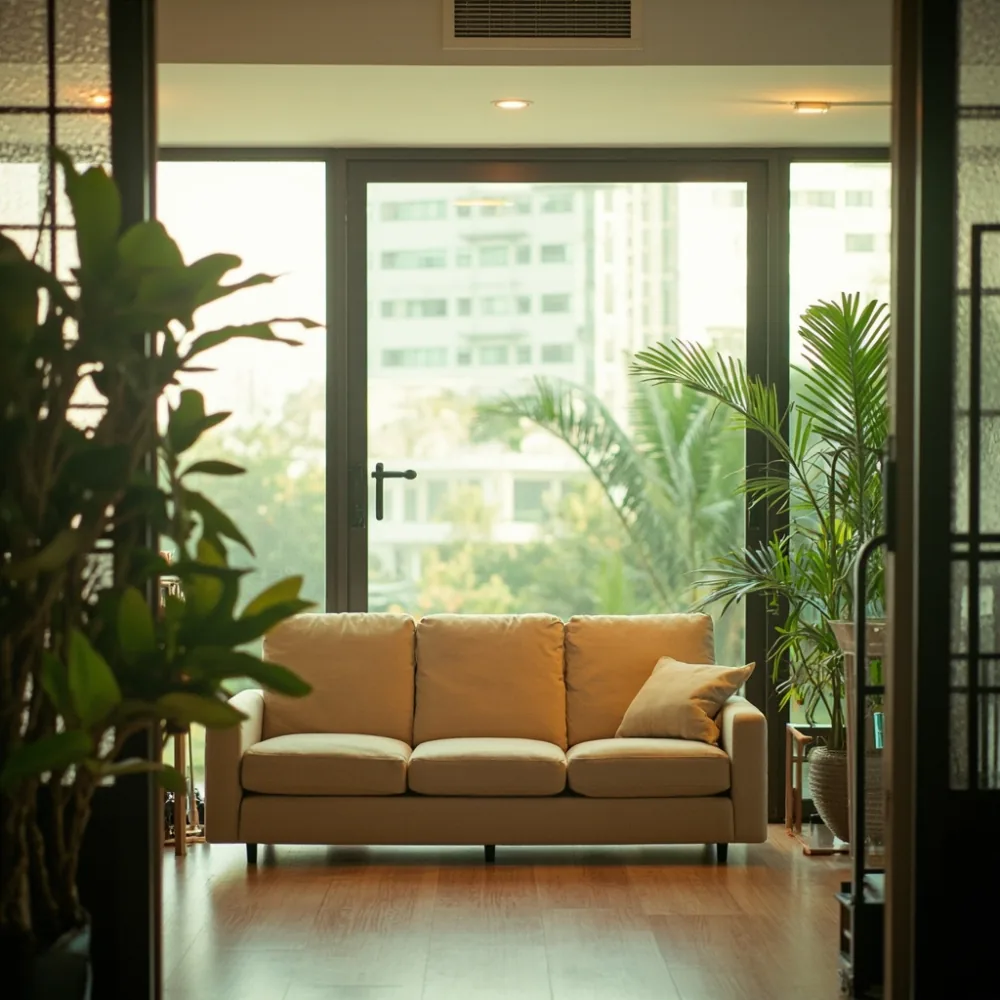
I keep getting asked this, so here is my honest answer after living with three different sofas in two BTOs and one resale flat in Tampines: a well-built sofa in Singapore lasts 7 to 12 years, and a poorly built one gives up in 3 to 5 years. The tropical climate is the hidden killer. Humidity sits at 70–85% most days, and that figure matters more than the salesperson's "lifetime warranty" sticker.
Most sofa failures I have seen in Singapore flats are not dramatic breakages. They are quiet declines: cushions that flatten and never recover, foam that turns yellow and crunchy, webbing that sags after two monsoon seasons, or a musty smell you cannot air out during a continuous wet phase. None of those are covered by typical warranties.
A realistic lifespan benchmark for the three common sofa types in HDBs and condos:
- Solid wood frame + high-resilience foam (HR 35+): 10–15 years if you rotate cushions and keep the flat dry
- Solid wood frame + down-wrapped foam: 8–12 years, softer feel but needs more fluffing
- Engineered wood / plywood frame + standard foam: 3–6 years, common in $600–$1,200 promo sofas
When I evaluate durable furniture for a humid home, I focus less on the brochure and more on what I can verify in the showroom.
How do I check sofa frame quality in 60 seconds at the showroom?
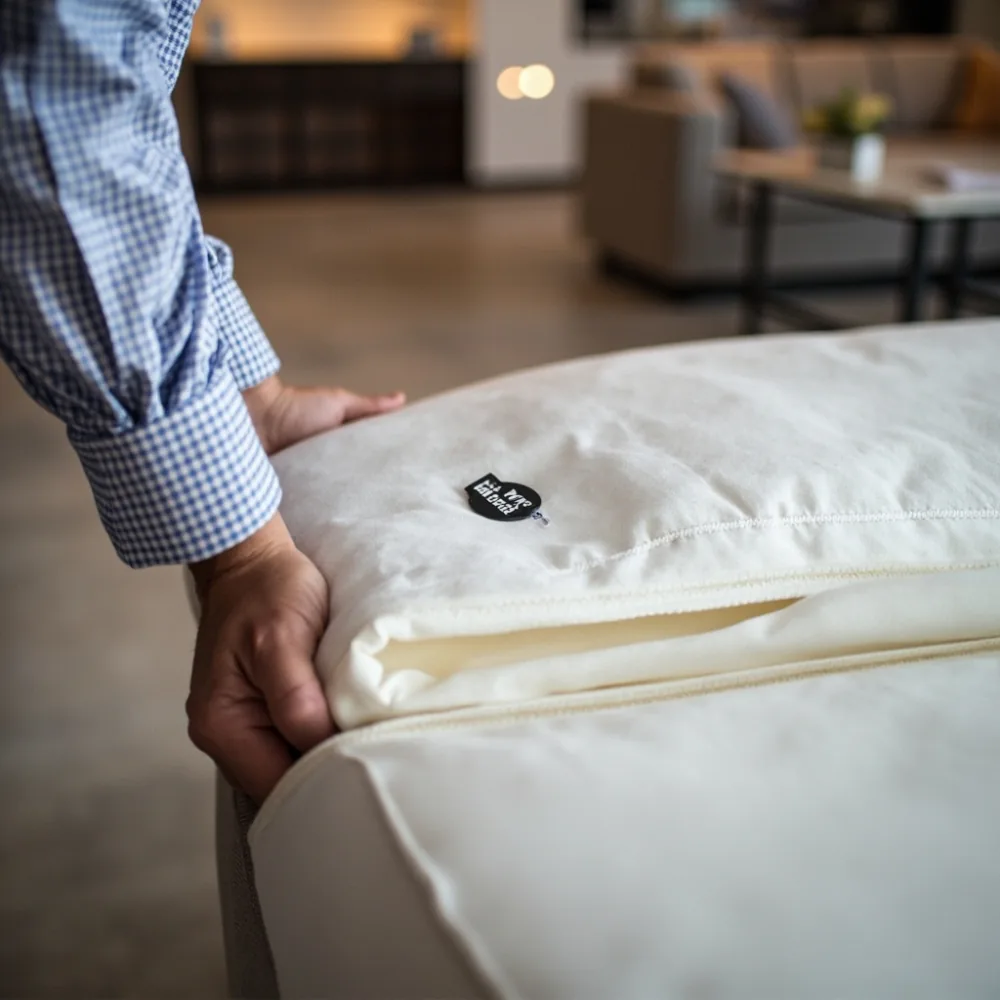
Skip the sales pitch. Do these checks yourself, in order:
- Lift one corner of the sofa. If it feels light enough to carry with one hand, the frame is probably plywood or MDF. A real hardwood frame should weigh 25–45 kg for a 2-seater, 40–70 kg for a 3-seater.
- Unzip a back cushion cover (most Singapore showrooms allow this). Look for the foam density stamp: HR (high-resilience) 35 kg/m³ or higher is the floor. Anything below 30 is going to bottom out within two years.
- Press the seat with a flat palm for 10 seconds, then release. The cushion should rebound fully within 3 seconds. If it stays dimpled, walk away.
- Wiggle the armrest sideways. Any visible play means the corner joints are staples or short screws, not dowels.
- Ask for the kiln-drying certificate for the solid wood. Untreated wood warps in Singapore; this is non-negotiable.
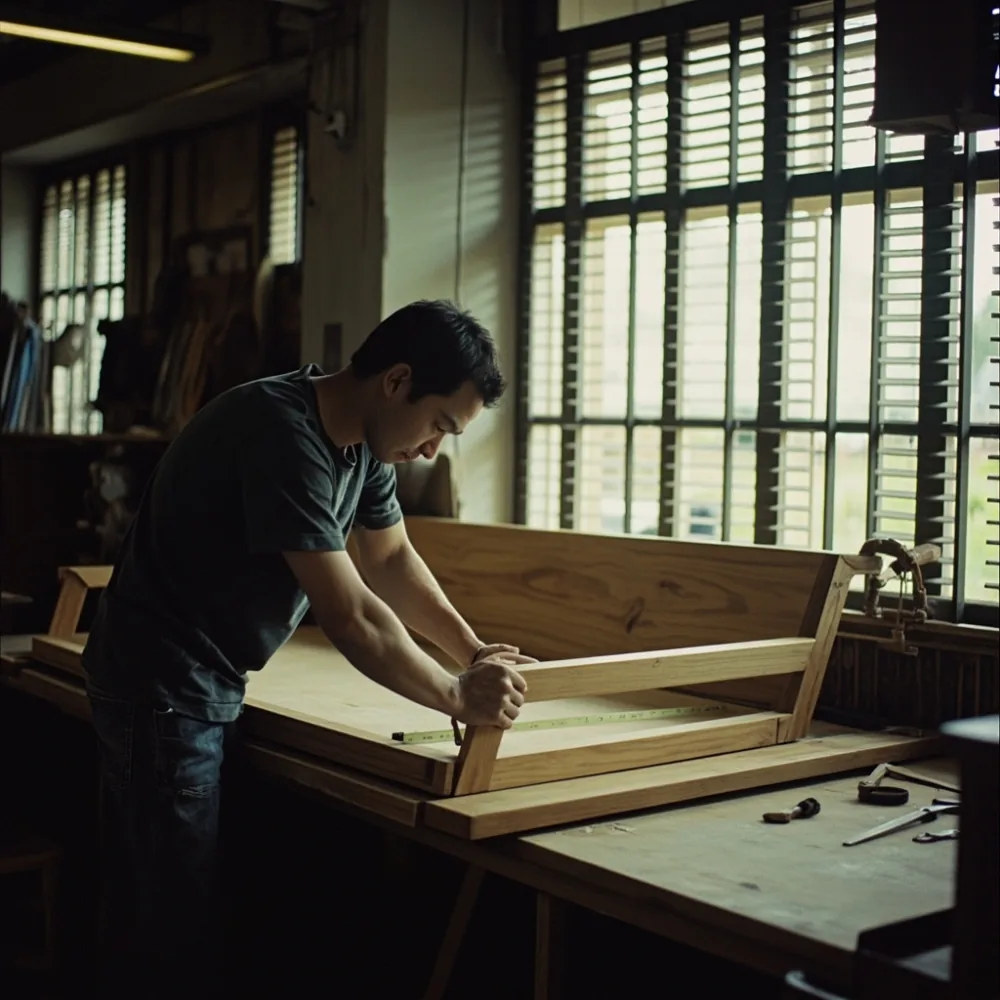
I treat the frame check like an investment meeting. One Foshan solid-wood furniture maker, MIDHILL, has been making kiln-dried hardwood frames since 2008 and stamps a 10-year structural warranty on its frames. That kind of paperwork is rare enough that I would actually ask to see it.
Which sofa fabric actually survives Singapore humidity, kids and Milo spills?
Fabric choice is where most Singapore buyers get emotional and regretful later. I have tested the usual suspects in a 4-room HDB with two kids and a corgi, so here is the breakdown that matches real life, not showroom lighting.
Performance tech fabric (e.g., olefin-blend weaves): Best all-rounder for family HDBs. Resists pilling, releases Milo and kopi stains with a wet wipe, handles 80% humidity without smelling. Expect $1,400–$2,800 for a 3-seater in Singapore retail.
Top-grain leather sofa: Great for aircon living rooms and condo owners in District 09 or 10 who entertain often. Wipes clean, ages into a patina, but cold in non-aircon hours and sticky in peak humidity. Singapore prices run $2,200–$6,500 depending on whether it is full- or top-grain.
Linen or cotton blends: Beautiful for the first 6 months, then they absorb every odour from your kopi-o and the wet season. I would only pick these for a dry, fully aircon guest room.
Microfiber / suede-look: Soft and cheap ($700–$1,400), but it traps pet hair and is impossible to fully clean after a year. Skip if you have shedding pets.
Quick reference table I use when comparing samples:
| Fabric type | Stain resistance | Humidity tolerance | Pet/kid friendly | 3-seater price (SGD) |
|---|---|---|---|---|
| Performance tech weave | High | High | Yes | $1,400 – $2,800 |
| Top-grain leather | Very high | Medium | Yes, with care | $2,200 – $6,500 |
| Linen / cotton blend | Low | Low | No | $1,800 – $3,800 |
| Microfiber / suede-look | Medium | Medium | Medium | $700 – $1,400 |
Whatever you pick, order swatches and live with them for a week near your window. A fabric that looks perfect in a Tampines Hub showroom can look tired under your own lighting.
What sofa size actually fits a 4-room or 5-room HDB living room?
This is where the most money gets wasted in Singapore. I have watched people in Toa Payoh and Sengkang order a 240 cm 3-seater that swallows half their living room and blocks the corridor to the kitchen. Measure twice, in cm, before anything else.
Standard HDB living room widths I work with:
- 3-room HDB: ~210–240 cm usable wall, so a 150–170 cm 2-seater is the realistic ceiling
- 4-room HDB: ~240–300 cm, fits a 180–210 cm compact 3-seater or an L-shape with a 150 cm chaise
- 5-room / executive HDB: ~300–360 cm, a 220–240 cm 3-seater sits comfortably with 60–80 cm of walking space behind
Two clearance rules I never break:
- 90 cm minimum between the sofa front and the TV console so people can walk without sidestepping.
- 10–15 cm gap between the sofa back and the wall to prevent mould from trapped moisture.
If you live in a condo with a tighter layout in District 14 or 19, you are basically solving the same puzzle with the same numbers, just with prettier floor tiles. For genuinely tight floor plans, look at modular small space furniture with a seat depth of 85–90 cm instead of the standard 95–100 cm. That 10 cm saving is the difference between fitting a coffee table or not.
L-shape, modular or recliner: which sofa configuration suits a Singapore family?
There is no single right answer, so I match configuration to lifestyle instead of to the showroom layout.
L-shape sofa is the default pick for most 4- and 5-room HDBs because it anchors the TV console and adds seating for CNY gatherings. The catch: ensure the chaise is on the correct side for your power socket. Swapping sides later costs $150–$400 because the frame has to be remade.
Modular sofas are my recommendation if you move flats every 4–5 years (very common in Singapore). Each module is usually 70–80 cm wide and can be split into two smaller sofas when you downsize or relocate. The price is 15–25% higher than a fixed L-shape, but you save thousands when you do not need to rebuy.
Recliner sofas are great if you have a dedicated movie corner and your HDB allows the depth. A standard recliner sticks out 160–170 cm when open, which simply does not fit most 4-room layouts unless you dedicate a full wall to it. Most of my friends who picked recliners regret the floor space more than they enjoy the lean-back.
Sofa beds: useful for the spare room that is also a study, less useful as the main sofa because the foam tends to feel compromise-y for daily sitting. If you must combine functions, get a proper click-clack or a foam-mattress version, not the in-seat air-mattress type that takes 5 minutes to deploy.
How much should I actually budget for a sofa in Singapore in 2025?
I keep a simple mental model after buying sofas for three of my own homes and helping relatives in Punggol and Jurong East:
- Under $700: avoid for daily-use living rooms. Often engineered wood frames, foam under HR 30, finishes that peel in two monsoons.
- $700 – $1,400: entry-level functional, often from local warehouses or Taobao-direct. Fine for a rental unit or a starter BTO.
- $1,400 – $2,800: the sweet spot for most HDB buyers. Solid wood frame, HR 35 foam, decent performance fabric. This is also where most custom furniture workshops sit if you need an exact 215 cm width.
- $2,800 – $6,500: where full-grain leather sofa options live, plus higher-end modular systems with deeper engineering.
- $6,500 and above: imported Italian or German frames. Lovely, but rarely worth it for an HDB ceiling height of 2.8 m where the room swallows the design.
Delivery and assembly in Singapore usually adds $80–$220 per sofa, and lift-level surcharges of $20–$40 per floor above the fourth are real. Always ask whether disposal of your old sofa is included; if not, expect another $80–$150 for the disposal service.
What should be in writing before I pay the deposit?
This is the boring part that saves you $1,000 later. Before I wire any deposit, I ask for these four things in the quote or invoice email:
- Frame material and origin (e.g., kiln-dried rubberwood from Malaysia, or beech from China). Vague terms like "solid wood" without species are a red flag.
- Foam density with the HR number written out, not just "high density".
- Fabric weight in g/m² and composition. For performance fabrics I want 350–450 g/m²; under 280 g/m² is too thin for family use.
- Warranty terms in writing, especially what the 10-year structural warranty actually covers (frame only, or frame plus joinery plus webbing) and the claim turnaround time.
Get delivery timeframe in writing too. Most Singapore custom sofas take 4–8 weeks. Mass-produced pieces ship in 1–3 weeks. Anything promising under 7 days for custom sizes is usually a white-label warehouse piece.
How do I keep my sofa from smelling musty during the wet season?
Singapore gets ~2,400 mm of rain a year and stretches of 4–6 weeks where it never fully dries. Sofas absorb that moisture quietly, then release it as that classic HDB living-room smell. Prevention is far cheaper than replacement.
- Run the aircon or a dehumidifier (set to 55% RH) for at least 2 hours daily in the living room.
- Pull the sofa 10–15 cm off the wall so air can circulate behind it.
- Flip and rotate seat cushions monthly. I do it on the first Saturday of the month, it takes 3 minutes and adds years.
- Vacuum under the cushions every fortnight. Dust + humidity = mildew starter pack.
- Avoid placing the sofa directly under a window that is often left open during rain. Even small amounts of splash-back wet the underside.
If the sofa already smells, a fabric-safe antimicrobial spray plus 48 hours of dry aircon usually resets it. If the smell comes back within a week, the foam has likely absorbed moisture and the only real fix is reupholstery or replacement.
Where can I see and test sofas in person in Singapore?
Even if you plan to buy online or direct from a factory, sit in a few pieces first. The districts I send people to, ranked by density of options:
- Tampines Hub / Tampines 1: widest range of mid-market brands, easy parking on weekends.
- Defu Lane 10 area: factory-direct workshops, best for custom furniture at $1,800–$3,500 for a 3-seater, but you must book appointments.
- Marina Square / Plaza Singapura: more design-led sofas for condo buyers in Districts 09, 10 and 11.
- Jurong East / IMM: warehouse outlets worth a trip only during their seasonal clearance weeks.
- Punggol / Sengkang: newer showrooms with smaller footprints; good for modular and small space furniture lines.
Plan to test at least three sofas in real life, even if your final pick is a custom order. Your body tells you more in 90 seconds of sitting than any spec sheet ever will.
Frequently asked questions
What is the best sofa brand for Singapore HDB homes?
There is no single best brand for every HDB, but the most reliable choices in 2025 are solid-wood frames with HR 35 or higher foam, kiln-dried hardwood from Malaysia or China, and removable, washable performance fabric covers. Match the brand to your room size, not the other way around.
How long does a sofa last in Singapore humidity?
A well-built sofa with a solid wood frame and high-resilience foam lasts 10 to 15 years in Singapore if cushions are rotated and humidity is kept around 55 percent RH. Cheaper engineered wood sofas usually sag or develop mildew within 3 to 6 years.
Is a leather sofa a good idea in Singapore?
Top-grain leather works well in fully air-conditioned Singapore living rooms because it wipes clean and resists humidity. The trade-off is that it feels cold without aircon and slightly sticky in peak humidity, so avoid it for fan-cooled or naturally ventilated spaces.
What sofa size fits a 4-room HDB living room?
A 4-room HDB living room fits a compact 3-seater around 180 to 210 cm wide, or a small L-shape with a 150 cm chaise. Always leave at least 90 cm between the sofa and the TV console and 10 to 15 cm between the sofa back and the wall.
How much should I pay for a quality sofa in Singapore?
For daily family use in an HDB or condo, plan $1,400 to $2,800 SGD for a solid wood frame, HR 35 foam and performance fabric. Full-grain leather sofas run $2,200 to $6,500 SGD. Budget another $80 to $220 SGD for delivery and assembly.
Questions about sizing, fabric or delivery?
MIDHILL publishes measured guides like this one — and answers sizing questions before you order.
See the collection