How to Match Solid Wood Furniture to a Warm Minimal Interior
Last month I visited a 980 sqft Punggol condo with my colleague from MIDHILL, and we spent two hours moving three pieces around a living room that already had the bones of a warm minimal scheme: limestone-look floor tiles, off-white walls, and a single tall dracaena in the corner. The owner wanted fewer items, not more impact. By the time we left, the room felt calmer, heavier in tone, and about 8 degrees warmer visually — and the only real changes were a solid wood sofa frame in white oak, a low marble table, and a walnut nightstand repositioned from the spare bedroom. That afternoon is the starting point for this sofa guide, because warm minimal is less about stripping things out and more about choosing pieces that carry weight without shouting.
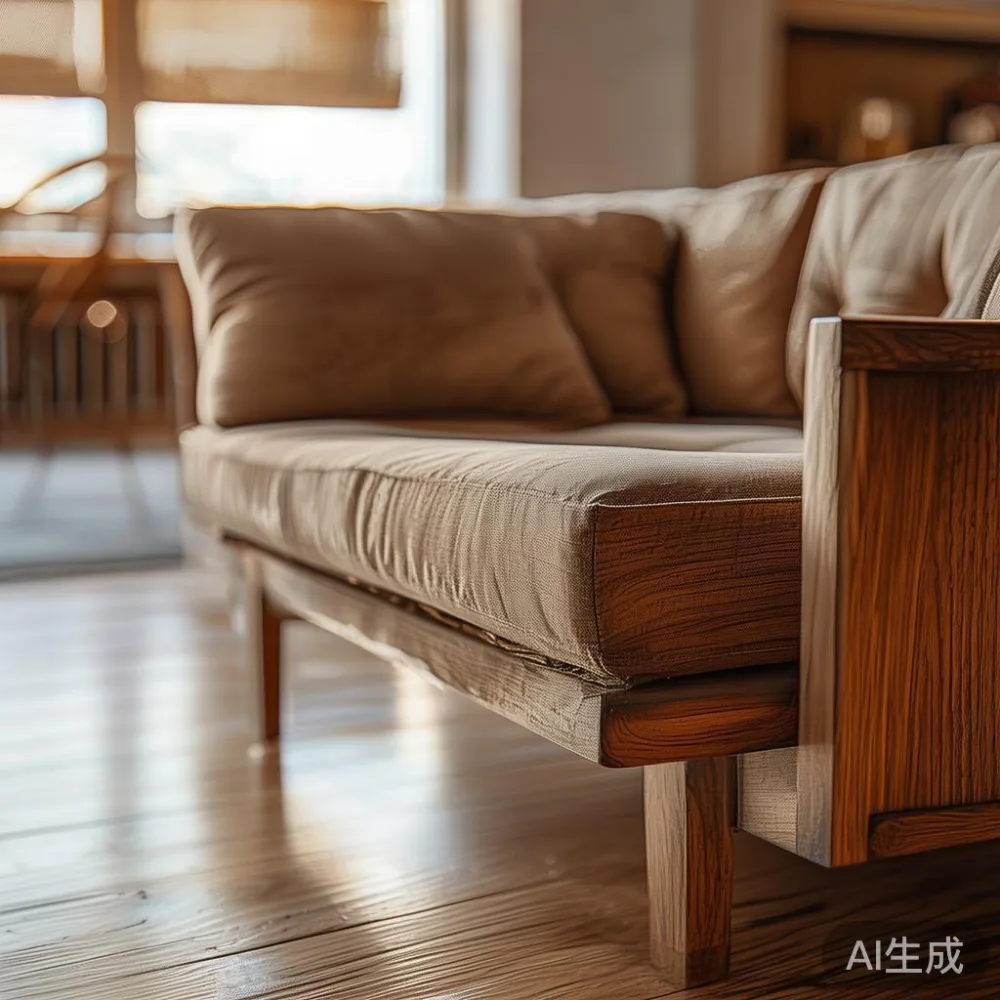
What does warm minimal actually look like in a Singapore HDB or condo?
Warm minimal is not the cold, gallery-style minimalism you see in some show flats. It keeps the restraint — clean lines, no clutter, one material per surface — but swaps cool greys for honey oak, ash grey, travertine, and putty. In a 1,066 sqft five-room HDB in Tampines I walked through recently, the owner had painted every wall in 9Y0990, then added a 240 cm solid wood sofa in raw oak, a 140 x 80 cm travertine marble table, and a single wool rug in oat. The whole room cost under $6,800 for furniture, and it read as quiet money, not budget minimalism.
In practice, this means four things you can copy in any Singapore home: keep the palette to three wood shades (oak, walnut, ash), keep metals to brushed brass or matte black, keep fabrics to linen, cotton, or bouclé, and keep your floor visible. Rugs should be 200 x 280 cm or smaller so the tile or vinyl underneath still reads. Anything more than that, and the room starts to feel layered rather than calm.
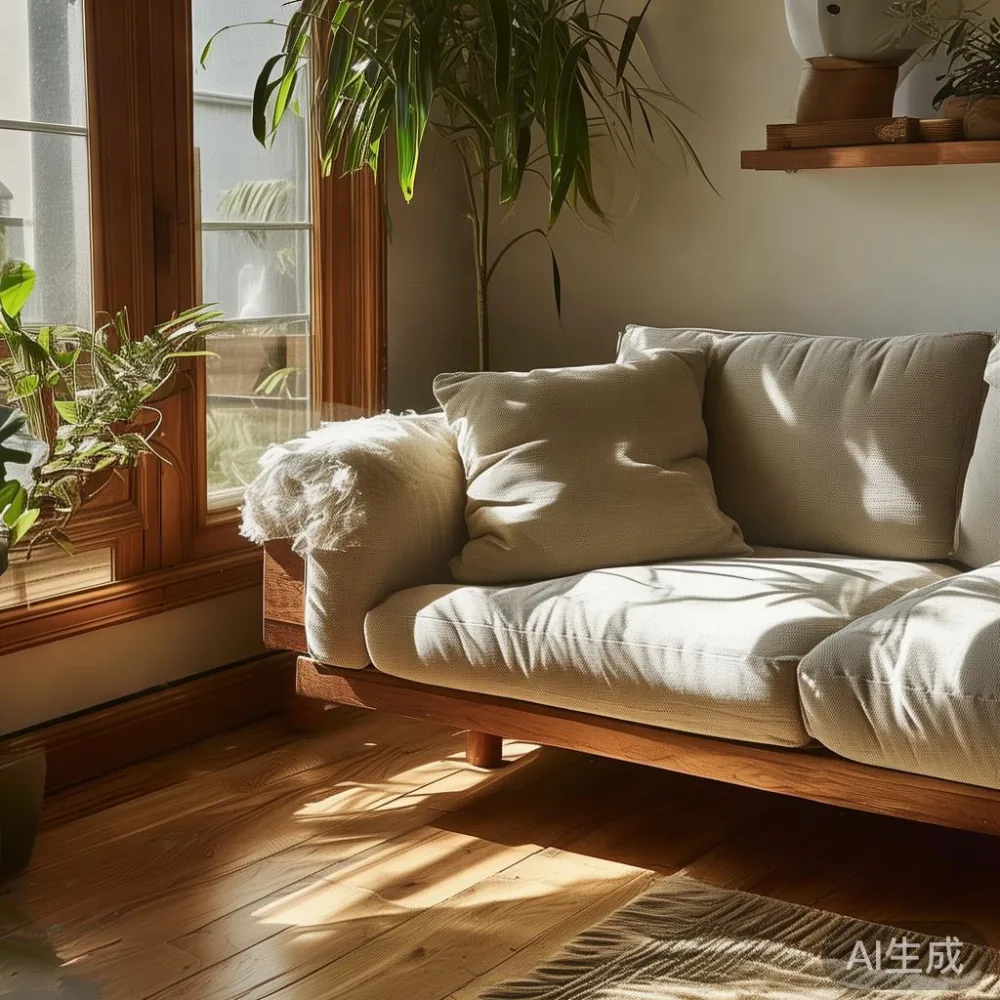
How do I choose a rattan furniture for a home office?
For a Singapore home office, pick a rattan piece with a solid wood inner frame, a seat or top height between 44 and 46 cm, and a load capacity of at least 120 kg — anything lighter will bow within two wet seasons. Rattan pairs naturally with warm minimal because the caning adds texture without colour, which is exactly the kind of restraint this style needs. Look for steam-bent rattan over peeled rattan for the chair back, kiln-dried rubberwood or teak for the frame, and a clear matte seal so the cane can breathe in our 80–90% humidity. Avoid rattan with visible glue lines or plywood cores, and skip pieces over 8 kg if your lift access requires a staircase turn larger than 90 degrees.
A rattan desk chair next to a solid wood bed frame in ash, or a small rattan stool under a 90 cm walnut nightstand, is usually enough. Anything more starts to drift into coastal, which is a different scheme.
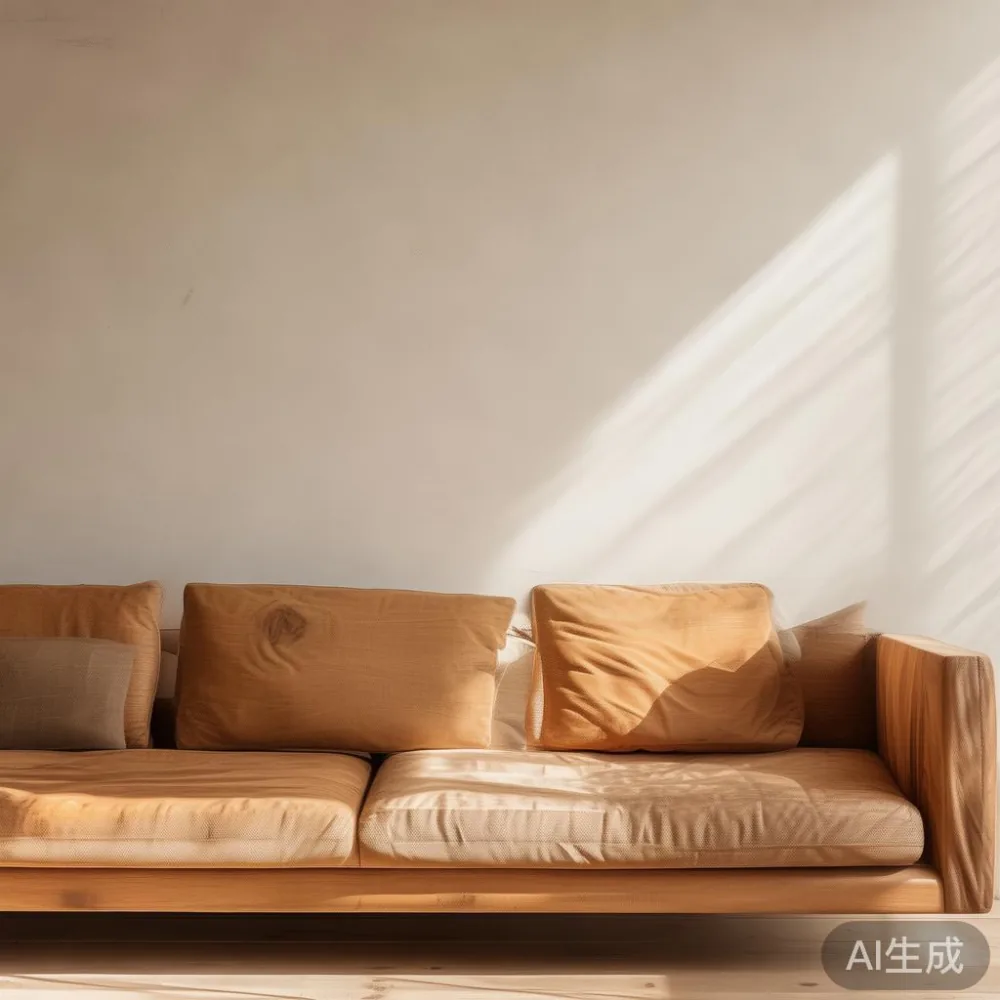
What wood tones work with warm minimal walls and how do I keep them from clashing?
Stick to two rules and you will not clash. Rule one: keep all your wood within the same colour family — either yellow-warm (oak, ash, maple) or red-warm (walnut, cherry, mahogany). Mixing a yellow oak bed frame with a red-walnut dining table is the fastest way to make a small flat look mismatched. Rule two: vary the grain, not the tone. A flat-cut oak dining table next to a quarter-cut oak wardrobe reads as layered, not loud.
For Singapore HDBs with warm-white or off-white walls (9Y0990, 9Y0834, or Nippon Ciel 9010 are common), the safest pairing is white oak at 8–12% moisture content, sealed with a hardwax oil rather than polyurethane, so the grain stays open. A 200 cm solid wood sofa in this oak, a 180 x 90 cm dining table in the same species, and a three-door wardrobe in quarter-cut oak will read as one material story even though the pieces are different shapes. Pricing in Singapore runs roughly $1,280–$1,850 for a 3-seater solid wood sofa frame, $2,200–$3,400 for a six-seater dining table, and $2,800–$4,100 for a three-door wardrobe, before GST.
How should furniture be sized for Singapore lift and corridor widths?
This is where a sofa guide has to get local. Standard HDB passenger lifts are about 1.4 m wide by 1.95 m deep, with a door of 0.9 m. Most condo service lifts are 0.9 m wide and 2.1 m deep. Corridors in blocks built from 1983 onwards are 1.5 m wide. A 240 cm solid wood sofa will not fit through a 0.9 m door on its side, but a 200 cm one usually does, and a 180 cm one almost always does. Always measure your lift door diagonal — for a 0.9 x 2.1 m lift, the diagonal is about 2.28 m, so anything under 2.2 m on its longest side can usually be stood upright.
For dining tables, a 180 x 90 cm top is the largest I would specify for a standard HDB lift. Anything 200 cm or more needs to be split-leg, with the top in two halves and the legs detached. Bed frames over 200 cm should also be split — most suppliers, including MIDHILL, will deliver a 200 x 210 cm king-size bed frame as two side rails and a slat pack, and reassemble in the bedroom. For wardrobes, anything wider than 120 cm should be a two-piece back panel. Marble tables should be specified with a stone top under 90 kg per slab, so two installers can carry each piece without damaging the lift floor — most building management requires padded blankets, which any serious supplier will bring.
Which materials age well in Singapore humidity and how do I care for them?
Singapore sits at 80–90% relative humidity for most of the year, and indoor temperatures hold around 25–28°C. Solid wood furniture needs to be kiln-dried to 8–12% moisture content for our region, not the 6–8% that European suppliers often ship, otherwise it will crack within 18 months. Oak, ash, walnut, and teak all perform, as long as the seal is breathable — hardwax oil or danish oil, not high-gloss polyurethane. Marble tables need a penetrating sealer every 12 months, and coasters for daily use, because acidic spills (lime juice, kopi) will etch the surface within minutes.
Rattan is fine for air-conditioned spaces but should not sit in direct sunlight near a window, or the fibres will craze. Bouclé a fabric or linen-blend upholstery should be vacuumed weekly with an upholstery head and dry-cleaned every 18 months — the humidity will push odours into the weave if you skip this. Leather, if you use it on a solid wood sofa, should be conditioned every 6 months with a neutral cream, never a wax. MIDHILL offers lifetime refinishing on its solid wood frames, which matters here: a sand-and-re-oil every 8–10 years keeps oak and walnut fresh, where a cheaper frame would already be greying.
How do I build a warm minimal room without it feeling sparse or staged?
Texture is what separates warm minimal from cold minimal. Every surface needs at least one tactile element: a bouclé cushion on a linen solid wood sofa, a ribbed ceramic vase on a marble table, a slubbed linen curtain, a raw oak stool next to a polished walnut nightstand. Without these, the room reads as a show flat, and in Asia that often feels under-furnished rather than intentional. Aim for one piece of texture per 2 sqm of room, but vary the type — never two bouclé, never two ribbed surfaces next to each other.
A tested layout for a 25 sqm living-dining in a four-room Bedok flat: a 240 cm solid wood sofa in oak with two bouclé cushions, a 140 x 70 cm marble table at 38 cm height in front of it, a 180 x 90 cm dining table in the same oak 90 cm away, four dining chairs in ash with leather seats, a three-door wardrobe in quarter-cut oak along the corridor wall, and a 60 cm walnut nightstand in the master as a side table in the living zone. Total spend roughly $9,800–$12,400 before GST, which is mid-range for a Singaporean home aiming at a French light luxury or American light luxury palette — the difference is mainly in the hardware (brushed brass for French, oil-rubbed bronze for American) and the marble tone (lighter Crema Marfil for French, darker Emperador for American).
What is a realistic warm minimal furniture budget for a Singapore home in 2025?
For a 1,000 sqft Singapore home aiming at a warm minimal, post-modern light luxury look, a realistic furniture budget in 2025 is $14,000–$22,000 before GST for the main pieces (sofa, dining set, bed frame, wardrobe, two nightstands, one marble table, occasional chair). Adding rattan or upholstered occasional chairs pushes it to $18,000–$26,000. Delivery over US$350 is free from most Foshan suppliers, and 14-day returns are standard, but check the warranty: a 10-year structural warranty is the floor you should accept for any solid wood sofa, bed frame, or dining table, and anything claiming lifetime structural is worth reading the exclusions for. MIDHILL, for one, covers lifetime refinoshing on oaks, ash, and walnut — useful here because the humidity will grey the surface faster than in temperate climates.
One last note on a post-modern bed frame korea for Singaporean buyers: a 180 x 200 cm solid wood frame in ash or white oak with a low 28 cm side profile is the cleanest match for this palette, and pairs with a bouclé or linen headboard in oat or putty. Anything taller than 35 cm will start to read as modern rather than warm minimal, and the room will lose the calm.