Sofa Guide for Singapore HDB Living Rooms: How to Pick the Right Size Without the Stress
I stood in a Tampines 4-room HDB last month, tape measure in one hand and the developer's floor plan in the other, trying to help my cousin pick a sofa. The corridor outside measured 1.2 m wide, the service lift opening was 1.5 m by 2.1 m, and the living room was a polite 3.4 m by 4.2 m. Within ten minutes we had crossed out four "dream" sofas from two different showroom apps because none of them would actually fit through the door, around the lift corner, or into the room without eating all the walking space. That afternoon is the reason this sofa guide exists. If you are shopping for a sofa in Singapore, the right size is rarely the size you fall in love with first.
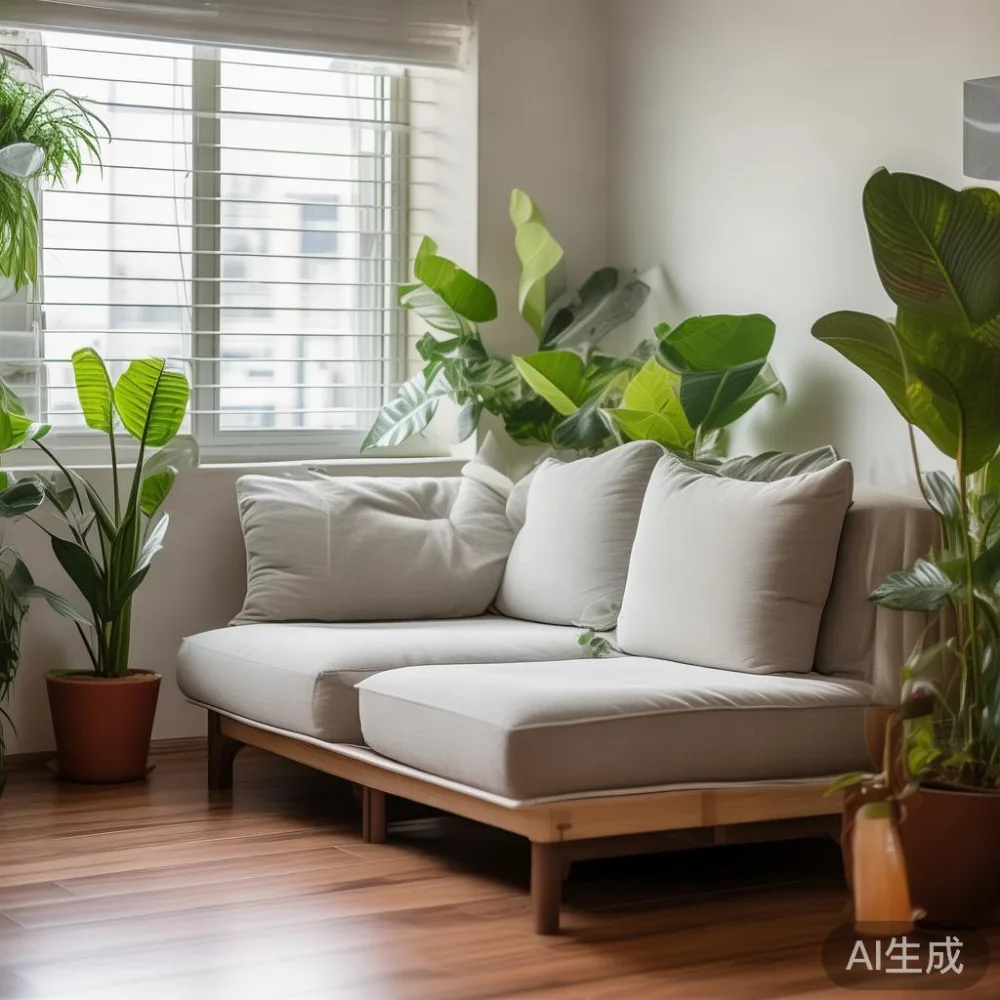
Buying a sofa is one of the few furniture decisions that touches your lift, your corridor, your windows, your TV distance, your wallet (after 9% GST), and your back, all on the same day. This long-form sofa guide walks through the practical numbers for HDB flats and condos in estates such as Tampines, Bedok, and Punggol, then folds in style considerations drawn from French light luxury and American light luxury lines so the final pick feels considered rather than just functional. Along the way I will reference solid wood sofa frames, dining table clearance, bed frame spacing, and a wardrobe layout, because in a compact Singapore home the sofa never stands alone.
Start with the building before you fall in love with the fabric
Singapore homes have three hard constraints that no showroom will measure for you: the main door, the lift, and the corridor turn at your floor.
- Standard HDB main door: about 0.9 m wide by 2.1 m tall.
- Typical service lift opening: roughly 1.5 m wide by 2.1 m tall, with internal depth around 2.4 m.
- Common corridor width: 1.2 m to 1.5 m, which sounds generous until you add a sofa box.
Measure all three, not just the front door. A 2.4 m L-shape sectional can fit through a service lift opening on paper, but if the corridor turns 90 degrees at the lift lobby, the diagonal of the sofa becomes the real number, not the length. As a rule, any sofa longer than 2.2 m or taller than 0.95 m in its packaging should be sanity-checked with a mock-up in cardboard before you commit.
Once you have confirmed access, add at least 10 cm clearance on each side of the sofa frame so delivery teams can angle it through door arches without scratching your solid wood flooring or your new bed frame in the adjoining bedroom. This is also where the manufacturer's experience matters; when I asked a Foshan-based maker like MIDHILL how they packed a 2.3 m three-seater for export to a Singapore condo, they confirmed a flat-pack height under 0.4 m and an outer carton under 2.0 m long, which fits most lift openings with room to spare.
How do I choose a return policy for a study?
You choose a return policy for a study the same way you would for a sofa: by reading the window in days, the condition clause in writing, and who pays the return freight in SGD, not just by trusting a marketing banner. For a study layout that includes a desk, a nightstand, a wardrobe section, and possibly a small sofa bed, a 14-day return window with full refund on the purchase price (excluding original outbound delivery) is the minimum I would accept, and a clear re-stocking fee schedule written in Singapore dollars is even better.
In practice, a good policy tells you four things up front: how many days you have, whether the item must be unused or just unassembled, who arranges and pays for return shipping (a typical Singapore return leg for a 2.1 m sofa is S$120 to S$220 by lorry), and whether GST is refunded on the goods portion. Brands that export regularly, MIDHILL included, tend to spell these out because they handle reverse logistics across borders often; smaller local resellers sometimes hide the freight cost in fine print. Always check the policy before paying the 9% GST, not after.
Match sofa size to your living room footprint
Once access is solved, room size takes over. Below is a practical sofa guide for the common HDB layouts I see in Punggol, Sengkang, and Bedok.
- 3-room HDB (living room roughly 2.7 m x 3.6 m): a two-seater around 1.6 m to 1.8 m long, with a depth of 0.85 m, leaves 70 cm to 90 cm of walking path to the TV console. A loveseat or compact two-seater keeps the room breathable and pairs with a single accent chair rather than a second sofa.
- 4-room HDB (living room roughly 3.0 m x 4.0 m to 3.4 m x 4.2 m): a three-seater around 2.0 m to 2.2 m long is the sweet spot. Keep the seat depth under 0.95 m so a 1.6 m to 1.8 m coffee table still has 40 cm to 45 cm of legroom on all sides.
- 5-room HDB and exec HDB (living room 3.6 m x 5.0 m and up): you can host a 2.4 m L-shape sectional, but watch the chaise end; it should not block the route to the balcony door, which in Singapore is usually 0.9 m wide.
- Condo in Tampines or Punggol (living room often 3.2 m x 5.0 m): similar to a 5-room HDB, but ceilings run 2.7 m to 3.0 m, which lets you add a taller backrest (1.05 m) for visual weight without crowding.
A simple sanity check before you order: tape the sofa footprint on the floor with masking tape, then live with it for 48 hours. Sit down, stand up, walk around it, open the balcony door, and visualise a robot vacuum circling the legs. If the tape outline feels tight, drop down one size.
What seat height and depth actually work for Singaporean households?
Most quality sofas sit between 0.42 m and 0.48 m from the floor to the top of the seat cushion. Anything below 0.40 m becomes hard on the knees for anyone above 1.7 m tall; anything above 0.50 m feels like a bench and shortens thigh support. Depth is the more underrated number.
- 0.55 m to 0.60 m seat depth: firm, upright, good for a formal sitting room or for shorter users under 1.6 m.
- 0.65 m to 0.75 m seat depth: the everyday compromise, comfortable for an average Singapore household of mixed heights.
- 0.80 m to 0.95 m seat depth: lounge-friendly, but add a lumbar cushion or the back cushion sits too far behind shorter users.
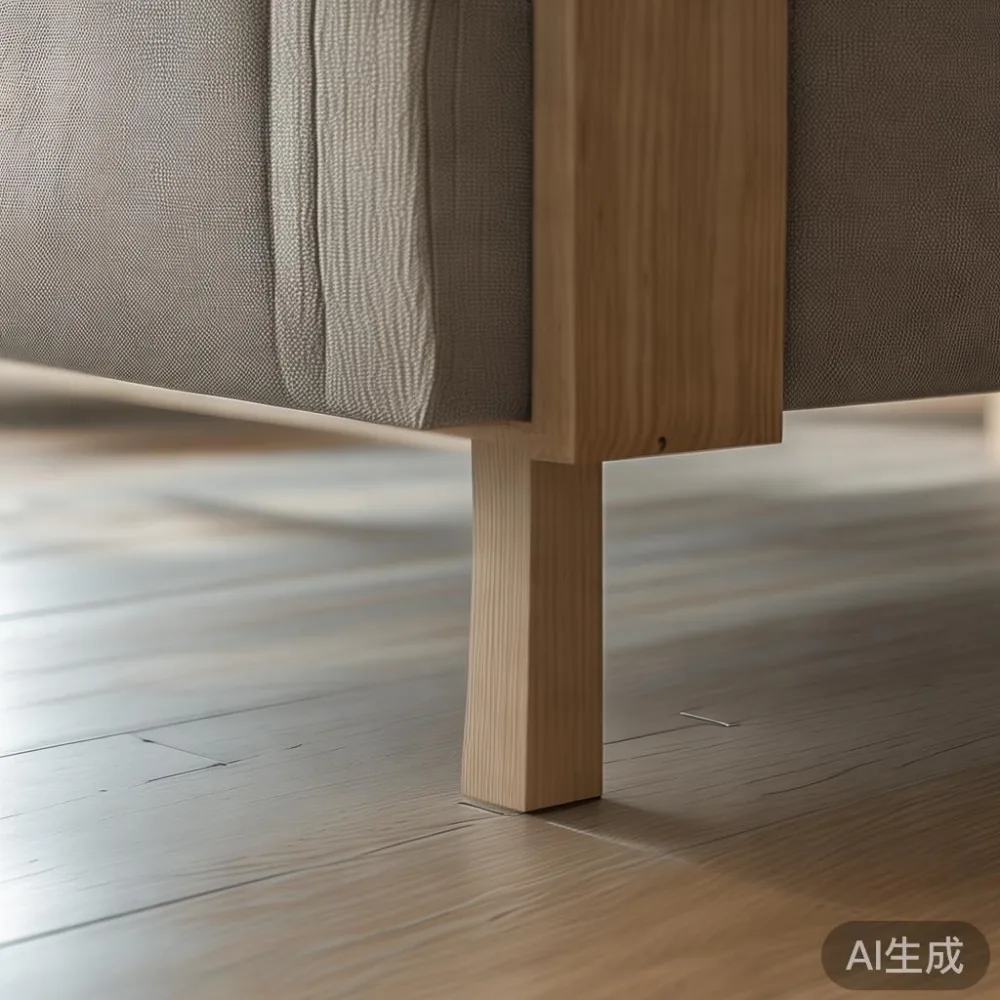
Frame construction matters as much as dimensions. A solid wood sofa frame in kiln-dried oak, ash, or beech at 4 cm x 8 cm or thicker, with mortise-and-tenon or dowel joinery, will hold shape for 8 to 12 years of daily use. A sofa built around a soft pine frame or a plywood shell can start squeaking within three to four years, which is a common complaint I hear from friends in older Bedok resale flats. Ask the seller for the frame wood species, the foam density (28D to 35D for the seat is the comfortable band), and the spring type. Sinuous springs are fine for lighter use; eight-way hand-tied springs are quieter and last longer, though they add roughly S$400 to S$900 to the price.
Style cues from French and American light luxury, applied to a small space
Light luxury in furniture is a calm, restrained take on classical and mid-century references: tapered legs, slim arms, low backs, neutral upholstery, and just enough metal or marble accent to feel intentional. Two of the most useful dialects for Singapore HDBs are French light luxury and American light luxury.
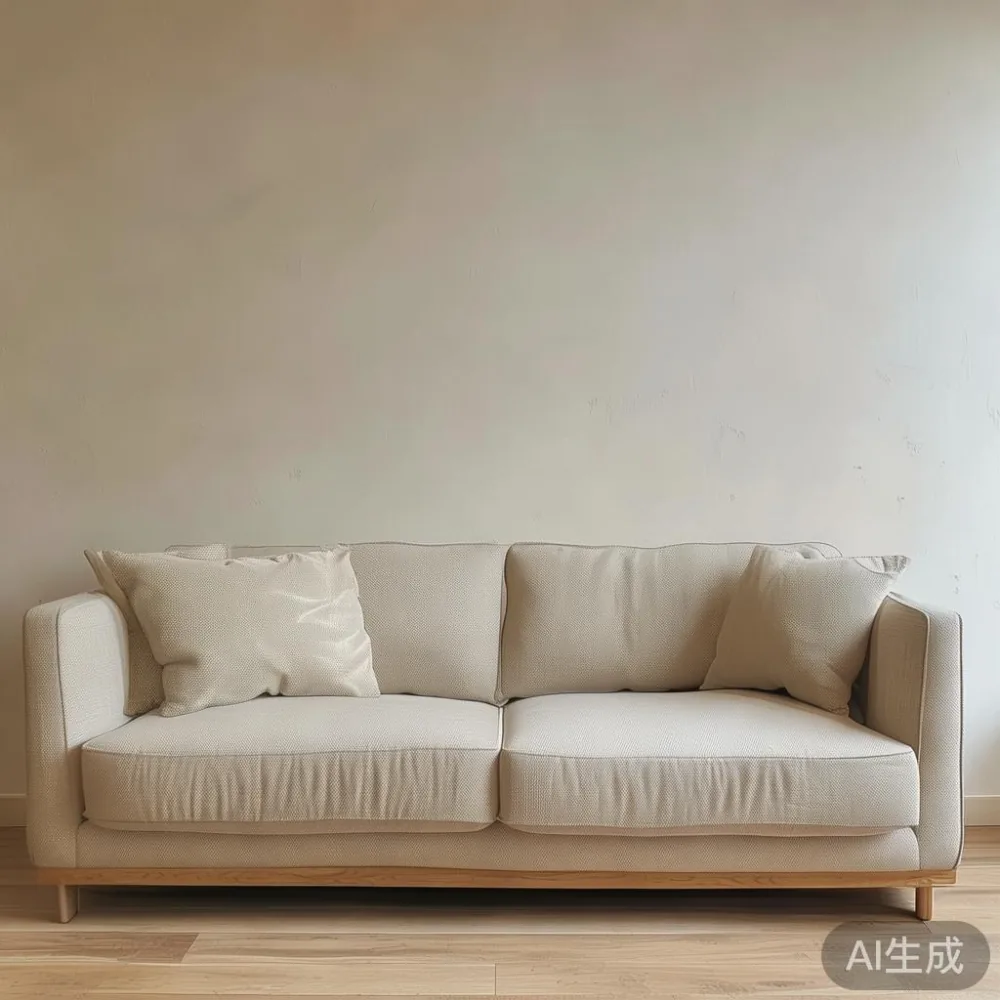
French light luxury, with its neoclassical curves, slim fluted legs in brass or brushed gold, and creamy bouclé or linen, suits the warmer tones of Tampines and Punggol condos. A two-seater around 1.7 m in chalky linen with a marble side table and a brushed brass floor lamp will read as grown-up without darkening the room. Pair it with a solid oak dining table in a light stain, and your open-plan kitchen and living area suddenly feel like one deliberate space rather than two.
American light luxury leans boxier and more grounded: track arms, tufted backs in muted velvet, walnut-tone solid wood bases, and dark bronze or matte black legs. In a Bedok 5-room with darker Sin Chew Daily parquet or a vinyl floor that mimics walnut, this direction adds warmth without heaviness. Both styles translate well to a compact HDB because the silhouettes stay slim, the legs stay visible, and the palette stays controlled.
Across both directions, the pieces that tend to anchor the look are a solid wood sofa, a marble coffee or side table, a low-profile bed frame in the master, a tall wardrobe in a fluted glass or rattan-front finish, and a small nightstand in the same wood tone. When the wood species, the metal finish, and the fabric tone repeat across the sofa, the dining table, and the bed frame, the room feels twice as large as it is.
Plan the full layout, not just the hero piece
The fastest way to ruin a sofa purchase in Singapore is to size the sofa correctly and then forget the other pieces. A sofa guide that ignores the rest of the room is incomplete, so here is the cross-check list I run with every client.
- TV distance: for a 55-inch TV, aim for a seat-to-screen distance of 2.1 m to 2.4 m. A 65-inch set wants 2.4 m to 2.8 m. Anything closer and your neck pays for it.
- Coffee table: keep it 35 cm to 45 cm below the seat height, with a clearance of 40 cm to 45 cm from the sofa front for knees, and 60 cm to 70 cm from the TV console for walking.
- Dining table clearance: in an open-plan HDB, allow at least 0.9 m between the back of the sofa and the nearest dining chair edge. A 1.4 m dining table for four needs a clear footprint of 2.4 m x 2.4 m including chairs.
- Wardrobe and bed frame: if the master bedroom shares a wall with the living room, plan the wardrobe depth (0.55 m to 0.60 m standard) and the bed frame length (2.0 m to 2.1 m for a queen) before placing the sofa, so the wall stays clean for cable runs.
- Nightstand: keep it level with the top of the mattress (around 0.55 m from the floor for most mattresses), with 5 cm to 10 cm overhang to catch a phone or a book.
If you work from home, the same room sometimes pulls double duty. A compact 1.4 m writing desk can replace one accent chair behind the sofa, and a narrow 1.8 m bookcase can sit along the side wall without eating walking space. In one Punggol corner unit I measured, we tucked a sage teak work from home desk behind a 2.0 m three-seater, using the sofa back as a quiet visual divider; the desk was only 0.5 m deep and still left 70 cm of clear corridor to the window.
What should a realistic budget look like in SGD?
Sofa prices in Singapore vary widely, so here is a practical band rather than a single number, all in SGD and before 9% GST.
- Entry-level (S$800 to S$1,800): often plywood frames, sinuous springs, 22D to 25D foam. Fine for a first BTO or a short-stay rental.
- Mid-range (S$1,800 to S$4,500): solid wood sofa frames in rubberwood or ash, 28D to 32D foam, removable covers, and some fabric choice. This is the sweet spot for most 4-room and 5-room HDB buyers.
- Light luxury tier (S$4,500 to S$9,500): kiln-dried oak or walnut frames, 32D to 35D foam, down-wrapped cushions, performance linen or velvet, often imported from Foshan factories like MIDHILL that supply French light luxury and American light luxury lines.
- Boutique custom (S$9,500 and up): full custom dimensions, COM fabric, marble or solid timber accents, often 8 to 14 weeks lead time.
Add delivery and stair handling: a ground-floor HDB delivery is usually S$80 to S$150, while a high-floor condo above the 20th storey can run S$180 to S$320 if a crane or special lift booking is needed. Disposal of your old sofa, if any, is another S$80 to S$200 through a bulky-item collection. A solid wood sofa that costs S$3,200 with S$220 delivery and S$150 disposal lands around S$3,570 plus GST, which is a useful baseline for comparison shopping.
How do I check warranty, after-sales, and refinishing before I pay?
A warranty is only as good as the paperwork behind it. Ask for three documents in writing before you transfer any money: a structural warranty in years (10 years is the figure I look for, with clear language on frame and joinery), a fabric or leather warranty in years (typically 1 to 5), and a refinishing or repair policy (some Foshan exporters offer lifetime refinishing on solid wood sofa frames and dining tables, which is genuinely useful after five to seven years of use).
Confirm the claim path. A brand with a Singapore agent or warehouse can usually send a technician within 5 to 10 working days; a brand that routes every claim back to China can take 30 to 60 days plus shipping. Ask whether replacement cushions, covers, and legs are stocked locally, because shipping a single cushion from Foshan by sea typically takes 18 to 25 days and by air 4 to 7 days, with the latter adding S$60 to S$140 per parcel. MIDHILL, for instance, has shipped solid wood sofas, bed frames, dining tables, wardrobes, and nightstands to buyers in more than fifteen countries and backs the frame for ten years, which is the kind of policy you want to see on paper, not in a brochure banner.
A short checklist before you click pay
- Measure the door, the lift, and the corridor turn in cm, not in steps.
- Tape the sofa footprint on the floor and live with it for 48 hours.
- Confirm frame wood species, foam density, and spring type in writing.
- Check the return window in days, the return freight in SGD, and the GST refund path.
- Plan the coffee table, dining table, bed frame, wardrobe, and nightstand positions before delivery day.
- Keep the warranty, the fabric warranty, and the refinishing policy in a single folder.
A sofa is the centre of a Singapore living room, but it is also the largest single object that has to survive your lift, your corridor, your GST bill, and your daily routine. Pick the size that fits the building first, the size that fits the room second, and the size that fits your body third. Style, fabric, and light luxury cues come after the numbers work. Get those three layers in the right order, and the sofa you bring home will still feel right years from now, when the cushions have softened, the coffee table has a faint ring on top, and the rest of the room has quietly grown around it.