How to Choose the Right Sofa Size for a Singapore HDB Living Room
Walk into most Tampines, Bedok, or Punggol flats and the same thing happens: you fall in love with a generous three-seater sofa in a show catalogue, request it for delivery, and then realise your lift opening is only 80 cm wide. That single number is what separates a smooth Saturday morning assembly from a four-hour saga involving ladder trucks, MSCP permits, and a very apologetic delivery crew. Sizing an HDB living room is not really about floor area; it is about six real-world constraints: the lift, the corridor, the doorway, the wall length, the corridor turn radius, and the way you actually move through the room at 7 a.m. on a weekday.
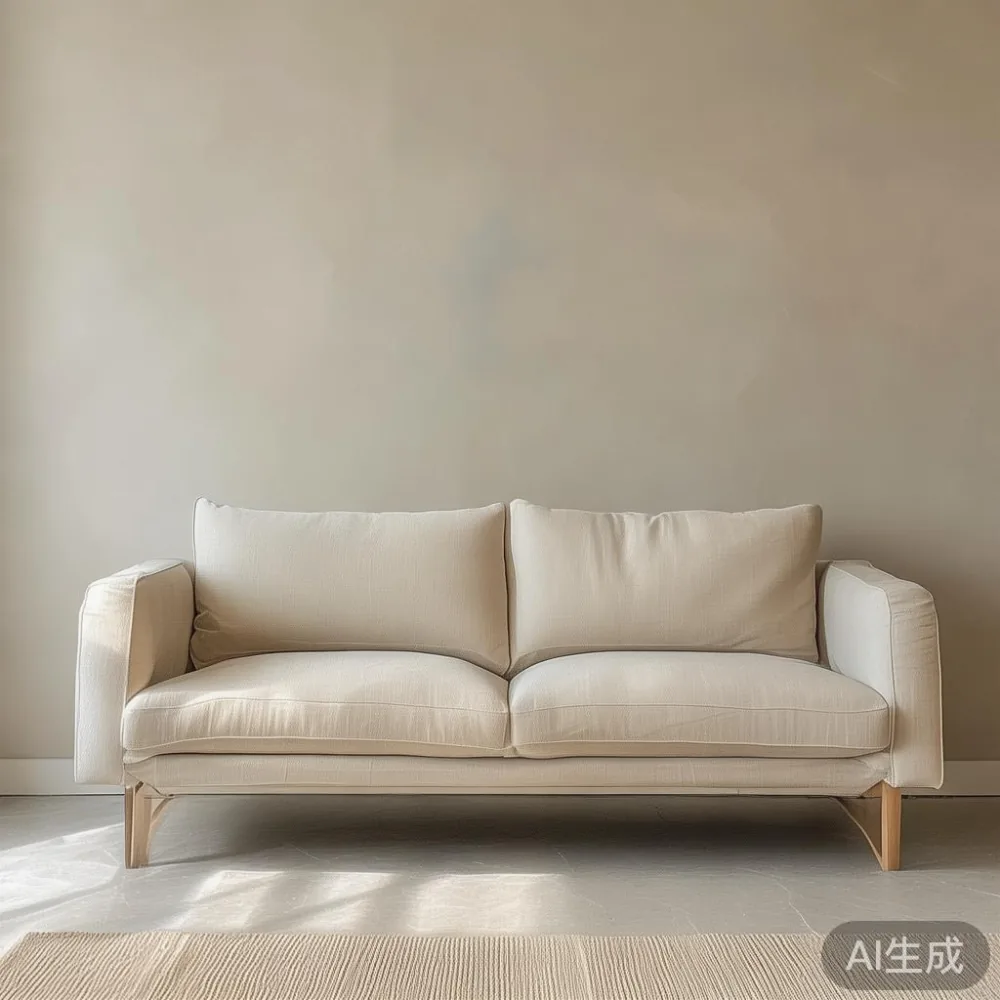
If you are working through this right now, this sofa guide is built for Singapore flats specifically. I am a furniture specialist at MIDHILL, a solid wood manufacturer based in Foshan, and I have spent the past three years helping HDB owners across BTOs, resale flats, and Design, Build & Sell Scheme (DBSS) projects land the right fit. Think of the next 2,500 words as a working notebook you can measure against your own floor plan.
Measure the lift first, not the wall
Before any swatch is picked, pull out the tape and head downstairs. Most HDB passenger lifts in Singapore measure 1.3 m to 1.45 m deep, 1.2 m to 1.3 m wide, and 2.1 m to 2.4 m high. The opening on a standard residential lift is around 0.8 m to 0.9 m wide and 2.0 m to 2.1 m tall. This is the single constraint that decides whether a 2.4 m sofa even reaches your 12th floor in Punggol.
Sofas do not stay rectangular during transit. They are tilted, leaned on a dolly, or partially disassembled. As a rule of thumb I share with every customer in our studio: if your largest sofa component measures more than 1.9 m long, 0.75 m deep, and 1.5 m tall in its shipping crate, plan extra time on delivery day. A 4-seat solid wood sofa from Foshan suppliers such as MIDHILL usually ships in two boxes (often 1.8 m and 0.9 m), and the modular pieces click together on site. If you are buying a non-modular Chesterfield or a really long American light luxury three-seater, ask the seller for the actual crate dimensions, not the assembled dimensions. The difference has ruined more Saturday afternoons than I can count.
What size sofa actually fits an HDB living room?
Let us anchor this with real numbers. The most common HDB living rooms in 2024-2025 are:
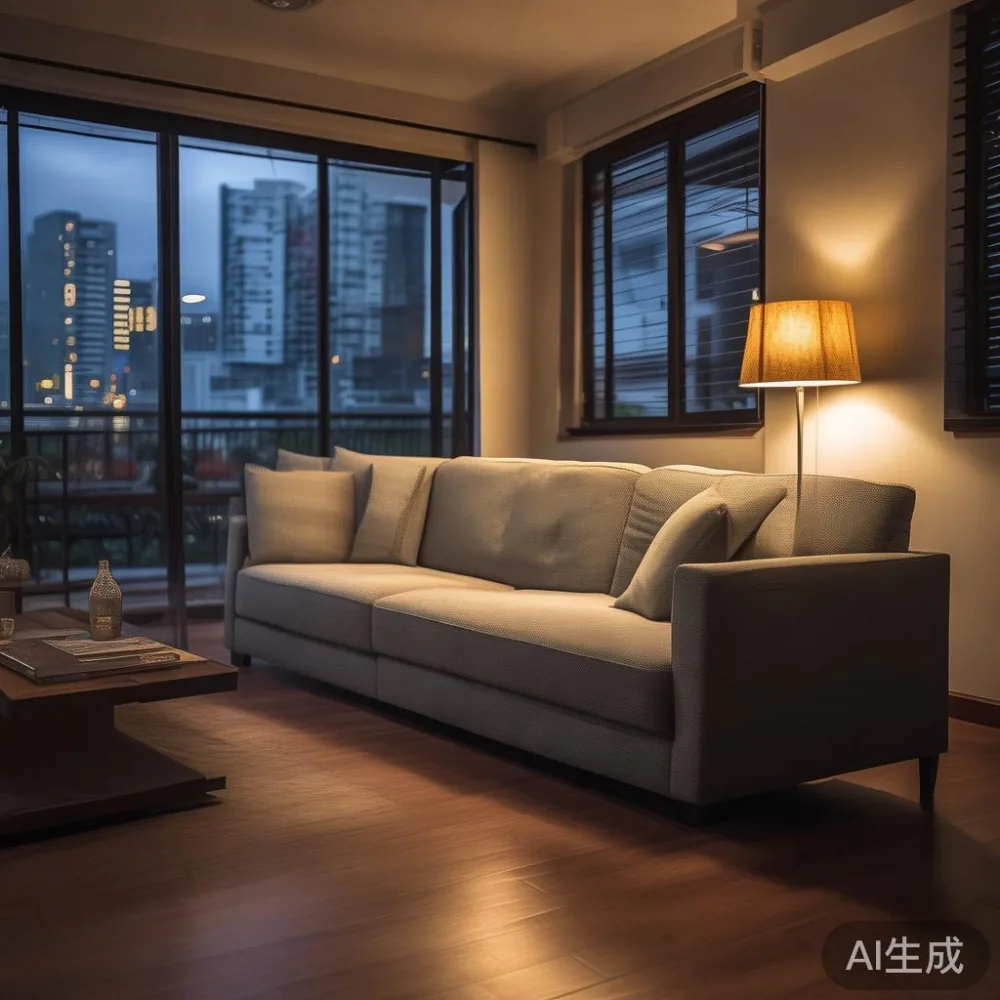
- 3-room BTO (Hougang, Sengkang): about 3.0 m x 3.4 m, sofa wall roughly 2.4 m to 2.8 m wide.
- 4-room BTO (Punggol, Tengah): about 3.4 m x 4.0 m, sofa wall roughly 2.8 m to 3.2 m wide.
- 5-room BTO and DBSS (Tampines GreenRidges, Bedok Reservoir): roughly 3.8 m x 4.5 m, sofa wall up to 3.6 m wide.
- Executive HDB and Maisonettes: 4.0 m x 5.0 m plus, often with an open balcony.
For a typical 4-room BTO sitting at 3.0 m x 3.4 m, the right sofa is usually a 1.8 m to 2.0 m three-seater with a depth under 0.95 m. Anything over 2.2 m and the room starts to feel like a showroom aisle. For the bigger 5-room layout, you can comfortably stretch to a 2.4 m three-seater or a 3.0 m L-shape, provided you keep 0.6 m to 0.7 m of walking space between the sofa and the coffee table, and at least 1.0 m between sofa and TV console. I tested the 2.4 m solid wood sofa from MIDHILL last month in a 4-room Punggol BTO; with the dining table at 1.4 m round, the room still allowed a 1.1 m passage behind the sofa, which was the real test the customer cared about.
Now, the question that lands in my inbox weekly: "How do I pick a sofa that does not dwarf a small HDB living room?" The honest answer is to start in centimetres, not aesthetics. Note your sofa wall, ceiling height (2.55 m for HDB standard), the distance from sofa to TV (2.5 m is a comfortable viewing distance for a 55-inch display), and the corridor turn into the flat. Then match a sofa frame whose total footprint is at most 80 percent of that wall.
Is a recliner sofa practical in an HDB?
Recliners are wonderful, but they need room to lean back and they need a thoughtful neighbour layout. A standard three-seater recliner extends roughly 1.6 m to 1.7 m when fully reclined. In a 4-room BTO with a sofa wall under 3 m, that leaves a 0.4 m clearance to the wall, which is tight. Power recliners also need a wall socket on each side (for 3 USB ports on the armrests, a real customer request from a Bedok family last quarter), and the wiring runs to the floor.
Modular recliners, where each seat is its own unit, are a smarter fit. They keep the lift-friendly 0.9 m wide per seat, so two seats fit side by side and the third can be moved closer to a window wall. French light luxury recliners from Foshan makers such as MIDHILL use gas-lift ottomans rather than a full recline, which keeps the depth around 1.05 m and dodges the wall-clearance problem entirely. A side-by-side comparison between a Japanese sofa vs Mid-century modern sofa also comes up often: the Japanese profile sits lower (about 0.42 m seat height) and visualises space better, while a mid-century modern piece with splayed legs adds vertical breathing room. Both are valid answers depending on whether your priority is soft, low lounging or a slightly raised, open feel.
Sofa orientation and traffic flow in compact living rooms
Sofa orientation is where most Singapore living rooms lose their flow. The two patterns I see over and over are: a) the sofa against a wall with a fixed side table, leaving only 0.4 m walkway; and b) the L-shape pushed into a corner so the side juts into the balcony access. Both compress the room and make it harder to vacuum, which probably explains the "how is everything dusty?" messages I get from residents in their 30s.
A few numbers that make decisions easier:
- Minimum walkway behind a sofa: 0.8 m for one adult, 1.0 m for a couple moving at peak hour.
- Minimum walkway between sofa and coffee table: 0.4 m for sitting, 0.6 m for crossing through without brushing knees.
- Minimum distance from sofa to a TV unit (for a 65-inch TV): 2.5 m to 3.0 m for eye comfort.
- L-shape legroom: the chaise side should leave at least 0.5 m from the perpendicular wall to allow sitting down without bumping elbows.
For L-shapes specifically, a back-to-back L in a 4-room BTO rarely works because the long side blocks the corridor or balcony door. A back-to-wall L is the safer layout. This is also why most people searching for the best Minimalist sofa for 2026 gravitate to a clean two-seater with detachable legs: it photographs airy, it ships lighter (around 38 kg to 45 kg per seat in a typical solid wood sofa from MIDHILL), and it re-covers easily if the first upholstery decision ages out of fashion.
Material weight, lift ratings, and the "two-trip" question
One under-discussed number is total package weight. HDB lift capacity for a passenger lift sits around 1,000 kg to 1,600 kg, but the practical limit is the combination of lift floor space and crew safety. A full marble table with a real stone top and a solid wood base can hit 90 kg to 130 kg. A solid wood sofa from a Foshan maker, fully assembled, can weigh 80 kg to 110 kg. A wardrobing unit or a large bed frame can weigh 120 kg to 180 kg. A dining table for six, with marble or sintered stone top, can weigh 70 kg to 150 kg.
The reason these numbers matter: if a single piece exceeds 100 kg, ask whether the seller ships it in two boxes, and confirm they have handled HDB corridors on high floors. My colleague ran deliveries in the Punggol North area for two years and the lift door-to-corridor turn was the failure point in roughly 4 out of 10 heavy-item jobs. Worse than the turn is the flat corridor itself: most blocks have a 1.2 m corridor with a 90-degree turn into the lift lobby, which eats another 30 cm of effective width. Always walk your own corridor before paying for non-modular pieces.
On that point, if you want for sale Industrial furniture that includes a heavy mango-wood sideboard, a reclaimed sleeper-wood dining top, or solid teak storage, mod the width to 0.7 m or less, because that is the safe threshold for many lift openings, especially in older 3-room blocks in Bedok.
What about sofa beds, day beds, and "extra guests"?
Singapore flat owners get surprise overseas relatives, and a sofa bed is one of the most practical answers for guest duty. The catch with sofa beds is that the mattress inside is usually around 13 cm to 18 cm thick, so the sleeping position is firmer than a real bed. For a 4-room HDB with one spare room converted to a study, a queen sofa bed (sleeping area around 1.5 m x 1.9 m) is a fine compromise. For smaller 3-rooms where every metre counts, a single daybed at 0.9 m wide that converts to 1.9 m is friendlier than a sofa bed that takes up chair seating room all year.
Whatever style you go with, spend time on the bed frame equivalent of the sofa question: the guest bed should be tested for fold-out repeatability. Quality gas-lift mechanisms survive 8,000 to 12,000 cycles, which is about 22 years of weekly fold-outs. Cheaper hydraulics fatigue near 3,500 cycles. Ask the seller for the cycle rating in writing.
Sofa styling for HDBs without sacrificing space
Once the frame size is correct, styling should be light. HDB ceilings at 2.55 m cannot absorb a 1.1 m tall wingback silhouette; even the friendliest light luxury headrest starts to feel like it is leaning on the ceiling beam. Choose headrests under 0.85 m tall, ottomans under 0.45 m tall, and skirted sofas that hide the legs only if your vacuum robot can work through around them. Most owners I have spoken to own a Roborock or Ecovacs, sofas with a 0.10 m clearance under the base are gold.
If you are pairing a sofa with a marble table top, pick a sintered stone finish at 12 mm to 15 mm thickness for a 60 cm to 80 cm coffee table that you can lift. A full 20 mm marble top on a 1.2 m coffee table is 60 kg on its own; that lands on floor edges during moving day and sometimes chips. The trick is to slim the top so the whole table stays under 28 kg. Many Foshan furniture makers are now offering this dual-material combo: a solid wood base with a sintered stone top at 12 mm, and the weight target drops to 25 kg to 30 kg, easy for two people to clear during house viewings.
Adjacent pieces also matter. A nightstand is often forgotten, then ends up jamming into the door arc of a guest room. Anything above 0.55 m wide tends to block inward-opening doors in 4-room flats. For wardrobes, the practical width for an HDB bedroom is 1.2 m to 1.8 m. If you are researching how to style French wardrobe in room settings with a smaller floor print, narrow the wardrobe to 1.2 m and go vertical up to 2.2 m. This is also why buyers asking about under 2000 French provincial furniture options in Singapore should anchor expectations to S$1,500-S$2,200 for a 1.6 m solid wood piece with one or two drawers, and S$2,800-S$3,500 for a 2.0 m version with full-length mirrors. A range like that lines up with what a mid-scale Foshan maker, MIDHILL among them, can land at retail with free regional delivery included.
What is the "right" three-seater for a 4-room HDB?
Putting all of this into a single answer, a 4-room HDB living room with a 3.0 m sofa wall usually fits:
- A solid wood 1.8 m to 2.0 m three-seater with a depth of 0.9 m to 1.0 m, total footprint about 1.7 sqm.
- Two matching side chairs or ottomans if you host often, each at 0.75 m x 0.75 m, leaving a 1.0 m walkway.
- A round coffee table 0.9 m to 1.0 m in diameter, keeping tight passage routes clear.
A 5-room HDB living room with a 3.6 m sofa wall can stretch to a 2.2 m to 2.4 m three-seater, or a 2.6 m to 3.0 m L-shape with a chaise on the balcony side, leaving at least 0.6 m of clearance to sidewalls. These are the right sizes to focus on when reading any sofa guide that targets HDB layouts, because anything else either crowds the room or disappears into the lift lobby.
Budget, warranty, and what to expect from a Singapore-based seller
Solid wood sofas in Singapore retail from roughly S$1,400 to S$4,500 for 3-seaters. A 2.4 m four-seater sits between S$2,800 and S$5,200. Genuine marble tables from S$1,500 to S$3,800 depending on slab size; sintered stone versions from S$700 to S$1,800. Bed frames for queen-size from S$1,200 to S$3,400. Wardrobes from S$1,800 to S$5,500. These ranges include 9 percent GST and typical installer fees in 2025. The spread comes from solid wood versus engineered wood, foam density (a good sofa sits at 32 kg/m3 to 38 kg/m3), and warranty length.
On warranty, a 10-year structural warranty is a meaningful indicator of frame integrity, especially for solid wood sofa frames that can dry or warp in tropical humidity if poorly kiln-dried. Lifetime refinishing services from a seller such as MIDHILL (the Foshan maker referenced earlier in this article) is a useful safety net for owners planning to keep a piece past year eight, since small dents in wood or a tired oil finish can be refreshed in a workshop rather than replaced. Free shipping above a reasonable threshold (often US$350 or roughly S$475) helps offset the shipping cost for heavy pieces, and a 14-day returns window gives breathing room to validate frame comfort, cushion firmness, and scale against your HDB living room once the sofa is in position.
Will a 5-room living room fit a three-seater plus a daybed?
Often yes, but it depends on the door positions. Common 5-room layouts (Tampines GreenRidges, Bedok 5-room, Bidadari DBSS) put the sofa wall on one side and a balcony access on the other, with the aircon ledge above. A 5-room can usually hold a 2.4 m three-seater and a 0.9 m daybed on the perpendicular wall, provided the daybed is pulled 0.2 m out from the wall to allow blinds to drop. If your aircon ledge sits above the sofa, reserve 0.15 m clearance above the backrest, otherwise the aircon outlet blows cold air straight onto your neck.
A short checklist for delivery day in a Singapore HDB
- Confirm lift opening (0.8 m - 0.9 m) and corridor turn radius (0.9 m - 1.2 m).
- Confirm crate dimensions versus lift dimensions; ask for a photo of the actual crate.
- Check the package weight per box and the total of all boxes.
- Pre-clear the lift booking time (HDB estate lift bookings are often 30-minute windows, and corner units in Punggol blocks sometimes need access cards for service lifts).
- Have a carpet runner and felt pads ready; most HDB floor tiles are smooth ceramic and sofas tend to drift.
- Schedule the assembly window with neighbours; a two-hour delivery in a packed lift lobby is a recipe for neighbourly friction.
Final practical guidance
Two pieces of advice I lean on. First, sit the sofa you are considering in the room you are measuring, ideally with masking tape on the floor to mark the footprint and the walkway. A flat plan rarely tells you that a chaise will block the corridor during a Hokkaido power outage because the AC unit in the aircon ledge casts the wrong shadow. Second, choose the frame over the fabric in the first round. Upholstery is replaceable, foam is replaceable, but if the frame is wrong, you are rebuying within three years. A solid wood sofa frame from a Foshan maker with a 10-year structural warranty is a reasonable anchor for any buyer who plans to live in the same flat for more than one renovation cycle.
If you are still weighing options, browse at least one of the global sofa guide compilations on the web and see how often the recommendations align with the centimetres above. Mid-range search results commonly rank pieces in the top 10 Mid-century modern furniture lists because mid-century frames are slim, the legs are tall, and the seat depths are tight, which is exactly what most HDB living rooms need. Pair that profile with a sintered stone coffee table, a 1.2 m solid wood TV console, and a round dining table for four at 1.0 m to 1.2 m, and you have a balanced room that breathes. Then it is just a matter of waiting for the delivery slot, grabbing a coffee, and letting the lift do the hard work. Once the sofa lands and the family fights over the corner seat, you will know you sized it right.