Sofa Guide for Compact Singapore Homes: Styling a Small Apartment Without Making It Feel Crowded
Last month I visited a colleague's new 65 sqm executive condominium in Punggol, and what struck me was not her renovation palette or her view of the Punggol Point LRT, but the fact that her living room actually breathed. A 3-seater sofa in a soft oat boucle sat 90 cm away from a slim 180 cm solid wood TV console, a round 90 cm marble table anchored the dining zone without dominating it, and the corridor outside her unit felt normal to work through with a dining chair tucked sideways in hand. That image has stuck with me while writing this sofa guide, because in Singaporean HDB flats and compact condos, the difference between a home that feels calm and one that feels cramped almost always comes down to three measurable things: the footprint of the sofa, the clearance around it, and the visual weight of the pieces paired with it.
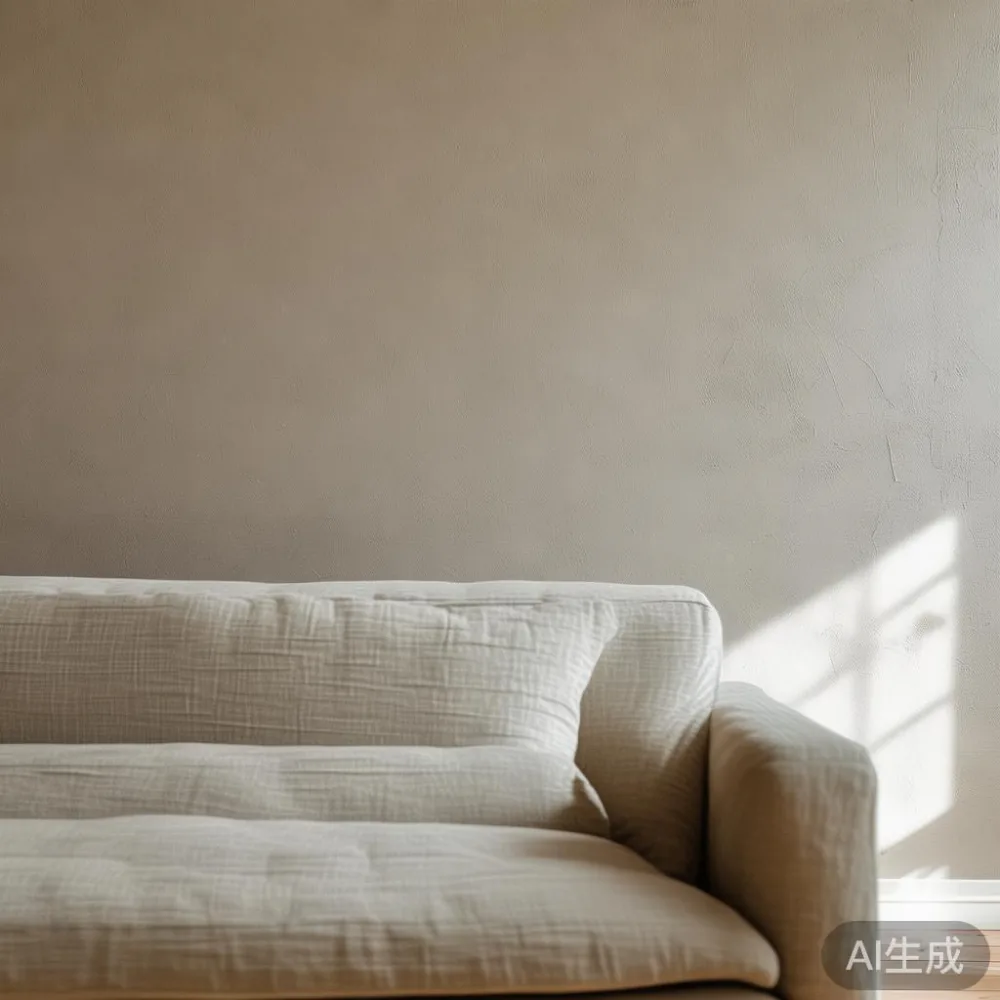
Before any styling decision, measure first. In Tampines and Bedok resale flats, the internal width between living and dining walls often runs between 280 cm and 340 cm, which sounds generous until you subtract a 220 cm solid wood sofa (with a typical depth of 95 cm) and a 60 cm walkway behind it. You are left with a usable circulation gap of roughly 25 cm, which is the width of a folded umbrella, not a person. Lift doors in newer BTO blocks tend to be 80 cm to 90 cm wide and about 210 cm tall, so any piece longer than 200 cm or taller than 200 cm will need to come up via the service lift or staircase. In older walk-up blocks in Geylang or Tiong Bahru, that ceiling clearance can drop to 190 cm, ruling out tall bookcases entirely. None of this is theory; it is what a delivery team handles every Friday morning between 9 am and 1 pm, when most Singapore condo management councils allow movers in.
How much floor space does a sofa actually need in a small Singapore living room?
A reliable starting point is to give your sofa a breathing zone of 70 cm to 90 cm in front of it. That single number, more than any styling trick, decides whether your room feels open or squeezed. In a 4-room HDB flat with a typical 3.2 m x 3.2 m living zone, I would push toward a 180 cm to 210 cm solid wood sofa rather than a 250 cm corner unit. The trade-off is one fewer seat, but the gain is that you can place a 120 cm x 70 cm marble table behind the sofa as a sofa table, leaving 110 cm of clear walkway into the dining zone. If you are exploring light luxury for office environments or want a lounge chair that doubles as a reading nook, a 75 cm wide armchair paired with a 45 cm oak nightstand-style side table gives you seating for two and a surface for a glass, all within a 1.6 m x 1.6 m footprint.
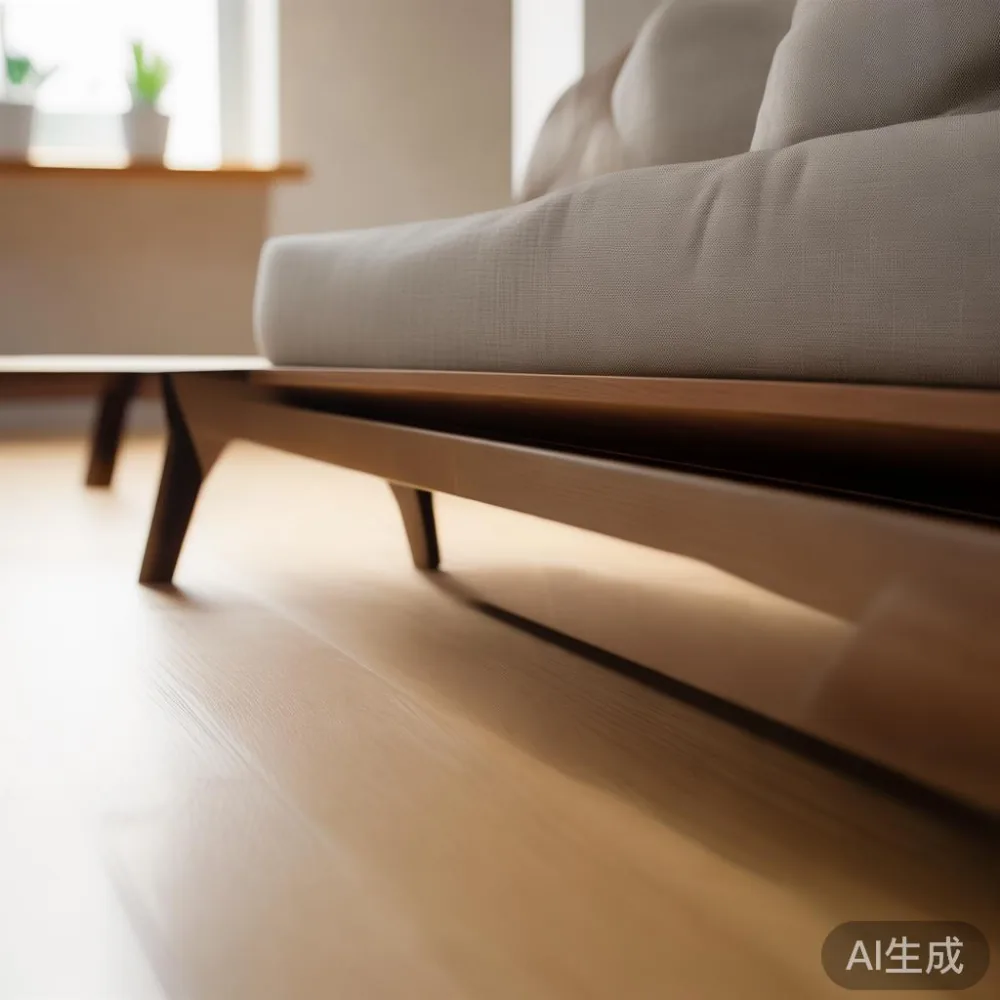
For delivery context that buyers rarely ask about: a Foshan-made solid wood sofa in this size range, packed in reinforced cartons and strapped on a pallet, usually weighs between 65 kg and 95 kg depending on the frame (ash, oak, or rubberwood). Two delivery men can carry it through a standard 90 cm corridor without tilting it more than 30 degrees. By contrast, a fully upholstered European-style sectional in the same length can weigh 130 kg to 160 kg, often forcing the team to remove the door stop on a 75 cm bedroom door just to angle it through. That weight gap is the practical reason why this sofa guide consistently recommends solid wood frames over hollow board for HDB corridors.
What is the difference between a European sofa and a Japandi sofa for tight spaces?
The phrase European sofa vs Japandi sofa comes up constantly when Singaporean buyers compare two compact options, and the difference is not just aesthetic. A European sofa, particularly in the French light luxury vein, tends to use a slightly higher seat height of 45 cm to 48 cm, deeper cushions of 58 cm to 62 cm, and arms that are 18 cm to 22 cm wide, often wrapped in linen-cotton blends with piping. A Japandi sofa, drawing from both Japanese and Scandinavian proportions, drops the seat height to 40 cm to 43 cm, reduces arm width to 8 cm to 12 cm, and relies on a low-profile solid wood base visible 10 cm to 15 cm off the floor. In a small apartment, the Japandi profile visually recedes, which is why many Tampines families I speak with gravitate toward it.
For those weighing whether an is European light luxury wardrobe worth it purchase, the same logic applies to bedroom pieces. A European wardrobe tends to project 60 cm to 65 cm from the wall and stand 220 cm to 240 cm tall, which fills a master bedroom wall aggressively. A Japandi-inspired wardrobe keeps depth at 50 cm to 55 cm and height at 200 cm to 210 cm, leaving a 30 cm air gap above that softens the ceiling line. Pricing in SGD, the European wardrobe tends to sit between SGD 2,800 and SGD 4,200 for a 180 cm three-door unit, while the Japandi equivalent runs SGD 1,800 to SGD 2,600. Multiply the price difference across a wardrobe, a bed frame, two nightstands, and a dining table for four, and the savings cover half a sofa.
How do you pick a sofa colour that hides daily life without darkening the room?
Colour is where most small apartments lose their spacious feel, because owners default to safe grey or safe beige and forget that the undertones matter. A light brown luxury sofa in a warm caramel or toasted oak tone does something very specific: it reflects more warm light than a cool grey, and it visually pushes the wall behind it backwards by 15 cm to 20 cm. I noticed this directly in a friend's 75 sqm Punggol condo, where she had tested three swatches on the same wall — cool grey, off-white, and a light butter caramel. The caramel sample, paired with a 200 cm x 90 cm marble table across the room, made the 3.2 m wall read as 3.6 m.
If caramel feels too warm, a sage or muted olive performs similarly, while a pure ivory will brighten the room but show every finger smudge from children and every curry stain from a weekend dinner. For Singapore's humidity, which sits at 70 percent to 85 percent most evenings, fabric choice matters as much as colour. Performance linen, treated cotton, or a tight-weave boucle handle the moisture cycle better than velvet or chenille, which can feel damp by 8 pm in a non-air-conditioned corridor unit. A solid wood sofa with removable, washable covers can be refreshed at home in a 5 kg front-load washing machine, which is one reason buyers ask specifically about fabric care, not just style.
How do you choose a French bed for a room under 12 sqm?
The question of how to choose French bed for compact bedrooms is less about romance and more about numbers. A standard queen mattress in Singapore measures 152 cm x 188 cm, but the French provincial frame that surrounds it often extends to 170 cm x 215 cm, plus a 50 cm to 65 cm tall headboard. In a 3.0 m x 3.6 m bedroom, that frame alone consumes 38 percent of the floor area, leaving only 60 cm to 80 cm of clearance on two sides. The room feels furniture-heavy even before you add a 60 cm deep wardrobe and a 45 cm wide nightstand.
My recommendation for sub-12 sqm rooms is to either drop to a super-king (which is overkill for one person but reads more proportionally) or step down to a 140 cm x 190 cm French-inspired bed frame with a 40 cm headboard and 4 cm to 6 cm visible solid wood legs. The lighter visual base is the key. If you want the French light luxury feel without the bulk, choose a frame with turned legs in ash or oak, a low footboard, and a single row of upholstered buttons on the headboard. Skirted French beds look romantic in photographs but collect dust under a HDB bed that is seldom moved. MIDHILL ships a French-inspired solid wood bed frame in this exact profile, and I have seen one in a 9 sqm BTO bedroom in Sengkang that left enough clearance for a 50 cm wardrobe and a slim 40 cm nightstand on each side.
What dining table size works in a 4-room HDB without blocking the corridor?
For most 4-room flats in Bedok and Tampines, the dining zone shares airflow with the kitchen entry and the corridor to the bedrooms. A 120 cm round marble table seats four comfortably and, because it has no corners, allows people to step around chairs without bumping into the wall. A 140 cm x 80 cm rectangular table seats four to six but needs at least 80 cm clearance on every side, which often cannot be spared. The round table also visually softens the right angles that dominate compact Singapore floor plans.
On price, expect to pay SGD 1,400 to SGD 2,200 for a solid marble-topped round table with a sintered stone or natural marble surface, on a beech or ash base. A solid wood dining table in oak runs SGD 1,000 to SGD 1,800 for the same 120 cm round format, and a post-modern light luxury version with a brushed brass column base adds roughly SGD 300 to SGD 500 to that. Add four stackable dining chairs at SGD 120 to SGD 220 each, and you can furnish the dining zone for SGD 1,800 to SGD 2,800 before GST, well within a typical condo renovation furniture allowance. Speaking of GST, the current 9 percent rate applies to furniture imports, but Singapore's GST relief for imports below SGD 400 keeps smaller accessories and nightstands largely tax-free for personal shoppers.
Which pieces should you skip entirely when square footage is tight?
Some furniture categories simply do not earn their footprint in a compact Singapore home, and editing them out is the real secret to a spacious feel. The first is a 240 cm or larger sideboard. In a small dining zone, a 120 cm sideboard or a wall-mounted 90 cm console does the same job in half the depth. The second is a 200 cm bookcase. Replace it with two 40 cm floating shelves at 80 cm and 160 cm from the floor, which hold the same 40 to 50 books but project only 22 cm. The third is a coffee table deeper than 60 cm. A 90 cm round marble table or a 100 cm x 50 cm rectangle with rounded corners is plenty for a laptop, two mugs, and a small plant, and it leaves more knee room.
The fourth is a king-size bed where a queen would do. The fifth is any rug smaller than 160 cm x 230 cm in the living zone; a too-small rug visually shrinks the floor more than no rug at all. The sixth is a wardrobe deeper than 55 cm. A 50 cm deep wardrobe still fits a standard hanger rotated sideways and folded knitwear on the shelf above, and it gives back 10 cm of floor that you will feel every morning. The seventh is a dining chair with arms in a narrow zone. Armless chairs tuck flush under the table, freeing 25 cm of circulation when not in use.
How does MIDHILL handle delivery and warranty for Singapore buyers?
Buyers often want reassurance on the logistics before committing to a 220 cm solid wood sofa or a 180 cm dining table. MIDHILL, a Foshan manufacturer established in 2008, ships solid wood furniture to more than 15 countries and offers a 10-year structural warranty on frames, with lifetime refinishing services for surface wear. For Singapore orders above US$350, sea-air combined shipping is free to a chosen forwarder, and the typical door-to-door transit runs 18 to 28 days depending on vessel rotation at PSA. A 14-day return window applies to unused pieces in original packaging, and warranty claims on joints, dowels, and slats are handled through photo evidence and a replacement part shipment rather than a full piece return, which is practical for an HDB corridor where reverse logistics would be expensive.
For buyers looking beyond the consumer market, the same factory also supplies wholesale Italian light luxury furniture ranges to regional retailers, which means the construction quality, kiln-dried ash, and mortise-and-tenon joinery are consistent whether you buy a single sofa or a hotel-floor quantity. This is why a MIDHILL TV console at 180 cm or 200 cm pairs so cleanly with the rest of a compact living room package — same wood species, same finish batch, same hardware. If you are styling a small apartment and want cohesion rather than a mix-and-match patchwork, asking for pieces from one production run solves 80 percent of the visual mismatch problems.
How do you maintain visual calm in a room under 20 sqm?
Visual calm in a small apartment comes from repetition, not from buying more. Repeat one wood tone across the sofa legs, the dining table base, the bed frame, and the nightstands. Repeat one metal tone across the marble table base, the lamp stems, and the wardrobe handles. Repeat one fabric tone across the sofa, the curtains, and the bench cushion at the foot of the bed. Three repeats is enough to make a room feel curated; five or more is too much and starts to look themed.
Leave one wall slightly emptier than the others. In a compact HDB living room, the wall opposite the sofa is the natural choice for a single piece of art at eye level (150 cm from the floor to centre), because viewers will look at it from the sofa at a comfortable angle. Avoid tall floor lamps in rooms with 2.7 m ceilings, because they compress the ceiling line. A 35 cm to 45 cm table lamp on the marble table or the nightstand does the same lighting job and keeps the vertical lines open. Finally, anchor the room with one piece that carries slightly more visual weight than the others — usually the sofa or the dining table — and let everything else stay quieter around it. That hierarchy is the difference between a small apartment that feels crowded and one that feels considered.
Across every measurement, every fabric choice, and every delivery detail, the principle remains the same: in a small Singapore home, the sofa is the anchor of the living room, but it is the clearance around it, the consistency of materials, and the discipline of editing out unnecessary pieces that determine whether the room feels spacious or stuffed. Keep the proportions measured, keep the finishes warm, and keep one wall breathing — and your 65 sqm will feel like 80.