Styling a Small Singapore Apartment Without Making It Feel Crowded
Last month I visited a 4-room HDB in Punggol with a client who owned a perfectly nice 2.4 m three-seater sofa. The sofa was fine. The room around her were the problem. After we swapped to a 1.8 m solid wood frame, moved the dining table flush against the wall, and pulled the curtains 15 cm higher than the window frame, the same 92 sqm flat felt 30% bigger. That experience is the reason I keep returning to the same sofa guide principles every single time I work on a compact Singapore home.
Small HDB flats and condos in Tampines, Bedok, and Punggol usually give you 65 to 110 sqm of usable space, a corridor width of about 1.2 m, and a lift cabin around 1.4 m wide by 2.1 m deep. Anything you buy has to survive that journey, then make the room feel generous instead of stuffed. This sofa guide walks through the exact measurements, materials, and styling moves I use, with prices in SGD and a few local delivery realities you should plan around.
Measure First, Buy Second: The Singapore-Specific Constraints
Before you fall for a beautiful solid wood sofa on Instagram, take ten minutes with a measuring tape. In a typical 4-room HDB, the living room runs about 3.2 m wide by 4 m deep, and the corridor outside your unit door is roughly 1.2 m wide. The service lift in most new BTOs holds about 630 kg or 8 people, with internal dimensions close to 1.4 m by 2.1 m. If a sofa box exceeds any of those numbers, you will be paying for a second delivery attempt or, worse, hoisting the sofa up the stairwell.
Write down four numbers and tape them inside your cupboard door: your unit door width (usually 0.9 m), corridor width, lift door width (about 0.9 m), and lift depth. Then measure the longest wall in your living room and subtract 60 cm for walking space on at least one side. In a 3.2 m wide living room, that leaves 2.6 m for the longest piece of furniture. A 2.2 m sofa is comfortable; a 2.6 m sofa is the upper edge. Anything longer crowds the room instantly. Keep this number in your phone notes; it is the spine of every sofa guide you will ever read.
Pick the Right Sofa Profile: Low Arms, Exposed Legs, Solid Wood
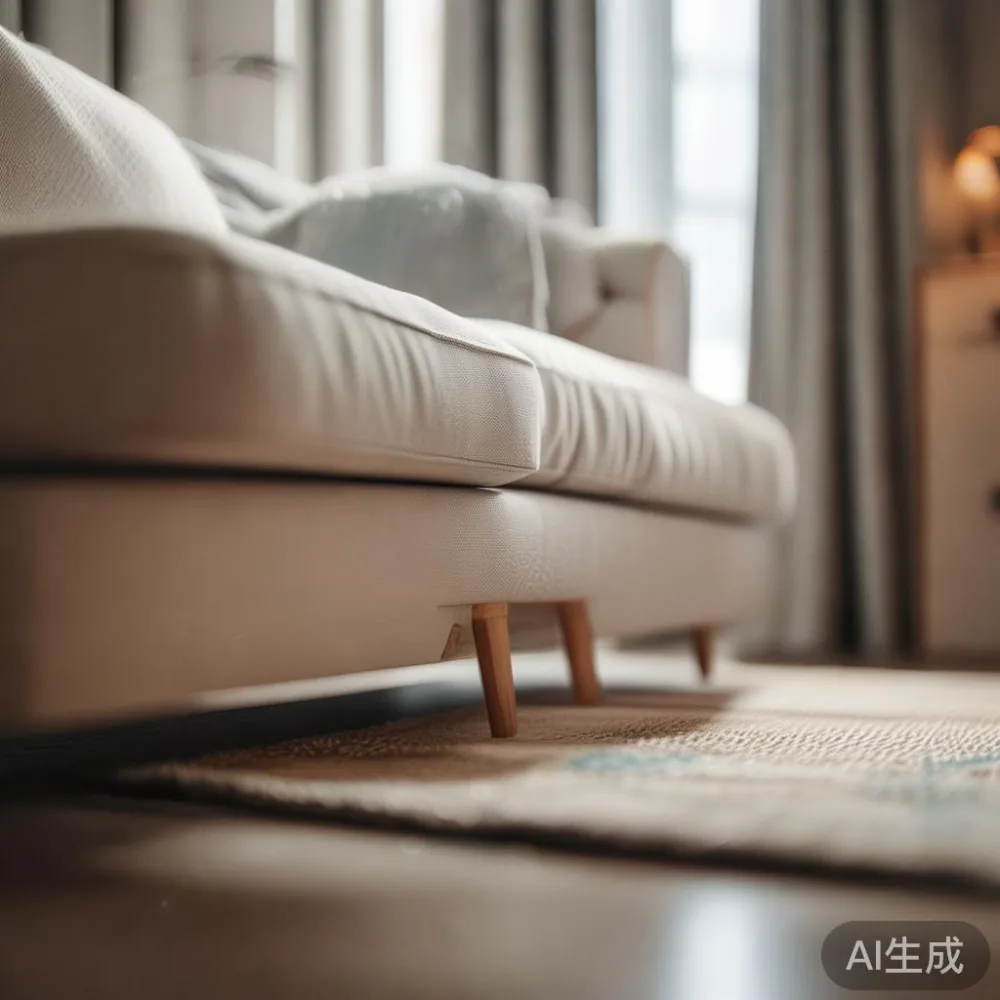
The single biggest mistake in small Singapore apartments is choosing a sofa with thick, floor-hugging cushions and no visible legs. Visually, those pieces eat the room. A solid wood sofa with exposed wooden legs, ideally 12 to 15 cm off the ground, lets light pass underneath and makes the floor appear to continue. From across the room, your eye reads more floor, which equals more space.
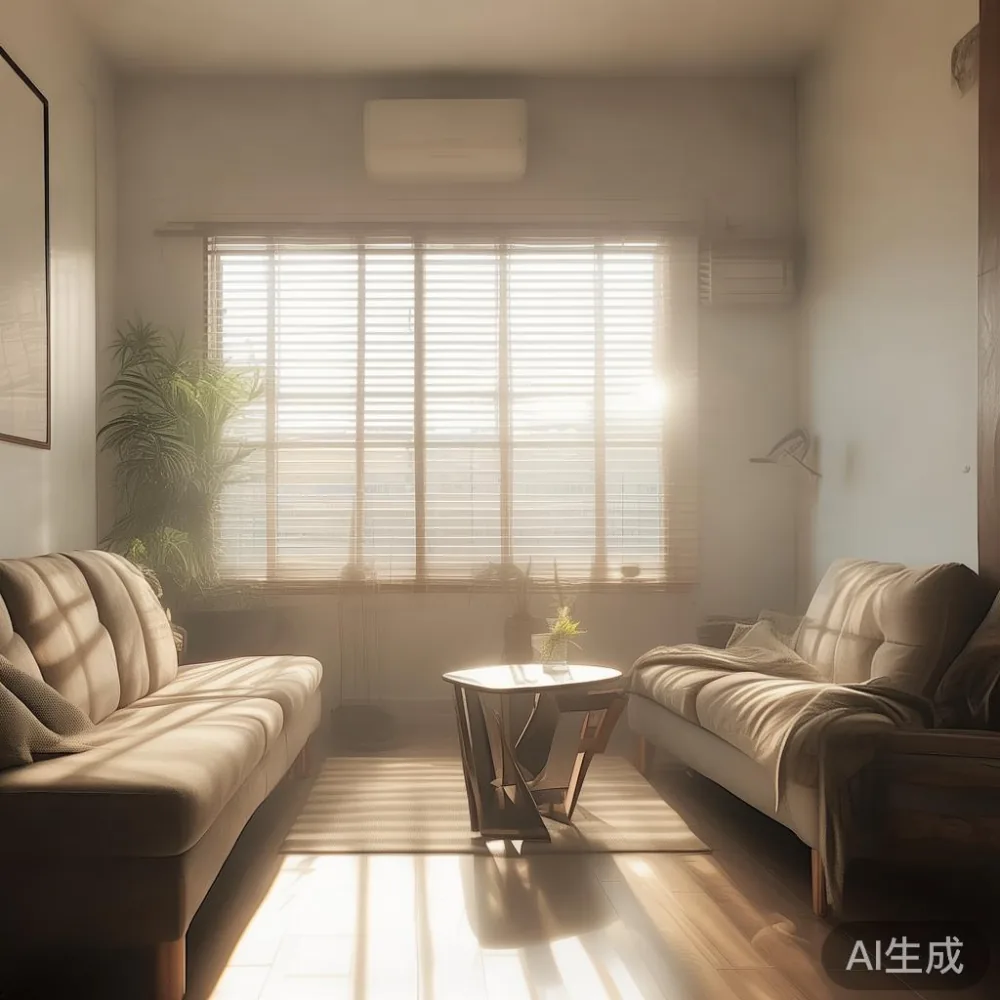
Arm height matters too. A low-arm profile around 55 to 60 cm tall keeps sight lines open between the kitchen and the living room, which matters in an open-plan HDB where the sofa is often the only barrier between cooking smells and the TV. If you entertain often, a 1.6 m two-seater with a single chaise on the right side usually works better than a 2.4 m three-seater, because you keep two clear walking lanes. Frames made from kiln-dried solid wood (ash, oak, or beech) weigh between 45 and 70 kg for a two-seater, which is light enough to move during house cleaning yet heavy enough to feel grounded.
For a French provincial sofa set in a 92 sqm flat, you do not need to abandon the look entirely. Just scale it: a 1.9 m two-seater with cabriole legs in a weathered oak finish gives you the romance of the style without the bulk. One client I worked with in Bedok paired this with a 120 cm round marble table as a side piece, and the entire living area read airy even with a 55-inch TV mounted on the opposite wall.
What About the Dining Table, Bed Frame, and Wardrobe?
The sofa sets the tone, but three other pieces quietly decide whether your flat feels like a home or a storage unit. The dining table is the first. In a 4-room HDB, a 1.4 m to 1.6 m rectangular solid wood dining table seats four without dominating the room, and a 110 cm round table seats four in only 110 cm of floor diameter, which often fits where a rectangular table simply will not fit. Look for pedestal bases rather than four corner legs; you can tuck chairs fully under the rim and reclaim 40 cm of walking space every meal.
The bed frame is the second. In a master bedroom that runs about 3 m by 3.2 m, a queen-size bed frame at 1.52 m by 1.88 m leaves two 60 cm side tables or a single 50 cm nightstand. Skip the storage headboard if your ceiling is the standard 2.8 m HDB height; the extra 30 cm of visual headroom does more for the room than three drawers you will forget to open. A Japandi-style low platform bed at 25 cm high opens the upper two-thirds of the wall, which is where your eye naturally rests.
The wardrobe is the third. Built-ins are great, but a freestanding 180 cm tall by 120 cm wide solid wood wardrobe gives you flexibility if you move between HDBs or upgrade to a condo later. Mirror panels on the sliding doors double the perceived depth of the room; a mirror panel facing a window pulls in natural light from the HDB corridor-facing window and makes a 3 m wall read as 4.5 m. Knowing how to style Japandi wardrobe in room is largely about leaving 10 cm of breathing space on either side and resisting the urge to push it into a corner where mould tends to grow in our humidity.
How Do You Style a French Provincial Sofa in a Bedroom Without Overcrowding It?
How to style French provincial sofa in bedroom is a question I get from clients in Punggol and Sengkang who inherit a family heirloom or buy one because they love the curves. The honest answer: only in a bedroom larger than 12 sqm, and only if the bed is a single or super-single. Place the sofa at the foot of the bed on a 160 cm by 230 cm rug, keep a 50 cm nightstand on one side only, and use linen curtains in ivory rather than heavy velvet. The float a fabric matters because velvet absorbs light and shrinks the room by visual weight. If your bedroom is 10 sqm or smaller, convert the same piece into a living-room sofa and keep the bedroom strictly for sleeping.
What Light-Luxury Style Suits a Compact Condo Best?
Light luxury is the umbrella term Singapore designers use for restrained, slightly European-influenced interiors. Three branches show up repeatedly in local condo projects. French light luxury pairs soft cream upholstery with brushed brass legs and a single marble accent, usually a 50 cm round side table or a 90 cm by 45 cm console behind the sofa. American light luxury leans toward wider seat depths (around 60 cm), darker walnut wood, and clean lines. Post-modern light luxury mixes curves with geometric legs and tends to use bouclé fabric, which adds texture without adding visual weight.
For a 92 sqm condo in Tampines, I usually recommend French or American light luxury over post-modern, because curves and bouclé can dominate a small room if you are not careful. A solid wood sofa in American light luxury style with a 58 cm seat depth and walnut-stained legs runs about SGD 2,400 to SGD 3,800 for a two-seater, plus SGD 280 for curbside delivery in Singapore and another SGD 120 for lift-up to the unit. The same shape in French light luxury with brass-tip legs usually costs 15 to 20% more because of the metal hardware.
If you are wondering whether is Italian light luxury sofa worth it for a small flat, the answer depends on how long you plan to stay. Italian-made pieces in this category run SGD 5,500 to SGD 9,000 for a two-seater, weigh closer to 90 kg because of denser hardwood frames, and use top-grain leather that costs about SGD 1,200 to reupholster after eight to ten years. For a five-year HDB stay, a SGD 2,800 solid wood sofa with a ten-year structural warranty is the better math.
How Do You Choose a Japanese Sofa or Japandi Pieces Without Mismatching?
How to choose Japanese sofa starts with two non-negotiables: seat height between 38 and 42 cm (lower than Western sofas) and a frame depth that does not exceed 90 cm so it fits a HDB corridor corner. The defining feature is the absence of bulk; Japanese sofas usually have thin arms, no cushions on the back, and a straight skirt that sits 2 cm off the floor. Fabric is almost always linen or cotton in oatmeal, charcoal, or forest green.
Japandi is the practical sweet spot for Singapore humidity: enough wood to feel warm, enough negative space to feel calm. A Japandi sofa at 1.7 m wide, 85 cm deep, and 40 cm seat height costs roughly SGD 2,200 to SGD 3,200 for a two-seater in solid ash with linen covers. Pair it with a 90 cm round solid wood dining table, a bed frame at 30 cm platform height, and a 180 cm tall wardrobe with sliding doors, and the whole apartment speaks one quiet language.
How Do You Keep the Room Looking Fresh After You Move Everything In?
Styling ends the day the last box is unpacked, and clutter begins the day after. The single habit that keeps a small HDB feeling generous is the 70/30 rule: 70% of every visible surface should be empty, 30% should hold intentional objects. On the marble side table, that means one tray, one book, one candle, nothing else. On the dining table, it means a single 30 cm vase with two stems of dried pampas, even on regular Tuesdays.
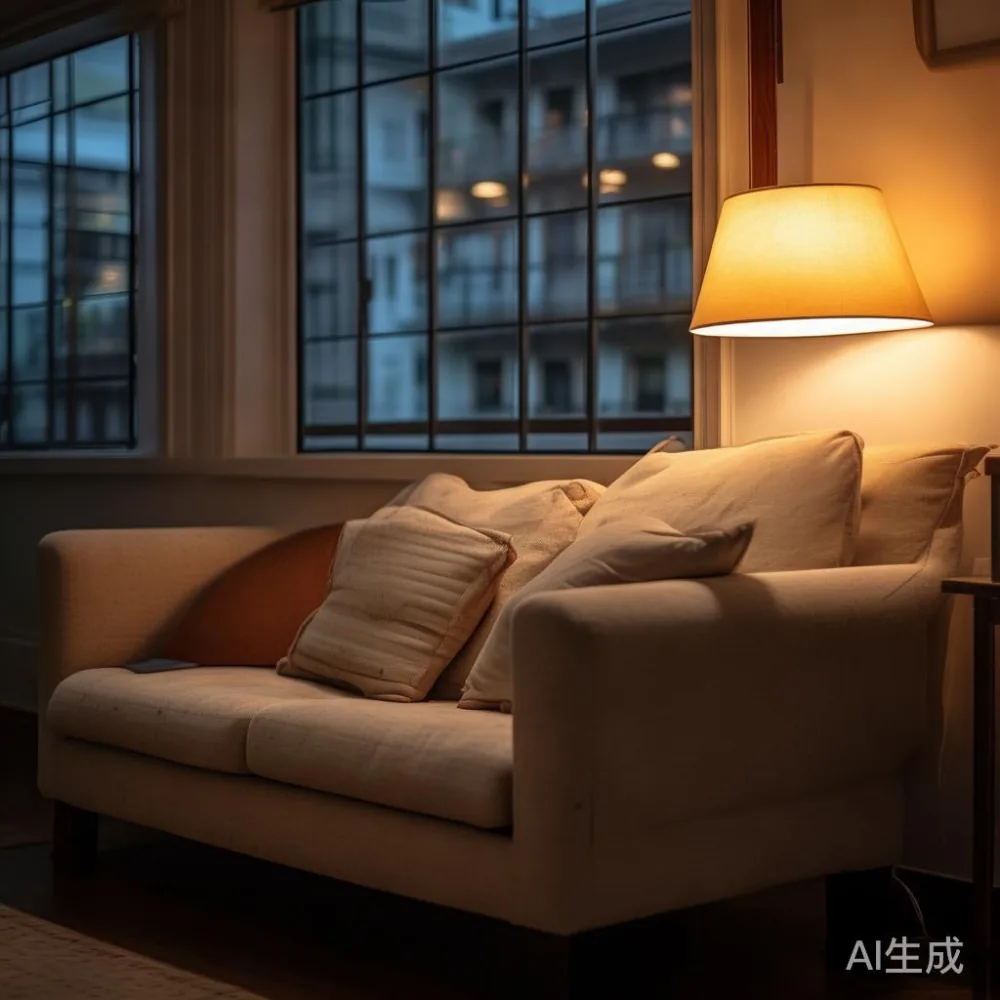
Lighting is the second habit. HDB flats ship with one ceiling light per room, which is rarely enough. Add a 35 cm floor lamp behind the sofa, a 25 cm table lamp on the nightstand, and picture lights above any wall art. Total wattage per room should land around 800 to 1,200 lumens, which in Singapore dollar terms costs about SGD 18 a month to run if you use LED.
Plants are the third habit, and Singapore has the advantage. A 1.2 m fiddle leaf fig in a matte white planter near the window costs around SGD 45 to SGD 75 and softens every hard edge. Two smaller plants on the dining table, one trailing plant on the wardrobe top, and you are done. Do not overdo it; a small apartment with too many plants feels like a nursery.
Where Does MIDHILL Fit Into a Small-Flat Plan?
MIDHILL is one of the Foshan-based makers I often recommend to clients who want solid wood construction without the SGD 4,000-and-up price tag of European imports. Their sofas, dining tables, and bed frames are built in workshops that have shipped to 15 or more countries since 2008, and the pieces arrive with a ten-year structural warranty, which matters more than any short-term discount. I particularly like that MIDHILL offers lifetime refinishing on wood frames; in Singapore humidity, that service pays for itself within the first six years because the wood will oxidize and you will want to refresh the tone.
For a typical Punggol or Bedok project, a MIDHILL solid wood sofa in American light luxury styling at around SGD 2,600, a 1.4 m dining table at SGD 1,400, and a queen bed frame at SGD 1,800 lands you a complete set under SGD 6,000. Free curbside shipping kicks in above US$350, which is roughly SGD 480, so a full living-room set clears that bar easily. Local lift-up to the unit is usually SGD 120 to SGD 180 per floor, and returns within 14 days are accepted if the piece does not fit your corridor, which removes most of the risk of buying online.
Can You Pull Off Vintage Furniture Without Making the Flat Look Dated?
Under 2000 vintage furniture pieces are popular in Singapore because they photograph well and cost less than new light-luxury sofas. The catch is that vintage frames often run 5 to 10 cm wider and 3 to 5 cm taller than modern equivalents, and the foam has usually compressed past the point of comfort. If you buy vintage, plan to reupholster immediately. Budget SGD 800 to SGD 1,400 for new fabric and foam on a two-seater, which brings the total to roughly the same as a new solid wood piece.
The places vintage works best in a small flat: a single accent chair in the bedroom corner, a marble-topped side table that you cannot find new under SGD 600, and a dining chair set where the seat is comfortable but the frame is not. The places vintage fails: the main sofa (you sit on it daily, comfort matters), the bed frame (you sleep on it nightly, support matters), and the wardrobe (you open it multiple times a day, hinges matter).
For French provincial for dining room setups, vintage shines. A weathered oak dining chair set with rush seats, paired with a new 1.4 m solid wood table, costs about SGD 1,800 to SGD 2,400 for six chairs. That is less than a single new upholstered chair from a European brand, and the room reads warmer for it.
What Should You Do Before the Delivery Truck Arrives?
Two weeks before delivery, measure again. Furniture pieces sometimes ship 2 to 4 cm larger than the catalogue spec because of packaging tolerances. Clear the corridor outside your unit, which in HDB blocks is shared with your neighbours and is policed by the town council. Plan a 15-minute buffer between the delivery slot and your next commitment; lift operators in Singapore are usually on schedule, but traffic on the PIE can add 20 minutes without warning.
Have a soft blanket, a roll of painter's tape, and a level ready. Painter's tape on the floor lets you mock the sofa footprint before the actual piece arrives; if the taped rectangle looks wrong, you still have time to exchange. Once the piece is in, take 10 minutes to adjust the leg levelers; an unlevel sofa creaks and rocks, and the noise travels through HDB walls faster than you would expect.
Finally, give the wood two weeks to acclimatize. Solid wood moves slightly with humidity, and Singapore's 80% average humidity is very different from Foshan's 70%. Leave the air-conditioning running for a few hours daily during the first week, and the frame will settle into its final shape without stress cracks. After that, your flat will read generous, calm, and quietly luxurious, which is the whole point of this sofa guide from the start.