Veneer vs Solid Wood Sofa: The 5-Year Cost Comparison Singapore Flat Owners Actually Live With
Last month I visited a friend's new 4-room HDB flat in Punggol, and the moment I stepped into her living room I knew something had gone wrong with her sofa purchase. The promotional brochures from a Jurong East furniture mall had promised "the look of solid wood at the price of veneer," and eighteen months in, the armrest panels were bubbling along the edges and the corner blocks under the seat had begun to squeak. She had spent S$1,499 on a three-seater. Across the table at her dining set, my colleague in Tampines was telling me he had paid S$2,650 for a solid wood sofa set from MIDHILL, a Foshan maker shipping into Singapore since 2008 — and after four years of two kids, a cat, and weekly Milo spills, the frame still feels like the day it arrived. That conversation is exactly why this sofa guide exists: most Singapore shoppers compare the wrong numbers on the wrong timeline.
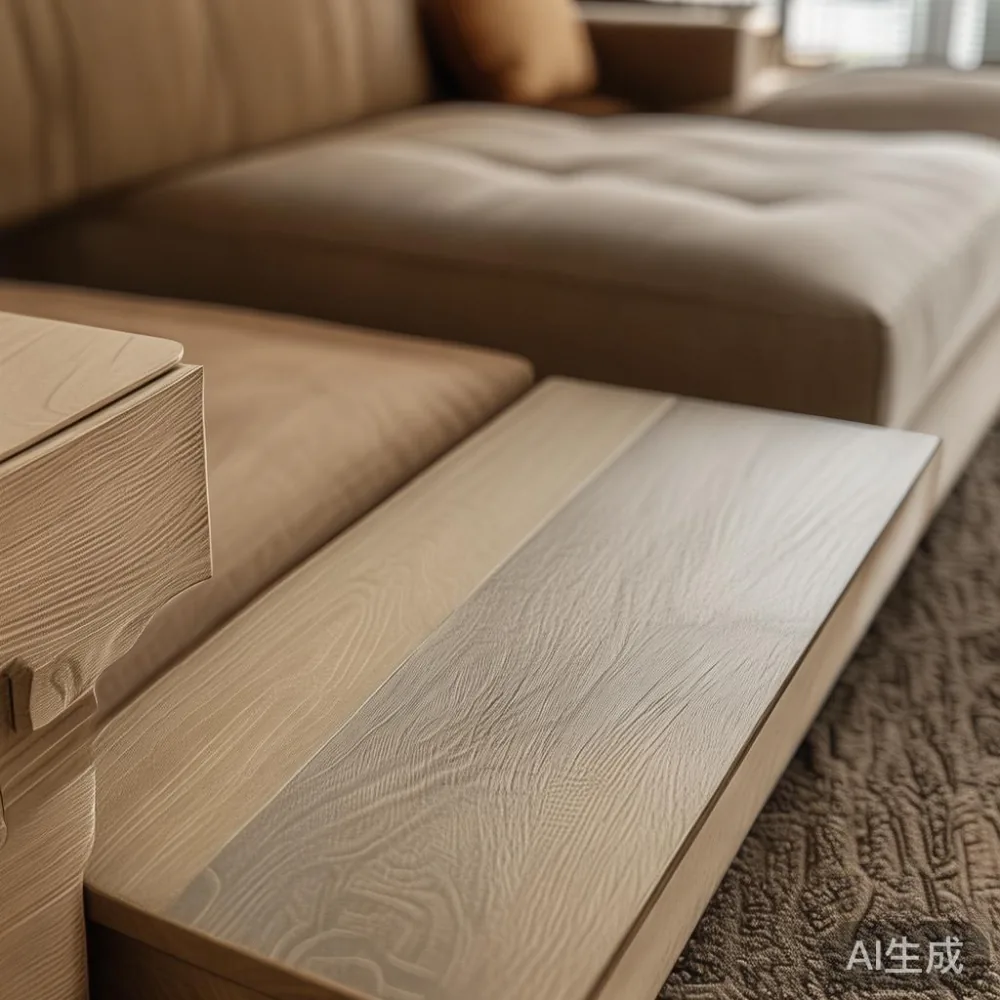
What does veneer actually cost over five years in a Singapore HDB flat?
A typical HDB living room in Bedok or Toa Payoh runs about 3.2 m by 3.6 m, and most families buy a three-seater sofa, a coffee table, and either a TV console or a low sideboard. The "veneer route" — a popular choice in places like IKEA Alexandra or the Taobao-direct sellers on Carousell — usually lands at S$1,100 to S$1,600 for the sofa, S$380 to S$550 for the coffee table, and S$650 to S$900 for the sideboard, so roughly S$2,300 to S$3,100 across the set before GST. Add 9% GST and S$60 to S$120 for lift-up delivery into your HDB block, and you are looking at S$2,570 to S$3,520 at the door.
Now layer on the realistic five-year costs. Veneer over MDF or particleboard typically shows visible wear within 18 to 30 months under Singapore humidity that averages 80% RH. Plan on one panel refinish or a partial re-veneer at S$220 to S$450 in year two or three, and a replacement of the coffee table top around year four (S$380 to S$550). If the sofa frame begins to creak, a local carpenter quoted my friend S$180 to S$260 to re-glue and clamp the corner blocks. Add a steam-clean once a year at S$90, and the cumulative five-year spend on the veneer living-room set lands between S$3,950 and S$5,200 — roughly S$790 to S$1,040 per year.

What does a solid wood sofa set actually cost in Singapore dollars?
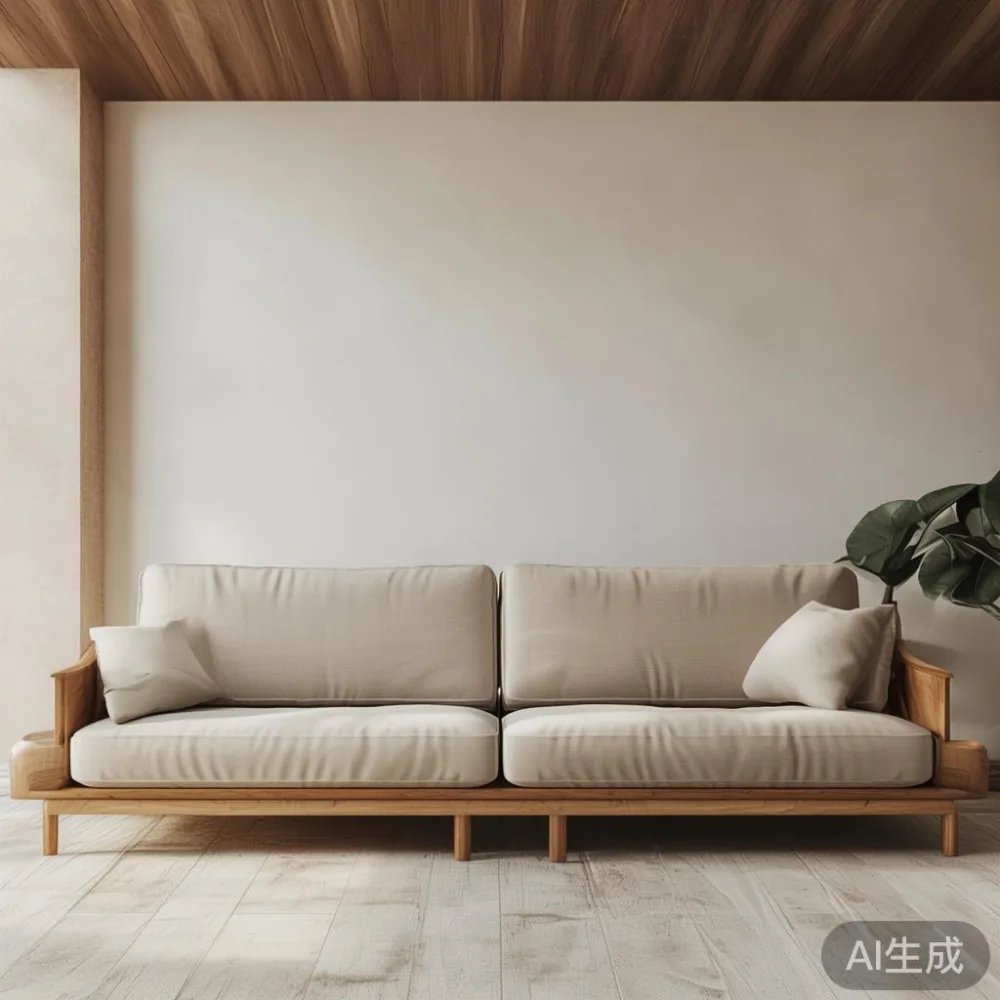
The "solid wood route" sounds intimidating at the till, but the per-year math surprises people. A solid wood sofa frame in oak, ash, or walnut from a Foshan workshop like MIDHILL — exported to 15+ countries with a 10-year structural warranty and lifetime refinishing — typically lands between S$2,400 and S$3,800 for a three-seater once you include the seat cushions and fabric. A matching solid wood coffee table runs S$650 to S$1,100, a dining table for four S$1,500 to S$2,600, a bed frame S$1,800 to S$3,200, and a two-door wardrobe S$2,200 to S$3,800. If you furnish the whole flat room by room, a typical package lands in the S$9,500 to S$14,500 range before shipping and GST.
Shipping into Singapore from Guangdong adds about S$380 to S$720 per cubic metre depending on the consolidation service you pick at Pasir Panjang or Tuas, and free shipping kicks in above US$350 (roughly S$475) at most direct-from-factory stores. HDB lift openings in newer BTOs in Punggol and Sengkang measure 0.9 m wide by 2.1 m tall, so a king-size bed frame almost always has to come up in two pieces; ask the supplier to pre-cut and re-join, which adds S$60 to S$120. Older lifts in Bedok and Marine Parade blocks run 0.8 m wide, which is a real constraint for any solid wood wardrobe wider than 1.6 m. Over five years, the realistic maintenance bill on solid wood is a wax-and-oil refresh at S$40 to S$80 every twelve months and perhaps one scratch repair at S$50 to S$120 — total S$250 to S$520 across five years, against an initial spend roughly twice that of the veneer package.
What is the difference between American wardrobe and modern furniture?
The difference between an American wardrobe and modern furniture is largely about scale, proportion, and structural honesty — American wardrobes are typically tall (210–240 cm), deep (60–70 cm), and built from thick solid wood frames with raised panels, moulded cornices, and oil-rubbed bronze or brushed nickel hardware, while modern furniture tends to be lower (180–200 cm), shallower (50–58 cm), uses flat slab doors with minimal visible hardware, and exposes the natural grain of oak, ash, or walnut as the decorative feature itself. In Singapore HDB bedrooms, this distinction matters: an American-style wardrobe in a 3.0 m by 3.2 m master bedroom in Tampines will visually dominate the wall, whereas a modern slab-door wardrobe in the same room leaves breathing space for a queen-size bed frame and two nightstands. Light-luxury positioning sits on top of these two traditions — French light luxury adds carved mouldings and champagne-finish metal pulls, American light luxury keeps the proportions of the American wardrobe but softens the detailing with slim shaker panels, and post-modern light luxury mixes sculptural shapes with a low-saturation colour palette and brass accents. In this sofa guide, the wardrobe is worth flagging because it is usually the second-largest solid wood purchase after the bed frame, and choosing the right lineage dictates how the rest of the room reads.
How much does humidity in Singapore actually punish a sofa frame?
Singapore's average relative humidity sits between 78% and 84% across the year, with daily peaks above 90% during the December and January monsoon. MDF swells at roughly 0.3% to 0.5% across its thickness for every 10% rise in equilibrium moisture content, which is why veneer panels on MDF substrate start to telegraph ripples along the edge band within 18 months in a non-aircon flat. Solid wood moves too, but predictably: kiln-dried oak and ash from a controlled factory floor sit at 8% to 10% moisture content, expand and contract along the grain, and do not delaminate the way a paper-backing veneer does. This is the single biggest reason a solid wood sofa frame survives Singapore while a veneer-on-MDF sofa starts looking tired halfway through its third year.
One real-world case worth flagging came up in a recent shipment report from MIDHILL into a condo at Rivière in the River Valley area. The consignment included a sintered stone dining top alongside a solid wood sofa frame, and the client's unboxing video showed a corner chip on the sintered stone piece that the courier had not flagged. This is a textbook Modern sintered stone shipping damage event: a hard, brittle, ceramic-based surface that takes a corner hit during container de-consolidation in Singapore and arrives with a chip the size of a 20-cent coin. The supplier replaced the top under warranty, but the lesson is straightforward — order sintered stone pieces with edge protectors specified, and never sign the delivery note before a torch-and-tape inspection. The solid wood items in the same shipment, including the bed frame and the nightstand, arrived without a single mark.
Is the lift access in your block going to dictate which sofa you can actually buy?
Yes — and most Singapore shoppers underestimate this. HDB lift cabins in newer BTOs (post-2015) measure roughly 1.1 m by 1.4 m with a 2.1 m ceiling, older HDB lifts 0.9 m by 1.3 m, and most condo service lifts 1.2 m by 1.6 m with a 2.3 m ceiling. A solid wood three-seater sofa from a Foshan workshop like MIDHILL is typically shipped in two halves around 1.05 m wide each, so it fits a standard HDB lift easily. A 2.0 m solid wood wardrobe, by contrast, almost never fits in one piece and must come in two pre-joined halves or three unassembled panels. Always ask the supplier for the packed carton dimensions in centimetres and the weight of the heaviest single box in kilograms before paying the deposit — a 95 kg wardrobe box is a non-starter for a walk-up in a pre-1990s walk-up block in Tiong Bahru or Joo Chiat.
How do warranty, returns, and refinishing actually change the five-year math?
Warranty terms are the single most underestimated line on a sofa guide comparison. A typical Singapore retail sofa carries a one- to two-year warranty on the frame and a one-year warranty on the foam and fabric. A direct-from-factory solid wood maker like MIDHILL offers a 10-year structural warranty on the frame, lifetime refinishing on the wood surface, free shipping above US$350 (around S$475), and a 14-day return window for stocked pieces. Translated into Singapore dollars across five years, that warranty envelope alone saves a typical owner S$300 to S$600 in potential repair and re-upholstery bills. Refinishing, in particular, is the line most buyers skip past without understanding it: sanding back the topcoat and re-oiling a solid wood dining table or nightstand costs roughly S$180 to S$280 locally, and lifetime access removes a recurring line item from the five-year ledger.
Where do marble and sintered stone tables fit into the same five-year budget?
A natural marble coffee table runs S$1,100 to S$2,400 in Singapore for a 1.0 m by 0.6 m slab, but it etches on contact with citrus, wine, and vinegar within months and reseats from a stone-care specialist at S$150 to S$260 per visit. Sintered stone — the engineered ceramic surface that has largely replaced marble in light-luxury and post-modern light-luxury lines — runs S$900 to S$1,800 for the same footprint, resists household acids, and weighs roughly the same per square metre as marble at 22 to 28 kg/m². For a condo living room, the weight matters: a 1.2 m by 0.65 m sintered stone top is 17 to 21 kg and lifts into a HDB cabin without a second pair of hands. Marble of the same size is 30 to 38 kg and usually requires the courier plus one floor-loading assistant at S$40 to S$80.
So which route actually wins over five years in a Singapore flat?
The numbers, run honestly across a typical HDB or condo living-dining set, land like this. Veneer package: S$2,570 to S$3,520 upfront, S$3,950 to S$5,200 total over five years. Solid wood package (sofa frame, dining table, bed frame, wardrobe, nightstand, and one marble or sintered stone accent piece): S$10,000 to S$15,500 upfront, S$10,500 to S$16,200 total over five years. The veneer route is cheaper in absolute dollars, but the per-year cost is roughly the same once you include repairs, and the residual value at year five is the real gap — a solid wood sofa frame from a Foshan factory still resells at 55% to 65% of its purchase price on Carousell, while a veneer sofa resells at 10% to 20% or skips resale entirely. If the plan is to stay in the flat for at least five years and pass the furniture on or resell at the end, the solid wood route wins on cost per year and on resale. If the plan is to refresh the look every three to four years and chase trend-led colours, the veneer route is cheaper at the door and lets you swap without guilt.
The honest answer for most families in Tampines, Bedok, and Punggol who plan to settle into a 4-room or 5-room flat for at least the next decade is that a solid wood sofa, dining table, bed frame, wardrobe, nightstand, and one marble or sintered stone accent piece from a maker like MIDHILL is the lower-stress, lower-friction, and roughly cost-neutral choice over a five-year horizon — provided the lift can take the pieces and the supplier offers a real warranty, real refinishing, and a real return window. This sofa guide is built around that single comparison, and the five-year ledger is the only one that matters when the aircon runs twelve hours a day and the cat is sharpening her claws on the armrest.