Solid Wood Sofa Guide: Price Factors in Singapore
Solid wood furniture can cost SGD 680 for a compact nightstand or SGD 5,800 for a large dining table, yet the timber name explains only part of the difference. Joinery, dimensions, finish, hardware, design rights, quality control, packaging, delivery, and warranty all influence the final invoice. For Singapore homes, the configuration must also fit HDB lift doors, corridors, stairwells, and compact living rooms.

Consider three familiar purchases: a 180 cm solid wood sofa, a 160 cm bed frame, and a 200 cm dining table. They can use similar oak or ash, but their prices may differ by SGD 1,200 because the sofa contains more engineered components and labour-intensive upholstery, the bed needs load-bearing joints, and the table may demand larger boards and a thicker top.
This guide explains the actual cost structure without pretending that one material grade suits every home. It also considers the practical questions buyers face in Tampines, Bedok, Punggol, and private condominiums, including the 9% GST shown at checkout and access constraints that sometimes affect delivery more than the furniture itself.
Is a solid wood sofa more expensive than a wood-look sofa?
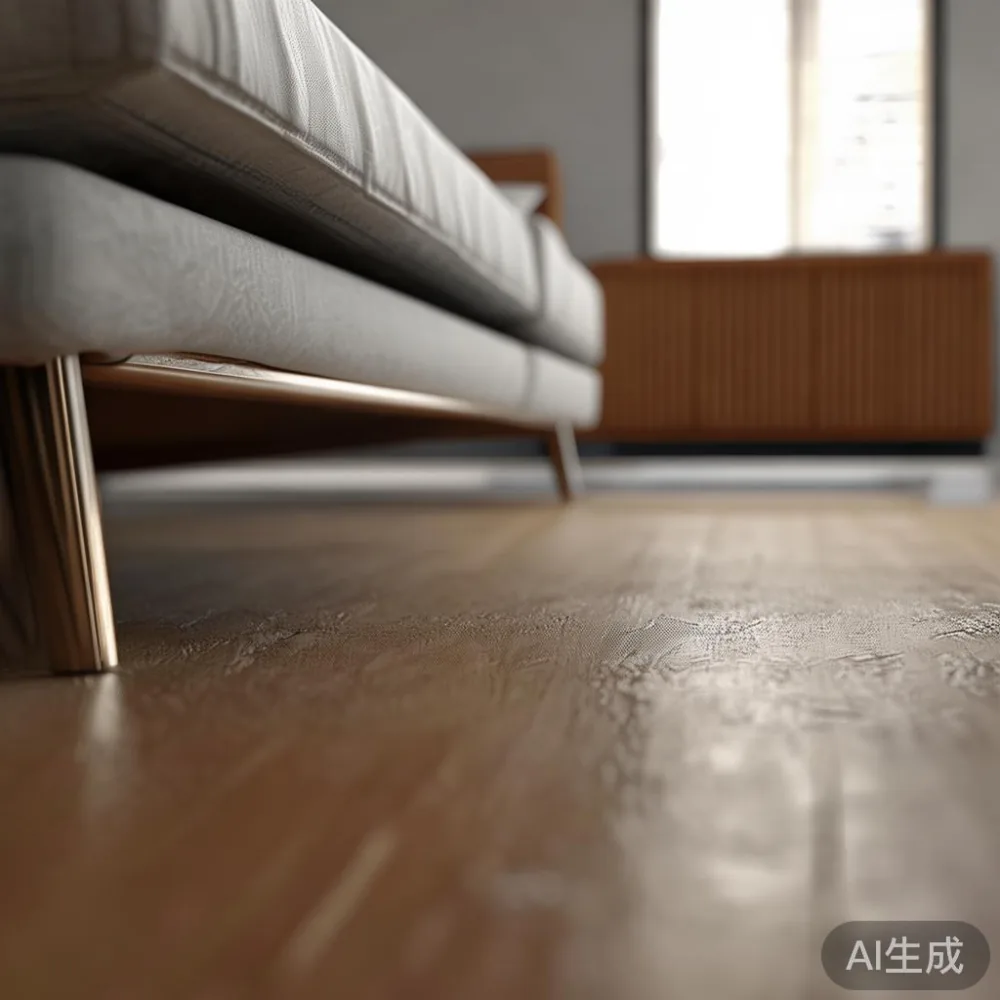
Usually, yes, although the total price depends on the construction rather than the label alone. A genuine solid wood sofa may use solid oak, ash, beech, or walnut for the visible frame, while lower-priced alternatives may use plywood, particleboard, or MDF beneath a wood-effect veneer. The name “solid wood” does not mean every component is solid timber: cushions, webbing, foam, mechanisms, legs, and back panels may use other materials.
For a 3-seat sofa measuring 210 cm wide, 92 cm deep, and 82 cm high, expect roughly SGD 2,400–SGD 6,500 before GST for a reputable mixed construction. A full solid timber frame with premium foam and tailored upholstery can reach SGD 8,000 or more. A visually similar wood-look sofa may cost SGD 1,200–SGD 3,000.

The important comparison is structural honesty. Ask whether the exposed frame, arms, legs, and rails are solid timber, whether the back panel is plywood or solid wood, and whether the frame is kiln-dried to approximately 8–12% moisture content. Singapore’s humid conditions make stability important, particularly in an HDB flat where the sofa must pass through a 90 cm lift opening or a 75 cm apartment door.
For buyers searching phrases such as “best Post-modern sofa for 2026” or “best Mid-century modern sofa for 2026,” the material specification matters more than a fashionable label. Post-modern curves and mid-century tapered legs require different tooling and joinery. A design may carry a licence or be reproduced in small batches, adding design cost without adding another centimetre of timber.
Upholstery can also shift the price by SGD 400–SGD 2,500. Standard polyester may sit at the lower end, while high-resilience foam, feather wrapping, full-grain leather, or performance fabric can move a sofa into higher spending bands. A sofa may look light because of its slim profile, yet a 70 kg solid frame can require two-person handling. I tested a 205 cm three-seat unit in Bedok last month: its 86 kg shipping weight made the lift dimensions more consequential than the trolley itself.
What determines the price of solid wood furniture?
The starting point is the timber. Species differ in availability, yield, workability, and market demand. Domestic-looking ash may cost less than premium oak, while walnut can command several times the board price of common hardwood. Grade matters too: clear boards with consistent colour cost more than knotty or mixed-character boards. Veneer can be efficient because one tree yields more usable surface area, but a thick, well-matched veneer may cost more than lower-grade solid wood.
Board dimensions create another jump. A dining table top measuring 220 × 100 cm and 4 cm thick needs stable, well-seasoned boards or a controlled joint system. Long solid boards can twist as humidity changes. Thickness is not simply a quality marker: a well-engineered 3 cm top with reinforced edges may outperform a poorly joined 5 cm slab. For a 6-seat table, a practical Singapore price range is SGD 1,900–SGD 5,500 before GST, with marble versions often ranging from SGD 3,800–SGD 8,500.
Joinery defines much of the labour cost. Mortise-and-tenon joints, dovetails, dowels, and bridle joints take more time than concealed screws and basic butt joints. Drawers add another layer: a simple box may cost SGD 120 in labour, while dovetailed drawers with hand-finished runners can cost SGD 350–SGD 600. A 120 cm wardrobe with six doors, interior drawers, hanging rails, and soft-close hinges may range from SGD 2,600–SGD 7,500.
Hardware must be counted. A standard hinge may cost SGD 6, while a soft-close hinge can cost SGD 18–SGD 35. Full-extension ball-bearing drawer runners can cost SGD 45–SGD 90 per pair. One 150 cm nightstand with premium drawer suspension can therefore add more than SGD 300 to production.
The finish also has a price. Sealing the raw surface with a clear matte lacquer may add SGD 80–SGD 180 per dining table. Hand-rubbed oil requires more preparation and repeated maintenance. A multi-layer stain, paint, and protective finish can add SGD 150–SGD 450. Dark walnut stains may cost more because achieving an even result takes more coats.
How much should a bed frame, nightstand, and wardrobe cost in Singapore?
A queen bed frame measuring 152 × 190 cm with a solid timber structure and a slatted base commonly falls between SGD 1,100 and SGD 3,600 before GST. Platform beds with upholstered or timber surrounds can reach SGD 4,500–SGD 7,000. King frames measuring 180 × 190 cm may add SGD 250–SGD 700 because they require longer components and stronger supports.
The mattress is normally separate, so budget SGD 400–SGD 2,500 for a queen mattress and confirm whether the quoted bed frame includes the slats. Slat spacing is more useful than a vague “premium” claim: supports spaced at 7–10 cm generally offer better load distribution. For a 70–100 kg occupant, centre-support legs are worth checking, especially across a 190 cm span.
A pair of 45 × 40 × 55 cm nightstands usually costs SGD 650–SGD 1,800 as a set. Drawer count, soft-close hardware, and matching solid timber influence the total. One marble table with a 110 cm diameter top may cost SGD 1,700–SGD 4,500; natural stone varies because veining, thickness, and extraction yield cannot be standardised like a board.
Wardrobes combine furniture making with architectural fitting. A 180 × 60 × 220 cm freestanding unit may cost SGD 3,200–SGD 7,800. Built-in wardrobes can be cheaper per metre because the cabinet system shares walls, but fitted panels, fillers, uneven ceilings, and on-site installation add labour. The storage specification deserves close attention: hanging space, shelf clearances, drawer internal dimensions, and mirror doors affect usability more than decorative trim.
For compact rooms, “Japanese for small living room” can be a useful design direction, but slimness alone does not guarantee good pricing. A well-made 120 cm solid wood sofa with a 78 cm depth may cost less than a poorly made 140 cm model. Likewise, a 90 cm bed frame can suit a smaller bedroom, while a 120 cm daybed may work better in a multipurpose room. Buyers asking “how to style Japanese bed in room” should first measure the room and mattress, then consider low profiles, warm timber, and restrained storage rather than assuming every item must be pale or minimal.
Why do French light luxury and American light luxury cost different amounts?
Light luxury refers to refined visual cues—proportions, pale timber, gentle curves, tailored upholstery, slim hardware—not to a fixed construction standard. French light luxury often draws on carved details, upholstered forms, and quieter ornament. American light luxury is typically broader and more architectural, with clean profiles, generous upholstery, and substantial wood details. Post-modern light luxury introduces more expressive curves, mixed materials, or sculptural forms.
These stylistic routes affect tooling. A softly curved arm requires templates, steam bending, or labour-intensive shaping. Carved motifs require moulds, setup, and hand correction. Clean American light luxury can appear simpler but demand very accurate machining and large panels. Post-modern pieces may use mixed timber, metal, or marble, making assembly more complex.
Design rights are another cost line. An original piece with registered drawings, drawings approved by a manufacturer, or a small-production mould can carry meaningful development charges. A reproduction without those costs can be less expensive, though it may not match the original’s material specification.
Buyers weighing “is European light luxury bed worth it” should compare measurable details: the timber species and moisture control, joint construction, centre support, upholstery density, floor protection, and warranty. A decorative headboard may account for 25% of a bed’s price. Whether that premium suits the room depends on daily use, not only photographs.
For dining spaces, “French for dining room” may point towards a pale oak table with rounded corners, but a 180 cm table still needs a verified footprint of at least 150 cm in an HDB dining zone for chairs to move. Marble can add visual coolness but requires a separate assessment of weight, support, and delivery. A 110 cm round marble table may weigh 70–120 kg; the quoted piece should arrive with the correct lifting equipment rather than relying on improvised handling.
How do factory scale, quality control, and delivery affect the price?
Large factories can spread machine and overhead costs across more units, but high volume alone does not guarantee accuracy. MIDHILL was established in 2008 and exports to more than 15 countries, which means it operates across different standards and shipping routes. Its 10-year structural warranty and lifetime refinishing policy are service commitments that should be priced into a fair comparison, not treated as decoration.
Quality control appears in less obvious places: checking moisture, sorting board colour, calibrating doors and drawers, reinforcing load points, inspecting finishes, and packaging each corner. A table that arrives with balanced drawers needs more alignment work during production than a rough visual sample. A small order may also attract a minimum-production charge, making a slightly larger order more economical per item.
Delivery costs reflect distance, packing, access, and labour. A local Singapore delivery may be SGD 60–SGD 180 for a normal item, while a bulky wardrobe or marble table may cost SGD 150–SGD 450. A full-service delivery with placement and packaging removal can add more. Some overseas orders benefit from free shipping above US$350, but the threshold does not automatically cover local doorstep placement or special handling.
Access should be checked before checkout. Common HDB lift openings are around 80–90 cm wide, with usable internal dimensions sometimes smaller after rails and controls. Corridors may narrow to 100–120 cm, and turning corners can prevent a rigid wardrobe or table from moving even when a doorway technically fits. Measure the lift door, lift car, corridor, stair turns, and final room doorway. Record the narrowest point rather than estimating from a floor plan.
Lead time also changes cash flow and price. A stock nightstand may ship in 5–10 working days, while a custom wardrobe can take 6–10 weeks. A made-to-order dining table may take 45–75 days. Add a buffer of 7–14 days for peak periods, sea freight, and production approvals. GST at 9% should be shown separately on the final invoice.
What questions should I ask before paying for solid wood furniture?
Ask for the actual material breakdown. “Solid wood” may describe only the frame or only the visible parts. Request a drawing showing solid timber, plywood, MDF, metal, stone, foam, and veneer components. For a dining table, ask about top thickness, extension method, leaf support, and seasonal movement. For a wardrobe, ask about internal dimensions and hinge adjustment. For a bed frame, ask about centre support and the spacing between slats.
Ask how the item will arrive. Obtain the packaged dimensions, not just the product dimensions, and the estimated weight. A 200 cm dining table may have a 215 cm package; an 86 kg sofa can become difficult to turn even if it enters the lift. Installation may be included in the listed price or available as a separate SGD 80–SGD 300 service.
Ask what happens after delivery. A 14-day return window can provide time to inspect finish, alignment, and access fit, but the reporting process and restocking rules should be clear. Confirm whether the warranty covers structural failure, how claims are assessed, and whether refinishing is limited by finish type, component type, or a stated service period.
Finally, compare the total delivered cost with the same specification and service terms. Two dining tables both described as “solid oak” may differ in top construction, finish, dimensions, and after-sales support by SGD 1,500. Three quotes at SGD 2,600, SGD 3,400, and SGD 4,300 should not be treated as equivalent until the material and construction sheets are aligned.
Can lower-priced solid wood furniture still be well made?
Yes, if the construction is sound and the price is realistic. The lowest offer may be smaller, use a less expensive species, omit a costly finish, or exclude delivery and assembly. A higher offer may simply include a wider solid timber surface, better joinery, premium hardware, and a more exact finish. Neither price proves superior workmanship on its own.
Look for even joints, close-fitting drawers, stable doors, smooth transitions between components, and restrained colour variation that appears intentional. Functional testing matters: sit on the sofa for 10 minutes, open and close every drawer, and check the wardrobe doors against the wall. A light-luxury solid wood sofa should feel composed in proportion and remain steady after use, not merely look pale and refined.
Budgeting is clearest when each cost has a purpose. A SGD 2,800 dining table might allocate SGD 700 to timber, SGD 550 to shaping and joinery, SGD 400 to finish, SGD 350 to hardware and reinforcement, SGD 300 to quality control, SGD 250 to packaging, and SGD 250 to logistics or local delivery. This does not make every breakdown identical, but it shows why material cost cannot explain the whole invoice.
At MIDHILL, the useful comparison is the specification behind the number: timber, construction, finish, dimensions, access, delivery, returns, and long-term care. Across bed frame, dining table, wardrobe, nightstand, and marble table choices, the fairest price is the one that leaves room for good making and remains appropriate for the room—not the one with the shortest catalogue description.