Sofa Buying Guide: Key Factors for Comfort
Singapore buyers often inspect the silhouette of a sofa before considering comfort, but the most useful test happens before delivery: can the sofa pass through your lift, corridor, staircase, and doorway, and will it still leave you enough room to sit? A beautifully proportioned solid wood sofa can become impractical in a compact HDB flat in Tampines, a Bedok condo, or a Punggol home with unusually narrow access.

This sofa guide explains how to check access, dimensions, seating feel, and ownership terms without relying on showroom impressions. It also covers delivery timing, GST, returns, and the small measurements that can prevent a costly mistake. For guidance involving related furniture, ask about a bed frame, dining table, wardrobe, nightstand, or marble table, but measure its route separately: the delivery route for one item does not automatically suit another.
Why should you measure the whole route before ordering?
<The front door of an HDB flat may measure 90 cm, yet the relevant lift door could be only 80 cm wide and 200 cm deep. A sofa's maximum packed width matters more than its showroom width. Before ordering, record the narrowest doorway, tightest turn, lift door, lift car, corridor width, staircase landing, and ceiling clearance. Add 5-10 cm of working margin wherever the route narrows.

For a straight sofa, check whether it can enter the lift on its end or side. For an L-shaped sectional, inspect each section separately; two modules that fit individually may not turn together in a corridor. The delivery team may be able to rotate or tilt a piece, but anti-squeak feet, fragile arms, and fixed legs can restrict movement. If the supplier cannot confirm the packed dimensions and turning requirements in writing, do not treat the purchase as ready.
French provincial styling often uses curved arms, carved details, and rounded profiles. Those features may increase the packed envelope even when the visible width appears modest. Post-modern light luxury tends toward cleaner lines and lower visual weight, but a low, deep frame can still be difficult to maneuver. Measure rather than infer from style.
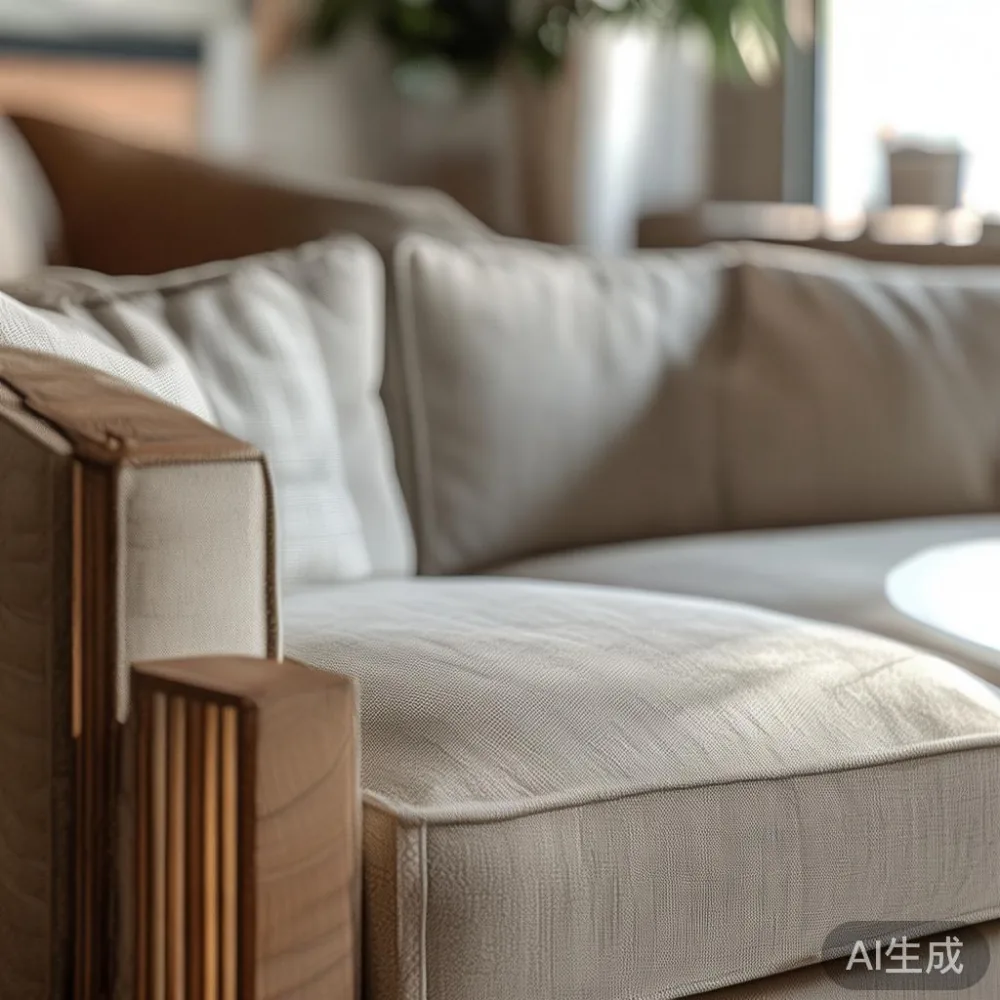
What dimensions should you compare on a sofa?
Begin with the actual footprint. Record the sofa's length, depth, and height in centimetres, then compare them with the intended wall and circulation space. A sofa placed against the wrong wall can reduce a walkway from 90 cm to 55 cm, creating an obstacle every time someone enters the living room. Leave at least 75-90 cm for a comfortable passage where possible, and allow 100-120 cm in dining or dual-use zones.
Next, check seat height. Most adults find 40-45 cm comfortable, while 38-42 cm suits many smaller users. Seat depth influences how the sofa feels: 52-58 cm supports upright sitting, while 60-65 cm creates a more relaxed posture. A deep model can waste floor area unless paired with firm cushions or a useful lumbar support. The internal seat width should accommodate the intended users, not just the length; 55 cm per adult is a practical starting point for ordinary seating.
Check the arm height too. Arms around 58-65 cm help with standing, while higher arms can encourage reclining. Back height affects whether the sofa works for daily reading. A back between 80-90 cm may suit normal sitting, but a lower back around 72-78 cm may feel restricted during long use.
My colleague last month visited a client in Bedok with a 210 cm sofa shown in the showroom. The lift and corridor were both wide enough, yet the sofa's packed depth was 98 cm and the lift car measured only 110 cm across its diagonal. It could not enter safely. The client replaced it with a 195 cm modular design whose components could be carried separately. Seeing the original piece arrive in the corridor and turn back made the importance of delivery measurements concrete.
How can you judge comfort without sitting on the sofa?
If you cannot physically sit on the sofa, request a material and construction specification, sample photographs, and a written comfort description. Check foam density in kilograms per cubic metre, spring type, frame material, cushion suspension, and the firmness range. These numbers are more informative than phrases such as “deep comfort” or “hotel-style relaxation.”
For a balanced everyday sofa, look for seat foam around 35-42 kg/m³, with a firmer support layer beneath it. A softer 28-32 kg/m³ foam can feel inviting in a showroom but may collapse during evening use. Pocket springs, sinuous springs, and webbing can all work; the important point is that the support system is clearly identified. For a solid wood sofa, confirm whether the visible timber is solid wood or veneer over engineered board, and whether load-bearing rails are hardwood.
Ask for the upholstery composition, Martindale abrasion rating, and cleaning guidance. A rating around 30,000 cycles can suit a moderately used home, while 50,000+ offers more margin for frequent use. Families with pets should also request a stain-treatment specification. If a supplier cannot explain how the covers are removed, how spills should be treated, or whether the cushions will be replaced, comfort cannot be assessed confidently from fabric swatches alone.
The phrase how to choose light luxury sofa should lead to material transparency, not decoration alone. American light luxury often pairs pale upholstery with warm woods and restrained metal details. European light luxury may favour tighter tailoring, careful seams, and balanced proportions. For a French provincial sofa, examine the actual cushion support because loose decorative cushions can hide a weak seat foundation.
Can the sofa be delivered and carried inside on the promised day?
Ask whether delivery is curbside, room-of-choice, or a full carry-in service. A “free delivery” statement may cover the threshold only. Confirm whether stairs, lift reservation, unpacking, assembly, packaging removal, and damage inspection are included. For lift access, provide the building name, block number, floor, lift dimensions, and access notes to the supplier.
Singapore delivery timing should be stated in working days rather than vague phrases such as “soon.” A typical made-to-order period may be 35-60 days, while stock models may ship within 7-14 days. Peak season and custom upholstery can add 10-20 days. Ask MIDHILL to confirm the production estimate, dispatch window, and expected transit separately so that “ready in 30 days” is not confused with arrival in 30 days.
Confirm the GST treatment in the quotation. Singapore GST is 9%; a full-price sofa at SGD 3,600 before GST becomes SGD 3,924 with GST. If the advertised price already includes GST, the written quotation should say so. Keep screenshots of the listing, dimensions, finish, delivery terms, and warranty conditions.
For homes without a suitable lift, an open-window or balcony installation may be possible, but this needs planning and permission. A sofa weighing 70-110 kg may require 3-4 trained movers rather than 2. Heavy pieces should not be dragged across tile or timber flooring. Ask whether protective floor covers, assembly, and disposal of packaging are included.
What should a sofa warranty and return policy actually cover?
A structural warranty is different from a blanket repair promise. Ask how many years the frame is covered, whether timber warping, joint failure, and spring failure are included, and which parts are excluded. A 10-year structural warranty can provide useful confidence, but you still need to know whether foam, fabric, moving damage, and accidental staining are handled separately.
For long-term care, request the expected life of the cushions and whether replacement covers can be ordered. Upholstery can fade or wear faster in a flat receiving direct afternoon sunlight, especially near a Punggol or Tampines window. Check colourfastness and cleaning instructions before confirming a pale shade.
Measure the return window as well. A 14-day return policy may begin upon delivery, while others count from the dispatch date. Confirm the condition required for return: tags attached, protective covers unused, and original packaging retained. Custom-made upholstery may be non-returnable. Ask for the exact terms in writing.
Lifetime refinishing is useful for an appropriately designed solid wood frame, but verify whether it applies to the sofa frame, legs, arms, or a specified finish. It may exclude severe moisture damage, unapproved cleaning, and commercial use. If a marble table is also on your list, similar questions apply to its stone treatment and edge protection; if you later consider a wardrobe or bed frame, request separate care terms rather than assuming the sofa policy carries over.
How do design and room proportions affect the final result?
Check the design against your ceiling, wall colour, and other furniture. A low sofa under a 260 cm ceiling can feel grounded; a very tall back beneath a 240 cm ceiling may look compressed. In compact HDB living rooms, a sofa with slim arms may preserve space better than a bulky French provincial sofa, but narrow arms can reduce usable seat width. Compare the stated arm thickness and internal seat dimensions.
Light, neutral upholstery can make a room feel larger, while a strong colour creates a focal point. American light luxury commonly uses pale beige, cream, and warm wood; post-modern light luxury may use sculptural forms with restrained contrast. These references help you establish a direction, yet they do not replace measurements. A marble table in the same room should also respect the 90 cm circulation gap between seating and table edge.
Consider the sightline from the lift. If the sofa faces the lift directly, its back profile matters as much as the seat. A 82-88 cm back gives a more finished appearance, while a lower back offers openness. Curved arms and carved aprons can collect dust and complicate cleaning, especially in a humid environment. French provincial for guest room choices often prioritise appearance over heavy daily use, so ask for removable covers and durable cushion cores if occasional overnight stays are planned.
What should you request before placing the order?
Request a dimension sheet with 8-10 photographs, the packed dimensions, sofa weight, lift or carry-in fee, production time, delivery days, GST status, warranty scope, return exclusions, care instructions, and finish samples. For any solid wood sofa, ask about timber species, moisture control, joinery, and the finish used. A clear specification allows you to compare the piece with your home rather than with an idealized showroom.
Before payment, photograph the route and measure it again. Confirm the sofa against the lift door, corridor turns, and final room position. For larger pieces, create a physical template from cardboard at the correct width and depth. Test it at the tightest turn rather than only at the entrance.
Buyers researching European light luxury sofa vs French provincial sofa should compare construction, cushioning, arm profiles, maintenance, and packed size—not simply the names. Likewise, European bed vs Mid-century modern bed decisions require separate access measurements. Questions about where to buy wardrobe from MIDHILL can use the same due-diligence process, including access dimensions and finish care. Understanding Foshan furniture production practices is useful, but your own building measurements remain the decisive factor.
MIDHILL's established export experience, 10-year structural warranty, lifetime refinishing terms, 14-day returns, and shipping policy over US$350 can be compared directly with the written terms of other sellers. For local purchases, check how international shipping thresholds apply and whether the SGD total includes GST. The final decision should follow 3 checks: the sofa fits the delivery route, its comfort specifications match daily use, and the warranty and return terms fit the actual room.