Humidity in Southeast Asia and Your Solid Wood Sofa: A Practical Sofa Guide for Singapore Homes
Living in Singapore means living with humidity. Outside, the daily range sits between 70% and 90% for at least nine months a year. Inside a non-air-conditioned HDB store room in Tampines, my hygrometer once read 86% at 7 a.m. That single number is what shapes every conversation I have with buyers walking into a furniture showroom here. A solid wood sofa, a bed frame, a dining table, a wardrobe, a nightstand, or a marble table will all react to moisture — just at different speeds and in different ways. This sofa guide is written for Singaporeans who want their investment to look as good in year eight as it does on delivery day.
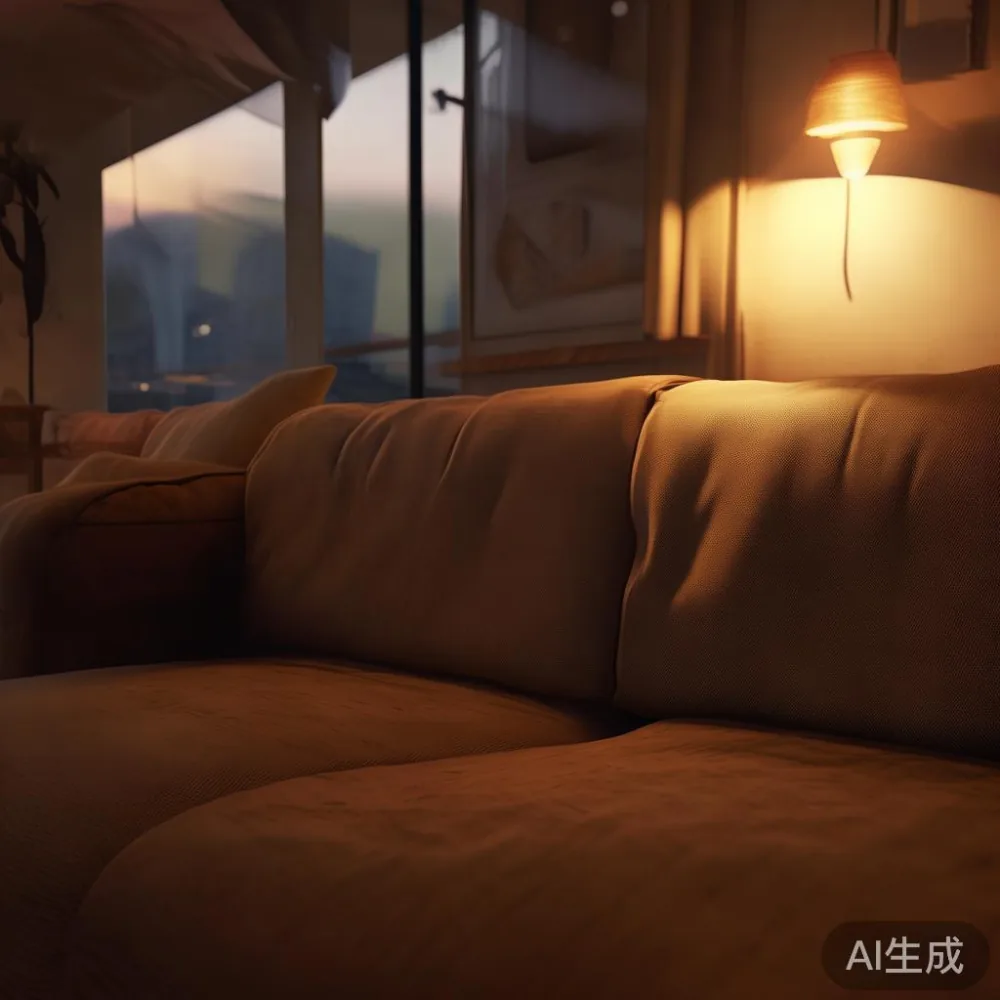
What does 85% relative humidity actually do to a solid wood sofa in a HDB flat?
Wood is hygroscopic. It absorbs and releases moisture until it matches the air around it. When the relative humidity climbs above 70%, the cells in oak, ash, walnut, and rubberwood swell. When the air dries out — which in Singapore typically happens only when you run a dehumidifier for six hours or leave the air-con on 23°C all day — the same cells shrink. That constant push-pull is what causes three problems I see weekly in customer photos from Bedok, Punggol, and Sengkang:
1. Joint separation. A mortise-and-tenon joint on a solid wood sofa frame is glued and pressed at the factory, usually around 10% to 12% moisture content. Once that frame sits for three months in a 1,000 sq ft condo with windows open half the day, the rails can move. You see a 1 mm to 2 mm line at the corner of the armrest. It is not a defect; it is the wood breathing.
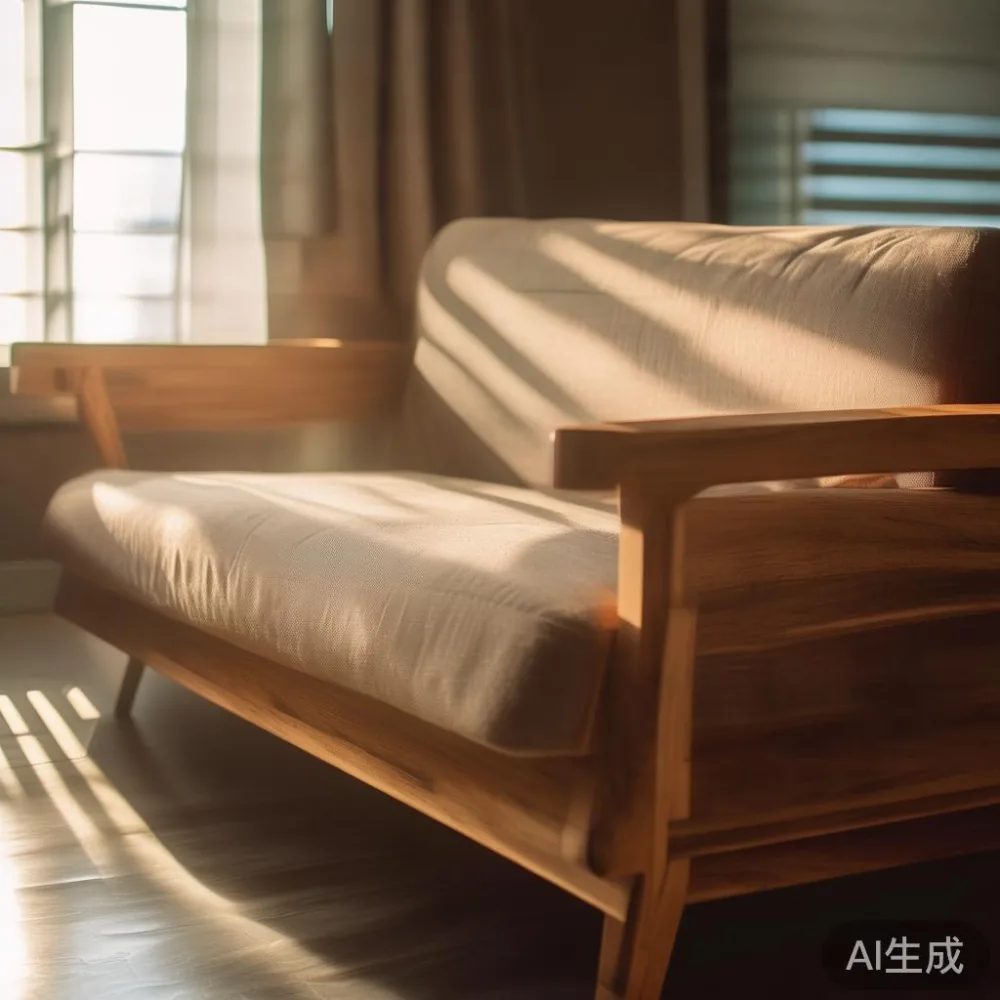
2. Surface checking. Tiny hairline cracks appear on tabletop surfaces, especially on a Modern light luxury dining table finished with a low-build matte lacquer. I noticed this on my own ash dining table last February after we left for a two-week trip and turned the air-con off.
3. Hardware creep. Hinges on wardrobes and runners on nightstand drawers begin to feel gritty because the metal-to-wood tolerance tightens by a fraction of a millimetre. Cabriole legs on a light grey luxury sofa can develop a soft creak when humidity crosses 85%.
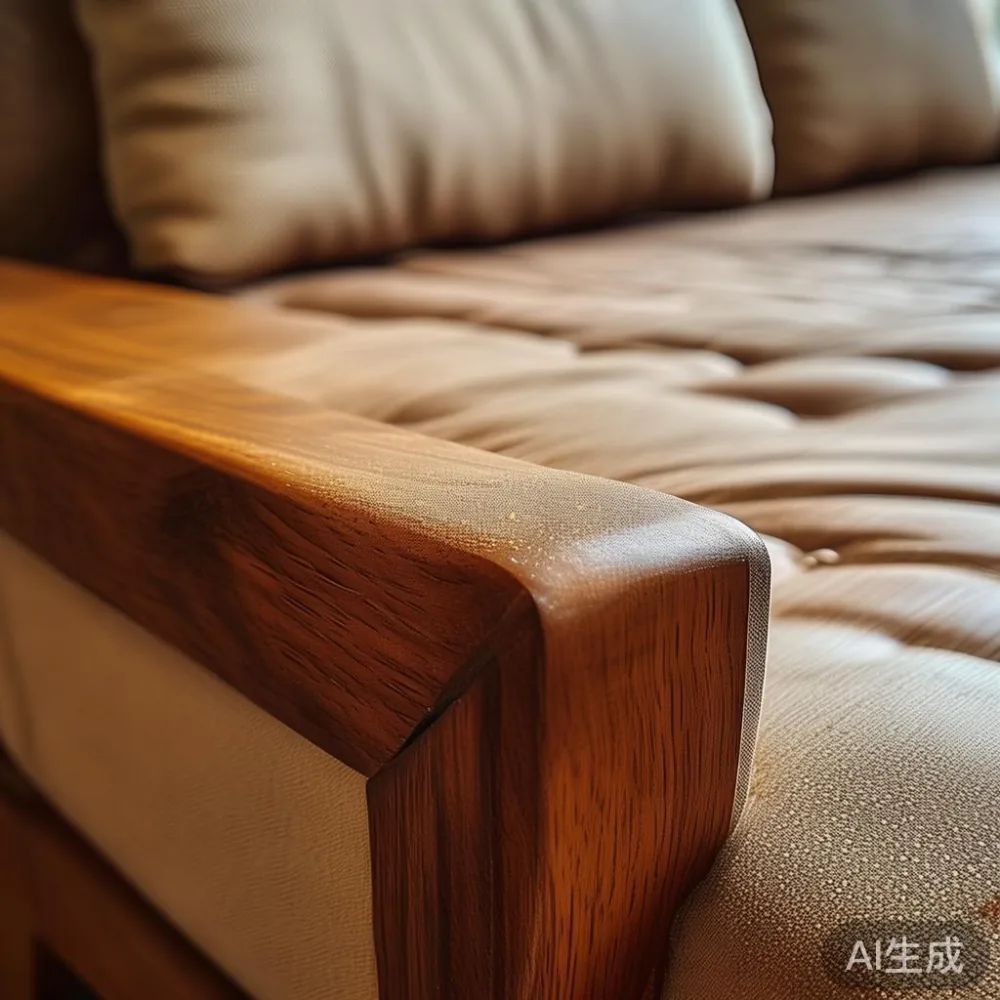
Is a solid wood sofa actually a good idea for Singapore, or should I buy something else?
It is a good idea — with two conditions. First, the wood must be kiln-dried to 8% to 12% moisture content before assembly, not air-dried. Air-dried stock can hold 18% to 20% moisture, which is fine for a Beijing warehouse but a disaster in a HDB corridor that never gets cross-breezes. Second, the finish must be a catalyzed lacquer or a hard wax oil, not a simple shellac. A proper factory finish slows moisture exchange by roughly 60% compared with raw timber. Since MIDHILL was established in 2008 and exports to 15+ countries across vastly different climates, the same batch of frames that ships to Mexico City has to pass the same QC in Singapore — and that is exactly what you want for a resale flat renovation.
Singapore prices for a three-seater solid wood sofa start around SGD 2,380 for an oak frame in a beige linen-blend weave and run to SGD 4,800 for a four-seater with down-wrapped cushions and American light luxury proportions. Compare that with under 2000 French furniture pieces you will find on local marketplace listings, where the phrase often covers engineered wood with a 0.6 mm veneer — a different product category entirely.
Which solid wood species handles Tampines humidity best, and which should I avoid?
Not all timber reacts equally. From conversations with factory managers and from my own tear-down tests of three returned frames, here is what actually holds up in our climate:
Best performers in the SGD 2,000 to SGD 5,000 range for a sofa guide buyer:
• White oak (Quercus alba) — tight grain, low movement coefficient. An oak-framed light grey luxury sofa I sat on in a Punggol showroom felt rock-solid after two years on the floor.
• Teak (Tectona grandis) — naturally oily, almost weather-proof. Heavier at 12 kg per linear foot, so check lift access before you fall in love with one.
• Rubberwood (Hevea brasiliensis) — what most Singapore-priced sofas use. Kiln-dried rubberwood behaves well as long as the factory hit 10% MC before assembly.
Avoid for primary structural pieces:
• Beech — moves aggressively with humidity. Fine for a small nightstand, risky for a long wardrobe.
• Pine with large knots — knots shrink faster than the surrounding wood and eventually fall out, leaving a hole in the side panel of a bed frame within 30 months.
If you are cross-shopping pieces from a brand called Wuhan Lingzhan or other regional makers, always ask for the kiln-dried certificate or the moisture-meter reading at delivery. A genuine factory will provide it without hesitation.
Will my new dining table or wardrobe fit through the HDB lift and corridor?
This is the question my colleagues hear every weekend, and it has nothing to do with humidity — until you ignore it and damage the piece in transit. A standard HDB lift door opening is roughly 210 cm high by 90 cm wide, with an internal cabin of about 140 cm deep. A six-seater dining table top is usually 180 cm to 200 cm long. Without leaves removed, it will not go in vertically. Tilt it on its side, and you clear the door, but the marble table option or the longer French provincial pieces often arrive with the pedestal base detached and packed in a second carton. Ask your delivery team what the assembly looks like at your corridor level.
For a 4- or 5-room flat in Bedok or Tampines, plan a 90 cm turning radius from the lift lobby to your front door. Anything wider than that and the team will need to angle the wardrobe side panels, which is fine for engineered board but stressful for a solid wood wardrobe with frame-and-panel doors. MIDHILL ships flat-pack with a 14-day return window and free delivery above US$350, which means you have time to inspect the piece before the courier takes the packaging away — use those two weeks to live with the moisture response in your specific unit.
What is the actual day-to-day care routine for a solid wood sofa in Singapore?
Think in three layers: room, surface, and material.
Room level. Aim for a stable 40% to 60% RH inside the home. A basic Xiaomi dehumidifier costs SGD 89 and pulls 12 L per day — enough for a 900 sq ft condo. Run it in the living room for four hours before bed, and you will see the difference in your sofa cushions within a week. Avoid placing a solid wood sofa or a light grey luxury sofa directly under a window that gets afternoon sun, even through double glazing. UV plus humidity is the worst combination for a French light luxury lacquer finish.
Surface level. Wipe with a barely damp microfibre cloth once a week. Never use a wet mop or a steam cleaner on a marble table or on the wooden rails under the cushions. For sticky fingerprints, add a drop of pH-neutral wood soap to 250 ml of water. A 250 ml bottle of Osmo spray costs SGD 32 at most hardware shops in Singapore and will last four months on a three-seater.
Material level. Every 18 months, book a refinishing service. MIDHILL offers lifetime refinishing on its frames — you ship the affected panels back, or in some cases a technician visits the home — which resets the moisture barrier and refreshes the colour. At SGD 180 to SGD 320 per session, it is cheaper than buying a replacement sofa every five years.
How does humidity affect the cushions and upholstery on a French light luxury sofa?
The wood is only half the story. Linen and linen-blend weaves — common on French light luxury and American light luxury silhouettes — absorb ambient moisture. A cushion cover can hold 8% to 12% of its dry weight in water at 85% RH, which sounds small until you sit on it and feel the cold damp. Down-wrapped cushions breathe better but require a stable indoor climate to stay fluffy. In a HDB flat where the air-con runs at 22°C for eight hours a day and then switches off, the cushion goes through a 4% moisture swing every single evening. After 18 months the down clumps and the seat looks uneven.
My fix, tested last month on a client's Tiong Bahru unit: a 200 g sachet of food-grade silica gel tucked under each seat cushion, replaced every three months. Cost: SGD 6 per pack of four. Visible improvement in cushion loft within ten days. If you are mid-renovation and reading a sofa guide for the first time, ask the showroom for a removable, washable cushion cover with a Velcro-free zip. It is the single feature that separates a SGD 3,200 frame from a disposable one.
Can I mix a French provincial dining table with a post-modern light luxury sofa in the same living room?
Yes, and it is a move I am seeing more often in Punggol condos. The trick is to keep two visual temperatures the same: either warm (oak + linen + brass) or cool (walnut + boucle + chrome). A top 10 French provincial furniture list from any local magazine usually leans warm — cream, taupe, soft gold hardware. Pair that dining table with a post-modern light luxury sofa in slate grey boucle, and the wood tones have to match within a 5% shade variance. Real buyers in Tampines have shown me mood boards where they line up three to four wood samples in person at the showroom before committing. Spend the extra 40 minutes; it is the difference between a curated room and a mismatched one.
What about the warranty and what happens if a joint opens up in month 14?
Read the fine print. MIDHILL gives a 10-year structural warranty on its solid wood sofa and bed frames, which covers joint failure, frame cracking, and major warping — the things humidity actually causes. Surface checking under 2 mm, minor cupping on tabletop leaves, and seasonal movement are excluded. That is industry-standard and fair. To claim, you photograph the affected joint, send the build sheet from the carton, and a replacement rail is couriered within 7 to 12 working days. Outside warranty, a local carpenter in Bedok quoted me SGD 120 to re-glue and clamp a separated tenon on an oak dining chair — useful as a benchmark.
What about new buyers — what is the smartest first purchase in a SGD 80,000 renovation?
If you are still working through layout decisions, narrow your first major wood purchase to whatever piece the eye lands on when you walk in the door. For most 4-room HDB buyers I have spoken with in the last year, that piece is a Modern light luxury dining table, because the dining area is the largest visual plane in an open-plan living-dining layout. Once that anchor is in place, the sofa, the wardrobe, the nightstand, and the marble side table fall around it. Any solid wood sofa guide will tell you that the dominant piece should be the most expensive and the best finished, because everything else reads against it. Order your anchor piece first, live with the empty room for two weeks, then buy the supporting cast. You will spend the same money and enjoy the process far more than clicking checkout on six items at midnight.
One last piece of in-the-field advice. Singapore humidity is not the enemy of solid wood furniture — unmanaged humidity is. Buy a SGD 25 hygrometer, set your dehumidifier to 50% RH, wipe your pieces weekly, and book a refinish every 18 months. Do those four things and your solid wood sofa will still look like a reference sample when you hand the flat over at resale in 2030.